Millet's 'Sower' Poses for Cameras: Yamanashi Museum Sets Photo Days
Kofu's Yamanashi Prefectural Museum of Art allows cameras in its Millet Gallery only on dates containing a 3. Curator Tomoko Ota explains why quiet days still matter.
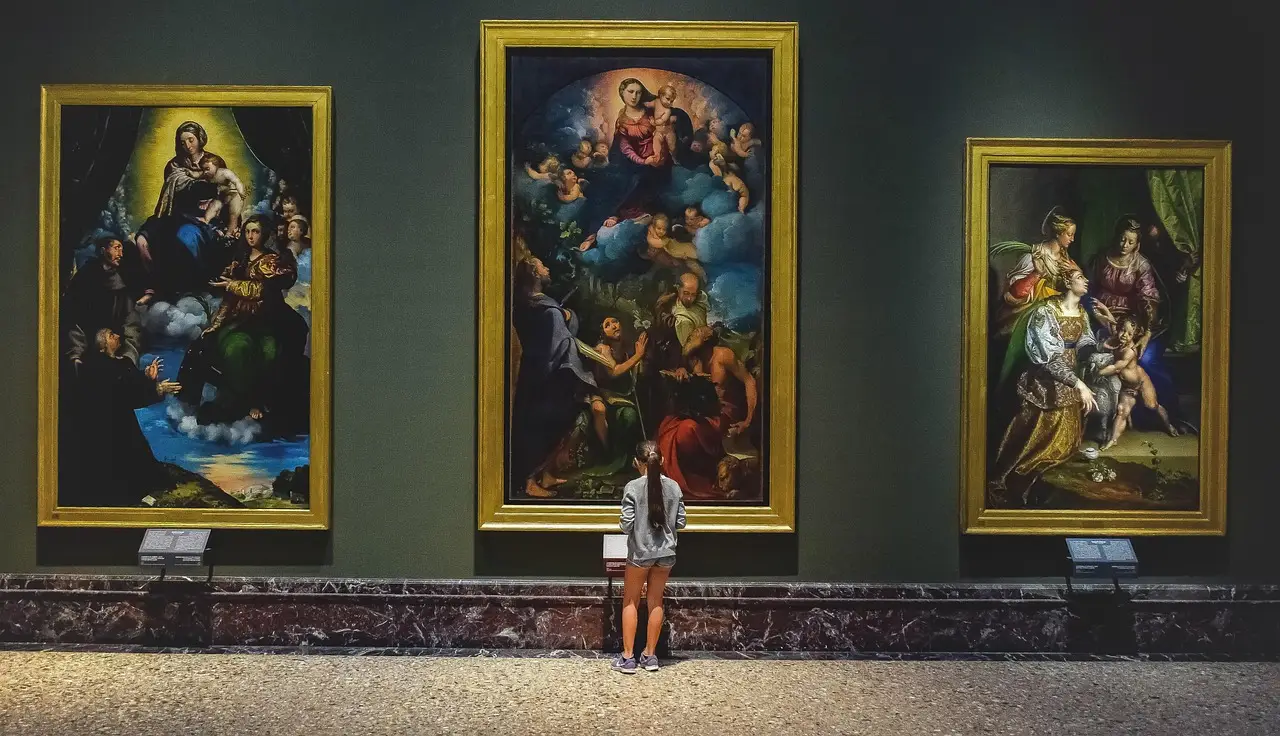
The Yamanashi Prefectural Museum of Art in Kofu now lets visitors photograph its permanent Millet Gallery, but only on days whose dates contain the number 3. The policy, branded "Millet Day," began in November 2025. Attendance on those days exceeds the museum's usual levels.
The museum holds roughly 70 works by Jean-François Millet, the French painter whose scenes of rural labor anchor the collection. Since opening in 1978, the institution has generally prohibited photography. Curator Tomoko Ota explained the reasoning: "Photographing a painting amounts to reproducing the work, so allowing it without restrictions raised a number of issues." Copyright exposure and the risk of flash damage drove the old rule.
The calendar compromise is unusual in Japan. Many museums have relaxed photography policies in the social media era, but few separate viewing days from shooting days.
What happens on a Millet Day?
Visitors now plan trips around the number. A woman from Nagoya came on September 3 with her husband. "I deliberately chose a date with a 3 in it," she said. "I took a photo of my husband standing next to The Sower to show just how large the painting is."
Misako Hisashima, an office worker from Nagasaki Prefecture, framed the appeal differently. "I want to look back at the photos when I get home and remember my visit," she said. Foreign tourists have also appeared at the gallery, posing beside the canvases for souvenir pictures.
The mechanism is simple. The museum keeps its conservation and copyright safeguards on most days, then opens a controlled window. Photographers gain access; contemplative viewers keep their quiet. The takeaway: scarcity turns a routine snapshot into an event worth scheduling a trip around.
Why not allow cameras every day?
The national trend runs the other way. A survey by the Japan Foundation for Regional Art-Activities covered about 600 museums nationwide. It found that the share allowing photography of some or all artworks year-round rose from 67% in fiscal 2019 to 84% in fiscal 2024.
The Aomori Museum of Art in Aomori City illustrates the shift. It has permitted photography of many works since 2019, including prints and paintings by Shiko Munakata. A museum spokesperson said the goal was to encourage visitors to share collection images on social media. Commercial photography remains strictly prohibited there.
Ota declined to follow that model, and her reason lies in the paintings themselves. Millet's works often depict tranquil landscapes and agricultural workers at labor. "We want to preserve a quiet environment for visitors who wish to contemplate the paintings undisturbed," she said. Crowds and camera shutters would break that spell.
The split schedule, she argued, lets "those who want to take photographs and those who prefer to appreciate the art quietly to choose a day that suits them, without interfering with one another." One gallery, two audiences, two calendars.
Does scarcity raise the work's value?
Nobutaka Imamura, a professor of art studies at Hokkaido University, endorsed the approach. "It's a good approach that protects both the artworks and the viewing environment while meeting visitors' demand for photography," he said.
He described the present moment as a period of transition, in which photography becomes part of the museum experience itself. The model, he suggested, "could gain traction as a new way of appreciating art in the age of social media."
Imamura added a sharper economic point. Limiting photography to a few days each month creates a sense of exclusivity that a full lifting of the ban would destroy. "This won't simply be a passing fad," he said. "In the long run, it could also help enhance the value of the artworks."
The Yamanashi experiment thus runs against the national current on purpose. As museums across Japan weigh open camera policies, Kofu offers a counter-model: restricted access as curation. If the attendance figures on dates with a 3 keep climbing, expect other institutions with quiet, contemplative collections to study the calendar trick closely.
Key points
- The Yamanashi Prefectural Museum of Art introduced 'Millet Day' photography dates in November 2025, on days containing the number 3.
- The museum in Kofu holds around 70 works by Jean-François Millet.
- Japanese museums allowing photography year-round rose from 67% in fiscal 2019 to 84% in fiscal 2024, per a survey of about 600 institutions.
- The Aomori Museum of Art has allowed photography of many works, including Shiko Munakata's, since 2019.
Source: Google News: photography museum
Grace Kim
Show full bio
Senior reporter covering companies, deals and strategy in Photography exhibitions, photographers, photo books, festivals and awards at Lens Gazette.