The Book of Miracles, 167 Apocalyptic Paintings, Goes to Auction
The only known copy of the 1550s Augsburg manuscript, with 167 paintings of comets, floods and blood rain, could fetch £1m at Christie's London on 10 December.
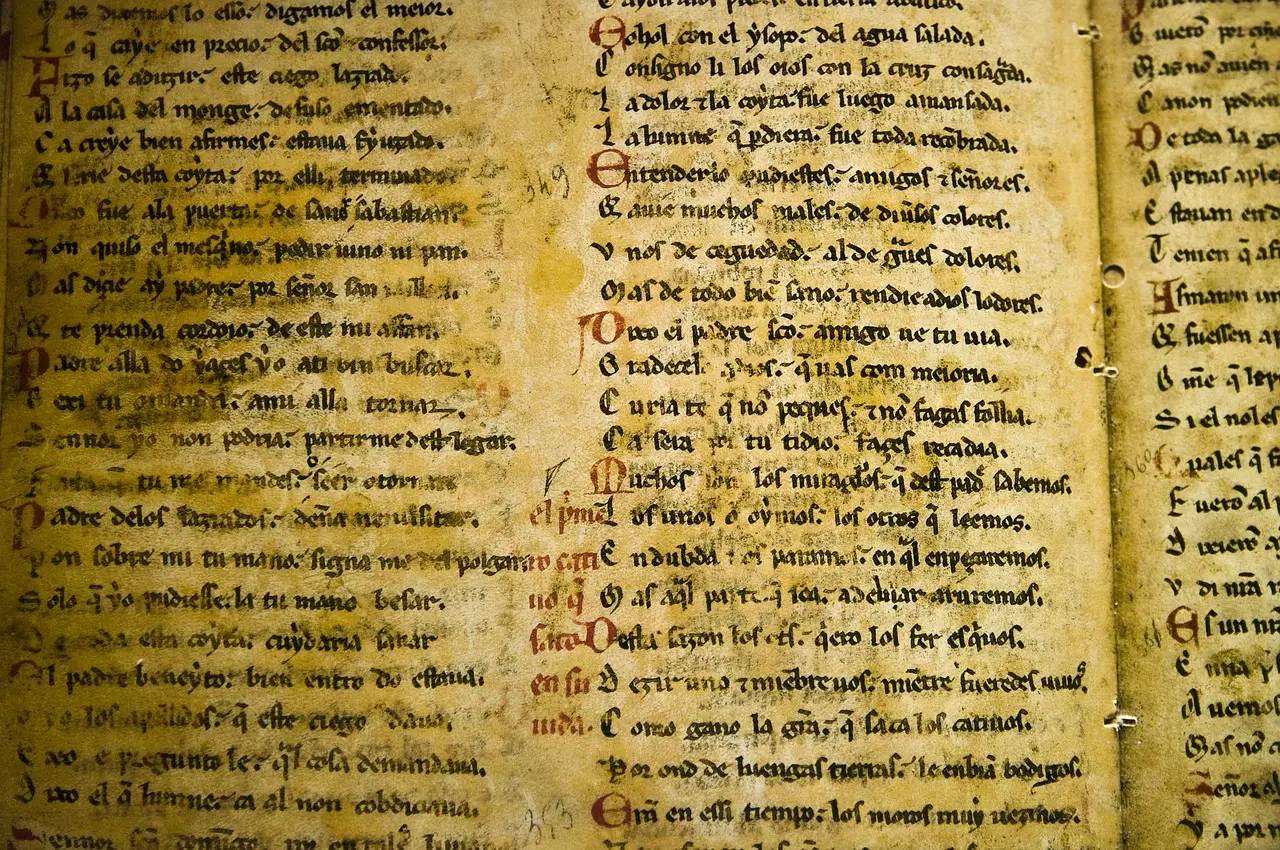
The Book of Miracles, a mid-16th-century manuscript containing 167 paintings of apocalyptic visions and meteorological phenomena, is expected to fetch between £700,000 and £1m when Christie's auctions it in London on 10 December as the star lot of its valuable books and manuscripts sale. The manuscript is the only known copy, and no scholar has ever established why it was made. Public institutions will bid for it for the first time since scholars learned it existed.
Members of the public will get a rare chance to see it in person for six days before it goes under the hammer.
What does the book actually show?
In one illustration, five suns blaze down on Leipzig in 1551. In another, blood rain falls on Rome in 1456. A third scene, dated 1552, shows monstrous hailstones battering the Dutch city of Dordrecht during a storm so fierce that people feared Judgment Day had arrived. Other pages record:
- a plague of locusts arriving in Poland on a "terrible wind" in 1527;
- the North Sea flooding the coast of Frisia — now the Netherlands and Germany — in 1230;
- fiery comets and eclipses;
- "wondrous dragons" flying across the sky over Bavaria in 1533, which scholars believe depicts the northern lights.
Each scene carries a German caption describing what happened, and where and when. The paintings, executed in watercolour and gouache, draw on contemporary broadsheets, chronicles and histories.
Eugenio Donadoni, Christie's international specialist in medieval and Renaissance manuscripts, calls the book an "exceptionally rare" German wonderbook. "German wonderbooks functioned as the sensationalist mass media of their day," he said. "They were used by Lutheran theologians such as Martin Luther and Philip Melanchthon to further their Protestant eschatology, but crucially – with all the depictions of comets, cosmological events, natural disasters, all verified by witnesses, with exact dates and geographic coordinates – they laid early foundations for empirical observation and reporting. They mark a shift from medieval to Enlightenment."
Why was it hidden for so long?
For nearly half a millennium, scholars did not know the manuscript existed. It surfaced around 20 years ago in the library of a small baroque castle in southern Germany, and came to auction in 2008 alongside the castle's furniture, carpets and tankards, selling for just over £100,000. Shortly after that sale it entered the private collection of Mickey Cartin, one of Connecticut's biggest contemporary art collectors.
A facsimile published in 2013 brought the book to wider attention. Till-Holger Borchert, director of the Suermondt Ludwig Museum in Aachen, who has studied the manuscript, said the facsimile got people "really excited" and that the Book of Miracles has since become "a kind of icon for people who are interested in apocalyptic things."
How modern do 16th-century omens look?
Donadoni expects the sale to attract collectors of both historic and modern art, because some scenes appear "super surrealist … almost Dalí-esque". "If it weren't for the little captions, which are obviously 16th-century German, some of them look so vividly modern … it's really jaw-dropping," he said.
Several images record real phenomena with rational explanations. The five suns over Leipzig are thought to depict a parhelion, the optical illusion commonly known as a sun dog. "You see in the sky various different rings of light and it looks like suns," Donadoni said. Blood rain occurs when high concentrations of red-coloured dust particles, usually from the Sahara, mix with water droplets in rain clouds. "Many of these things have actual rational scientific explanations to them," he said.
For Donadoni, the book registers a specific historical anxiety. "All of these events are portentous," he said. "The artists of the Book of Miracles, relying on contemporary broadsheets, chronicles and histories, have condensed into pictorial form the concerns of an age that was gripped by an anxiety – and learned curiosity – about the future." It records how uneasy people felt about climatic anomalies at a time of doctrinal disunity, when interest in documenting visible, tangible scientific phenomena was growing. "It's really fascinating … it is a window into how Europeans were dealing with the impending end of the world, political uncertainty and extreme – and strange – weather events," he said.
He draws a contemporary parallel: leafing through the pages in the 1550s, he imagines, resembled bingeing on bad news today. "I think it could be a little like the 16th-century version of doomscrolling."
Could it beat the estimate?
Borchert thinks £1m is a "very conservative estimate" of the manuscript's value. "It [the final price] could possibly be much more," he said. His first reaction on seeing it was simply: "Wow. It's one of a kind. It grabs you by your heart or your soul or your belly." He argues it would be wrong to value it merely as a historical document: "It's more than that. It speaks to us, to our generation."
Donadoni places the book at a hinge of intellectual history: "We're right at that period where the superstition of the middle ages turns into the age of scientific discovery." Whether the hammer price on 10 December keeps such a manuscript within reach of a public institution, or returns it to private hands, will shape who can study — and exhibit — those 167 paintings next.
Key points
- Christie's London auctions the Book of Miracles on 10 December, estimate £700,000–£1m.
- The manuscript holds 167 watercolour and gouache paintings of celestial wonders and disasters, made in 1550s Augsburg.
- It last sold in 2008 for just over £100,000, found in a southern German castle library.
- The current owner is Mickey Cartin, a major Connecticut contemporary art collector.
- A 2013 facsimile made the book, the only known copy, an icon for apocalyptic imagery.
Source: theguardian.com
James Calloway
Show full bio
Market editor covering people, launches and day-to-day practice in Photography exhibitions, photographers, photo books, festivals and awards at Lens Gazette.