Rian Johnson's $13 Chromagraph App Brings Film-Grade Color Science to iPhones
Rian Johnson and cinematographer Steve Yedlin have released Chromagraph Camera, a $13 app shooting RAW with the film-grade processing pipeline from Knives Out and Looper.
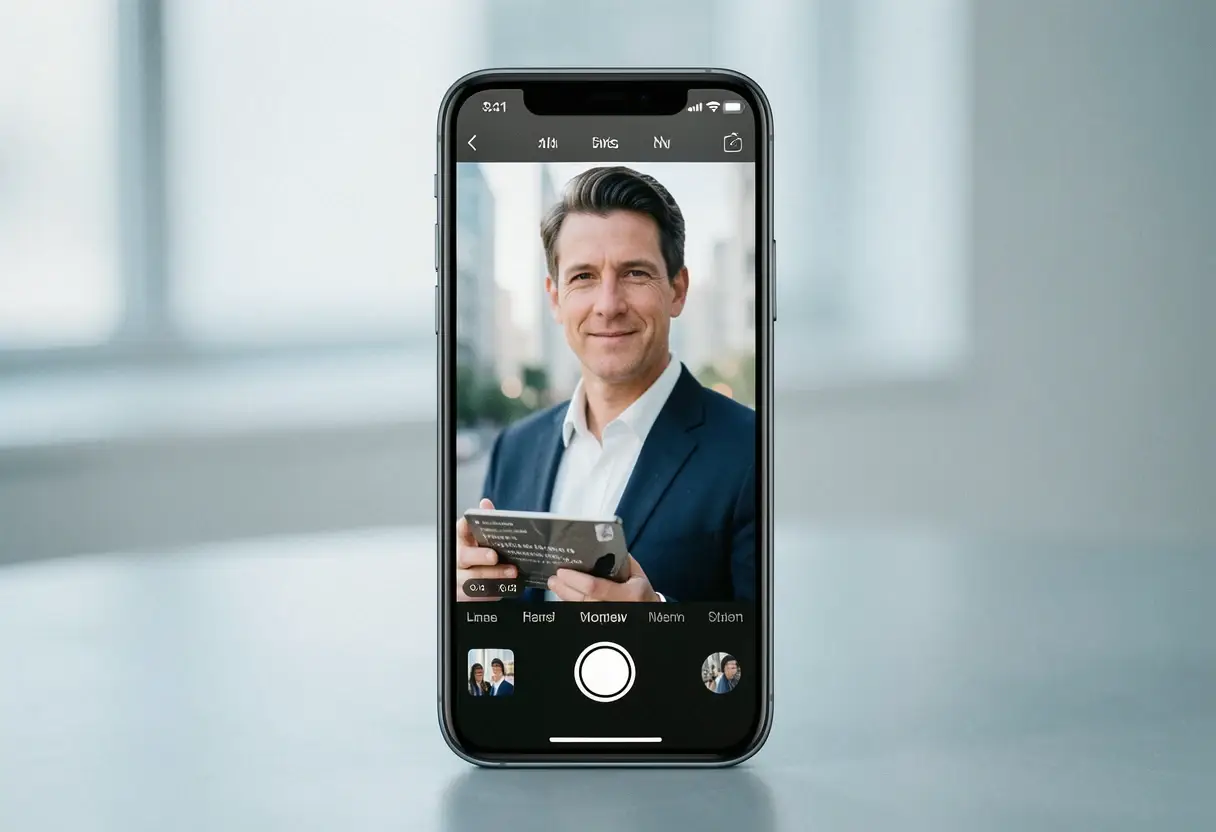
A $13 iPhone app from the director of Knives Out briefly claimed the number-one spot on the App Store's paid charts last week, and it isn't another filter pack. Chromagraph Camera, released by Rian Johnson in collaboration with his longtime cinematographer Steve Yedlin, shoots RAW files while bypassing Apple's own image processing — and substitutes the same pipeline the pair use on their feature films.
"So I recently badgered my cinematographer Steve Yedlin into making my ideal iPhone still camera app," Johnson announced on X. "It shoots RAW, bypasses the iPhone's look processing and instead uses the same image processing we use on our movies."
That is an unusually precise claim, and it's backed by a verifiable lineage. Johnson and Yedlin have worked together on Looper and the Knives Out films, and Yedlin has spent years researching color science. As Fast Company notes, he demonstrated back in 2015 how cinematic film looks can be faithfully reconstructed from RAW camera data — not approximated with presets, but rebuilt from the sensor's unprocessed output.
What does the app actually do?
Chromagraph Camera is, in Johnson's telling, an "elegant one-stop-shop." The concrete feature set:
- RAW capture with manual controls, including shutter speed
- In-app fine-tuning through color, exposure, grain and halation tools
- Export of finished images straight to the camera roll
- Import of RAW files shot elsewhere, which can be processed inside the app and exported
The halation tool is the tell. Halation — the red-orange bleed around bright highlights on celluloid — is one of the hardest film artifacts to fake convincingly, and its inclusion signals that Yedlin's processing is doing more than applying a blanket Instagram-era grade. The app's stated aim is recreating filmic looks from RAW data, the same approach Yedlin used when he wrote a series of color-grading scripts for Johnson's productions so the digitally-shot films would read as if they'd been captured on celluloid. That script work, according to the source, is what led directly to Chromagraph Camera.
Johnson has credibility on this front beyond the director's chair. He tells The Verge he's a film photography "nerd" who is often seen on set with a Leica M6. But his reasoning for the app is refreshingly pragmatic rather than gear-romantic.
"The reality is, as much as I love my Leica, as much as I love my other gear, it's a pain having a camera on your shoulder, or a massive backpack with four cameras in it," Johnson told the publication. "And I always have my phone with me."
Is this cinema-grade processing in your pocket?
Measured skepticism is warranted, as it always is with "the same tools as the pros" marketing. The iPhone's sensor and optics remain phone-sized, and no processing pipeline changes that physics. But the claim here is narrower and more honest: it's about the look pipeline, the transform between RAW data and final image, and that is precisely the territory where Yedlin has published research and shipped working scripts on multi-million-dollar productions. Few paid apps in this crowded category can cite a 2015 technical demonstration and a decade of feature-film application behind their color science.
Johnson also admits he has "messed with plenty of good 3rd party tools" already — the field includes established RAW-shooting apps — so Chromagraph enters a competitive market rather than inventing one. Its differentiator is Yedlin's processing, which Johnson calls "Steve's special sauce." Whether that sauce justifies the $13 asking price, roughly the cost of three months of many subscription-based camera apps, is now a question the paid-chart audience is answering with its wallets.
Chromagraph Camera is available now on the App Store for $13, a one-time purchase. Whether it marks the start of filmmakers shipping their pipelines directly to consumers — or a one-off curiosity from a director who got tired of carrying four cameras — depends on how the app evolves now that it has an audience.
Key points
- Chromagraph Camera costs $13 and briefly hit number one on the App Store's paid charts after release last week.
- The app shoots RAW, bypasses iPhone image processing, and uses the same pipeline as Johnson and Yedlin's films.
- Yedlin demonstrated in 2015 how film looks can be recreated from RAW camera data.
- The app includes color, exposure, grain and halation tools plus RAW import and export.
- Johnson shoots film personally and is often seen on set with a Leica M6.
Original: x.com
Olivia Hart
Show full bio
Staff writer covering people, launches and day-to-day practice in Photography exhibitions, photographers, photo books, festivals and awards at Lens Gazette.