Sean Parker's Night Skies Open in Scranton on October 7
Astro-photographer Sean Parker opens "The Lights Above" in Scranton, Pennsylvania on October 7, bringing long-exposure night-sky work to a regional gallery audience.
Updated
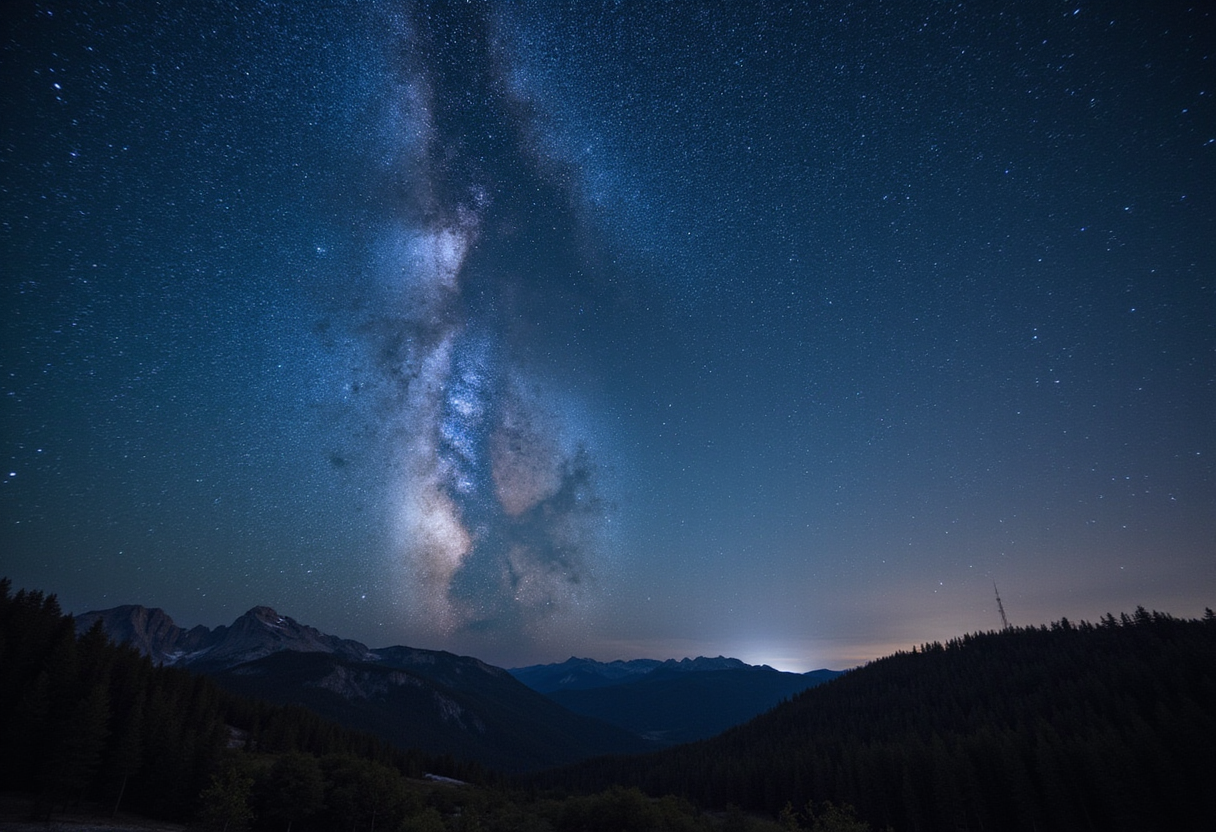
Astro-photographer Sean Parker opens "The Lights Above" in Scranton, Pennsylvania, on October 7, an exhibition announced by the regional outlet DiscoverNEPA that turns attention from the daytime documentary tradition toward the night sky as a photographic subject.
The exhibition's title does some quiet work. "The Lights Above" positions the celestial sphere not as a backdrop but as the subject itself — stars, atmospheric phenomena and the long exposures required to capture them. Parker's practice belongs to a lineage of astro-photography that has moved decisively from the observatory to the gallery, trading scientific instrumentation for patient fieldcraft in dark-sky locations.
Scranton is an apt host. Northeastern Pennsylvania's relative distance from major metropolitan light pollution gives the region a genuine stake in what Parker photographs: a night sky that remains visible, fragile and increasingly contested as artificial light spreads. An exhibition of astro-photography in a mid-sized American city is also a small act of institutional redistribution — night-sky imagery more often circulates through social media feeds and print sales than through regional exhibition spaces, and DiscoverNEPA's promotion of the show signals a local audience being asked to look up and look closely.
The date carries its own logic. Early October in the northern hemisphere offers lengthening nights and, typically, stable atmospheric conditions ahead of winter — the season when astro-photographers accumulate the hours of exposure that a finished print conceals. Parker's output, as the exhibition title suggests, rests on the foundational techniques of the genre: long exposures that accumulate starlight invisible to the naked eye, precise timing, and the discipline of working in darkness far from urban glow.
What distinguishes astro-photography as a gallery practice is its peculiar relationship to time. A single print can compress minutes of planetary rotation into a fixed image; the trails and points of light that result are records not of a moment but of duration. Visitors to "The Lights Above" will encounter images whose making demanded both technological control and endurance — the camera pointed upward, the shutter open, the photographer waiting in the cold.
The genre also carries an argument. Astro-photography has become one of the most persuasive visual documents of light pollution's advance; images of a star-dense sky over an identifiable landscape implicitly ask what has been lost where the Milky Way no longer shows. Whether Parker's exhibition makes that argument explicitly, the framing of "lights above" against a Pennsylvania cityscape invites the comparison.
For Scranton's exhibition calendar, the show marks a wager that nocturnal landscape work can draw the audiences that daytime landscape photography long has. For Parker, it converts images made in remote darkness into public objects — printed, framed, and seen under gallery lighting rather than on glowing screens.
"The Lights Above" runs in Scranton from October 7, and its opening will indicate whether regional institutions in Pennsylvania become a more regular home for astro-photography — a genre whose subject, quite literally, hangs over every potential venue in the state.
Key points
- "The Lights Above: The Astro-Photography of Sean Parker" opens in Scranton, Pennsylvania, on October 7.
- The exhibition is promoted by DiscoverNEPA, the regional outlet for Northeastern Pennsylvania.
- The show presents Parker's long-exposure astro-photography of the night sky in a gallery setting.
Source: Google News: photography museum
Grace Kim
Show full bio
Senior reporter covering consumer brands and retail at Lens Gazette.