Sam Faulkner's Print Swap Trades Walls for Money
Ian Parry Award winner Sam Faulkner launched Print Swap in May: an app where photographers exchange editioned archival prints directly, with no money and no follower counts.
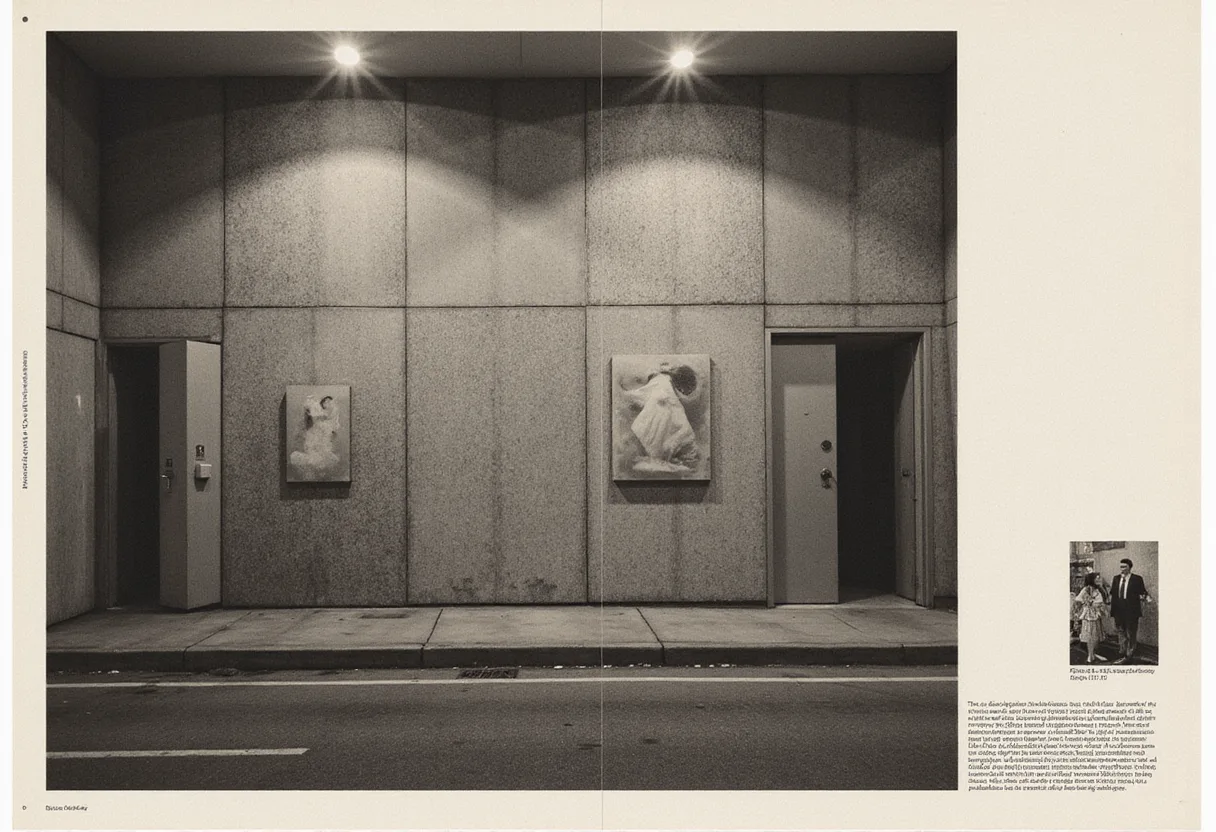
Sam Faulkner, the Ian Parry Award-winning photographer behind Unseen Waterloo, launched Print Swap in May — an iPhone app that lets photographers exchange editioned prints with each other, with no money changing hands. Each participant pays only to produce and post their own print; professional labs around the world print both images on archival paper, ship them direct, and include a certificate of authenticity. The platform's catalogue already includes work by Simon Roberts, Marcus Bleasdale and Will Pryce.
Faulkner is a third-generation photographer — his father and grandfather both worked professionally, though neither pushed him toward it. He found his own way in, going straight from university to Afghanistan, drawn to documentary work in the mould of Magnum Photos and Don McCullin. The images he brought back won him the 1995 Ian Parry Award, and that grounding shaped Cocaine Wars, his long-term project on the cocaine trade across Colombia, Bolivia, Peru, Brazil, Haiti, Mexico and the US, featured in British Journal of Photography in October 2007.
In 2001 GQ commissioned him to photograph Mario Testino ahead of Testino's first museum show at the National Portrait Gallery, London. That led to behind-the-scenes work with Testino's clients — Estée Lauder, Burberry, Michael Kors — and, as the editorial market thinned, more commercial commissions. In summer 2015 he showed five years of battlefield portraits at Somerset House and published Unseen Waterloo: The Conflict Revisited.
Where did the idea come from?
The origin sits in a 2001 conversation with Magnum photographer David Hurn, one of Faulkner's mentors at the World Press Masterclass in the Netherlands. Hurn said he had swapped prints throughout his career, ending up with more than 700 of them. Faulkner later calculated that if he had swapped just two prints a year since that conversation, he would now own 50 prints by photographers he admired — a house full of work instead of an empty wall. He felt loath to hang his own photographs, and could not justify buying at gallery prices, musing that "most photographers can't afford that".
The idea sat until two problems pushed it forward. First, a straightforward swap with a friend took more than a year to complete after Faulkner handed his print over at the pub and the friend arrived empty-handed. "Getting photographers to actually do the mechanics of the swap felt like a bit of friction," he says. Then came a night in another bar with photographer friends "in various states of misery about the state of the business". "I've got a bit of time on my hands," Faulkner remembers thinking. "Why don't I give it a go?"
What does the app change for photographers?
The platform strips out sales, followers and visible status. Images first appear in the feed with no names attached; you only discover who made one when you tap it. Faulkner is candid that this works around hierarchy rather than erasing it — some photographers still carry more status than others, and that tension shapes the swapping dynamic. "I want it to be image-first," he says. "Hopefully there's some sense of mutual appreciation. It's always nice to have your work recognised by your peers — for them to look at it and think, that's something I want to have around."
His case against consuming images online is a case against inattention. "We're surrounded by more images than we've ever seen," he says. "How much attention do we give them when they're 4cm x 4cm on your screen? You literally just swipe past them, and they become completely disposable." He wants to be surrounded by photographs he wishes he had taken — in the kitchen, while chopping vegetables.
Simon Roberts, whose St James's Park image features on the platform, endorses the model: "In an era where everything is commodified, particularly art, it's refreshing to have a more democratic and affordable way to acquire prints from fellow photographers." He praises the range of archival photographic papers and the flexibility to print in the format you want.
What has surprised the founder?
Since the May launch, Faulkner says the hardest part has been changing behaviour. People like the idea once it is explained; the resistance shows up in actually doing it. He compares the holdups to dating apps — the reluctance to make the first move, the fear of rejection. "What's the worst that can happen? Someone doesn't want to swap with you." He likens discovery on the platform to walking round Photo London and stumbling on work that no algorithm would ever serve you. Whether that culture of swapping takes hold will decide if Print Swap becomes an institution on Hurn's model — or another feed.
Key points
- Sam Faulkner launched the Print Swap app in May; no money changes hands between photographers.
- David Hurn told Faulkner in 2001 he had accumulated more than 700 prints through career-long swaps.
- Faulkner won the Ian Parry Award in 1995 for work from Afghanistan.
- Prints are produced by professional labs on archival paper with certificates of authenticity.
- The feed shows images without photographer names; users tap to reveal who made each picture.
Source: 1854.photography
James Calloway
Show full bio
Market editor covering people, launches and day-to-day practice in Photography exhibitions, photographers, photo books, festivals and awards at Lens Gazette.