Thirty-Five Titles Shortlisted for the 2026 Paris Photo–Aperture PhotoBook Awards
Thirty-five photobooks from a record fifty-six countries make the 2026 Paris Photo–Aperture shortlist, exhibited November 12–15 before winners are named November 13 at the Grand Palais.
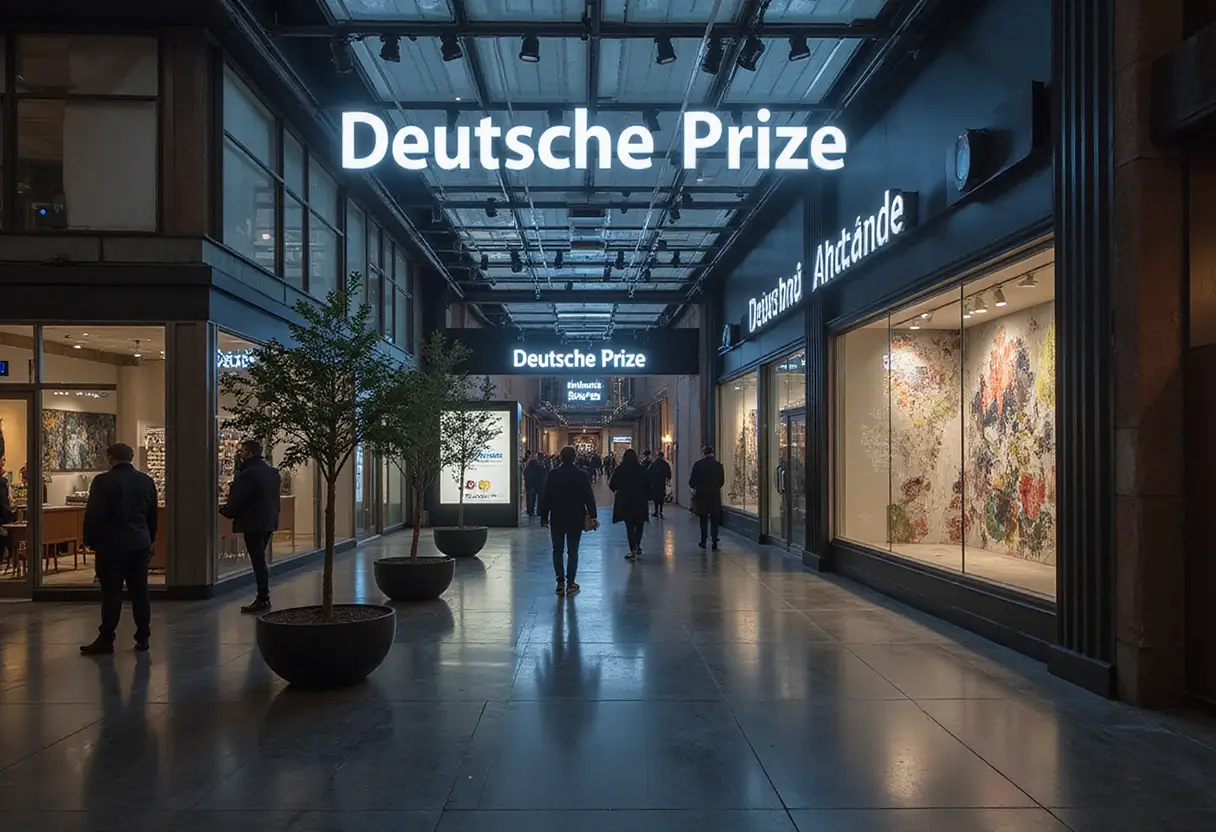
Thirty-five photobooks from a record field of submissions spanning fifty-six countries form the 2026 Paris Photo–Aperture PhotoBook Awards shortlist, now in its fourteenth year. The shortlisted titles go on display at Paris Photo, open to the public from November 12 through November 15, with winners announced on Friday, November 13, at 3 p.m. (CET) at the Balcon de l'Horloge at the Grand Palais. An international tour follows, including PhotoIreland in Dublin in December 2026 and further venues to be announced.
The shortlist jury met in New York in September for three days of review. Its members were artist Alejandro Cartagena; Alexandra Cunningham Cameron, director of design at the Judd Foundation; Aperture editor in chief Michael Famighetti; Paris Photo artistic director Anna Planas; and Anshika Varma, curator and founder of Offset Projects. The awards recognize three categories: First PhotoBook, PhotoBook of the Year, and Photography Catalog of the Year.
What does the First PhotoBook field look like?
Ivan Anisimov's Pants on Top of Shoes (Kult Books, Stockholm; design by Janne Riikonen) photographs the draped trousers and scuffed shoes of Tbilisi passersby in black and white on uncoated paper—a typology that becomes, for the Russian-born photographer, an inquiry into belonging. Amparo Baquerizas reconstructs a pilgrimage to Mercedes, Corrientes, birthplace of the folk-saint Gauchito Gil, in Gauchito Querido (Editorial RM), mixing Google Street View screenshots, testimony and devotional scans, with red prayer ribbons on the spine serving as bookmarks.
Miranda Barnes's Social Season (Important Flowers, London; design by Anamaria Morris) documents Black debutante balls in Detroit from 2022 to 2025, tracing a tradition reclaimed after emancipation. Former public defender Sara Bennett spent over a decade photographing women convicted of violent crimes; Looking Inside: Women with Life Sentences (Kehrer Verlag) pairs portraits with letters, polaroids and handwritten responses to the question "When you see this photo . . . what does it make you think?"
Nata Drachinskaya's Binom (BLOW UP PRESS and Rencontres d'Arles) fuses two slipcased volumes to probe her father's secret life as a cryptographer, thwarting the reader with uncut pages and obfuscated texts. Franco Dupuy's pocket-sized, Swiss-bound Cruising Diaries (Set Margins) pairs black-and-white nocturnal images with textual interludes on anonymous queer desire.
Jakob Ganslmeier and Ana Zibelnik's If a Flower Bloomed in a Dark Room, Would You Trust It? (Spector Books) rephotographs phone screens to examine spiritual hustling and looksmaxxing on TikTok. Jesse Glazzard's screen-printed The Sound of Dirt and Beauty (SPBH Editions) chronicles queer youth in the UK through self-portraits tracing the photographer's transition.
Ma Hailun's Üruklyn (Jiazazhi, Ningbo)—a portmanteau of Brooklyn and Ürümqi—celebrates the style of Uyghur teenagers and Kazakh cowboys in Xinjiang, a region of 25 million people and more than forty ethnic groups where Uyghurs face systematic persecution. Moeko Ishiguro's self-published Notation(s) abandons pagination for folds and layers the reader must physically negotiate. Adél Koleszár's Only Have Faith (Art Paper Editions) follows the excavation of a mass grave in Veracruz and the women of Colectivo Solecito searching for the disappeared.
Jeremy Liebman's Coincidence (Apartamento Publishing) braids three generations across Dallas, Brooklyn and the English shires as his father's Alzheimer's meets his daughter's first words. Augustin Lignier's Turning Point (Art Paper Editions) selects sixty of six thousand self-portraits of the artist leaping, spiral-bound with reams of metadata. João Linneu's JJ VFF VV (Void, Athens) records a difficult pregnancy and premature birth in 2014. "From the perspective of a powerless close witness, this book shows a side of pregnancy that is not usually seen," Linneu notes; his son Valentín, now eleven, drew the cover.
Yufan Lu visited over thirty cosmetic surgery clinics for Make Me Beautiful (Editorial RM), pairing sterile interiors with her own facial diagnoses. Swan Moon's eponymous TBW Books debut reworks 1990s Korean American adolescence in Los Angeles. Peter Rauch's 2, 3 (Perimeter Editions) surveys ten years of architectural and forensic photography. Allie Tsubota's Dead Letter Room (The Eriskay Connection) builds a correspondence with Hiroshima survivor and poet Hara Tamiki (1905–1951) through lithographs, imagined letters and photographs made in 2022. Joël van Houdt's self-published Afghanistanism collects work from 2010 to 2022; "I watched as life continued with resilience and courage but also with creativity and humor," he writes. Farren van Wyk's Mixedness Is My Mythology (Fw:Books and Deadbeat Club) subverts colonial photographic aesthetics on her Dutch family farm.
Who competes for PhotoBook of the Year?
Borzoni and Rorandelli's Silent Springs (Loose Joints) documents European climate direct action as a contemporary manifesto. Bieke Depoorter's The Beds I Slept In (Hannibal Books) assembles hundreds of photographs of beds from 2008–2016 travels—evidence, she wondered, of "collecting" something. Bérangère Fromont's République (Chose Commune) photographs youth at Paris's Place de la République since 2023. Roger Grasas's encyclopedic WALLS (Institut de lesigualtats) studies border geographies across four continents.
Nick Haymes's Chronograph (SPBH) gathers more than one thousand photographs across twenty-five years of family life, opening with the Twin Towers aflame. Takashi Homma's chapbook This Is Not My Cat (Nieves and Perimeter) makes the case for the simplest idea. Sohrab Hura's Snow (MACK) edits 175 images from dozens of Kashmir trips between 2014 and 2019. Zhu Mo's Undercurrents (JZZP), nearly four hundred loose-leaf pages from nine years on China's highways, lets readers rearrange the sequence. Keisha Scarville's Passports 2012–2025 (MACK) reworks her father's Guyanese passport photo into three hundred unique artworks. Newsha Tavakolian's And They Laughed at Me (Kehrer) embraces contact sheets, light leaks and scratches from two decades in Tehran.
Which catalogs are in contention?
Nanina Guyer's A Kind of Paradise (Spector Books) surveys artists counter-reading colonial-era archives; "redemption is possible," Guyer writes, "when the archive itself becomes an act of love." Marta Martín Núñez's Ecos de la Memoria (Editorial RM) surveys more than 120 photobooks on the Spanish Civil War's legacy. Damarice Amao's Ghana! Rêver l'indépendance, 1957–1976 (Atelier EXB), tied to a Rencontres d'Arles exhibition, runs from James Barnor's portraiture to Carlos Idun-Tawiah. Anne Lacoste and Rose Durr's L Is for Look covers more than one hundred children's photobooks since the 1930s, and More collects twenty-five years of Blommers & Schumm's fashion imagery alongside a FOAM, Amsterdam survey.
Key points
- 35 shortlisted titles drawn from submissions from a record 56 countries in the awards' fourteenth year.
- Winners announced November 13, 2026, 3 p.m. CET at the Grand Palais; Paris Photo runs November 12–15.
- Shortlist jury of five met in New York in September for three days of deliberation.
- First PhotoBook field includes 22 debuts; PhotoBook of the Year lists 11 titles; 5 catalogs compete.
- International tour includes PhotoIreland, Dublin, December 2026.
Original: kultbooks.com
James Calloway
Show full bio
Market editor covering people, launches and day-to-day practice in Photography exhibitions, photographers, photo books, festivals and awards at Lens Gazette.