Four Cameras, Seven Lenses: A Photographer's Commonwealth Games Kit
A sports photographer brought four camera bodies and seven lenses to Glasgow 2026. Three bodies worked most venues; the fourth served as backup or remote. The kit reflects 11 years of lessons.
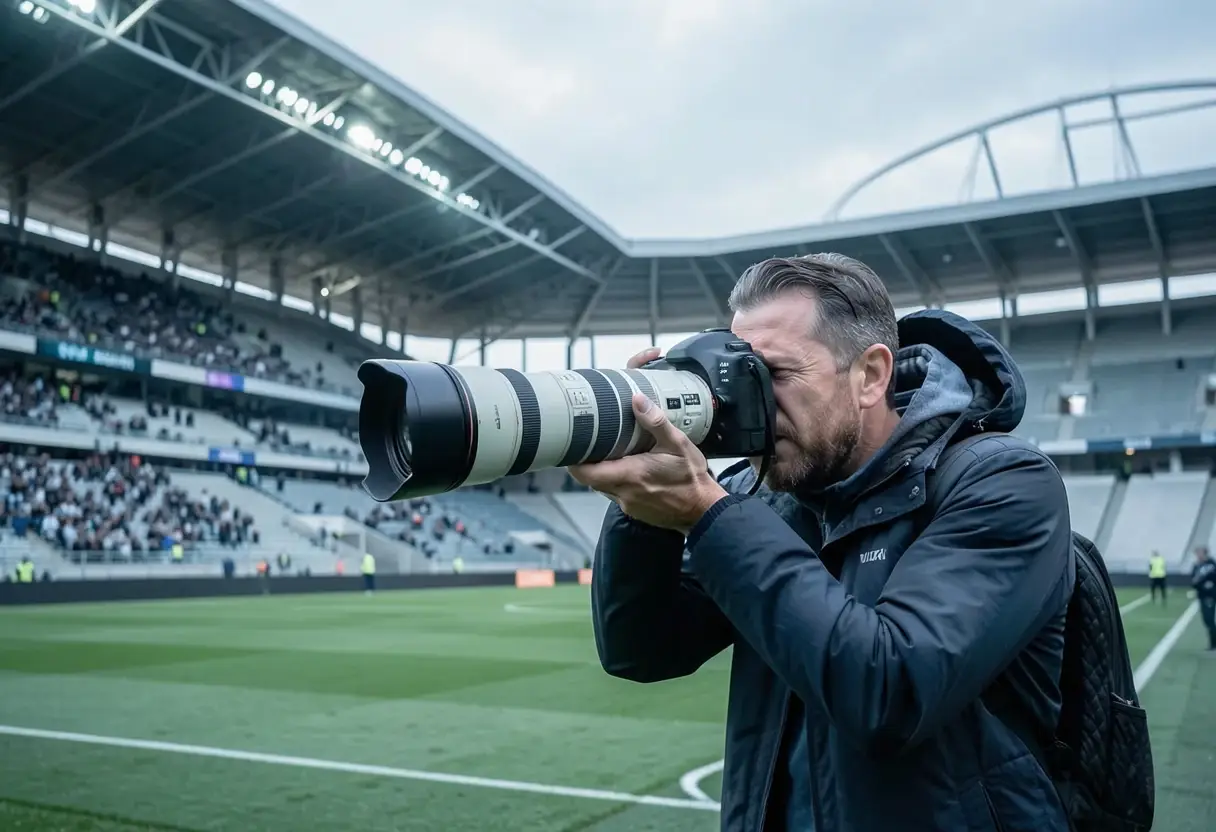
A sports photographer carried four camera bodies and seven lenses to the Glasgow 2026 Commonwealth Games. Most days, only three bodies left the hotel. The fourth stayed behind as a backup, unless it served as a remote camera at a venue.
The photographer has spent 11 years in sports photography, with roots in swimming coverage. The kit for Glasgow reflected lessons learned at the previous Commonwealth Games in Birmingham in 2022. Back then, the transition from DSLR to mirrorless was underway. Nikon's Z-mount system was expanding, but availability was uneven. The photographer brought trusted F-mount glass instead: the AF-S NIKKOR 120–300mm f/2.8 and a 600mm.
What changed between Birmingham and Glasgow?
The 600mm taught a hard lesson. A focal length that worked for swimming felt restrictive elsewhere. One unexpected movement could push an athlete's limb outside the frame. What was not photographed could not be recovered. The photographer's thinking shifted from asking how close a lens could reach to asking how much freedom it allowed across a whole competition.
By Glasgow 2026, the NIKKOR Z 400mm f/2.8 TC VR S had become a core tool. The 400mm focal length left room for unpredictable movement while still isolating athletes. A built-in 1.4× teleconverter switched the view to 560mm without removing the lens from the camera. It did not replace every telephoto, but it offered a balance of reach and flexibility across many sports.
Why three cameras instead of two?
The working set was one Nikon Z9, one Z8, and a Z6 III, with a second Z8 in reserve. Two cameras cover most situations. The third captures moments the photographer might otherwise miss. Action can move closer faster than a zoom can widen. A finished competition may demand an instant switch from tight action to a wide reaction shot. Another body with another lens mounted removes the delay.
Rain adds another reason. Opening a lens mount in heavy rain invites water into the camera. Keeping lenses mounted on separate bodies limits unnecessary changes. The photographer acknowledged the physical cost of a third camera but said the flexibility earns its place.
Lens-to-body pairing follows the sport, not habit. The Z9, with its integrated grip and larger battery, carries the lens expected to see the most use. Smaller bodies carry the rest. As the photographer put it: "I don't carry three cameras because I need all three for every photograph—I carry three because I don't know when I'll need the third."
What were the seven lenses?
- NIKKOR Z 24–70mm f/2.8 S II — closer action, environmental photographs, general coverage
- NIKKOR Z 70–200mm f/2.8 VR S II — flexible action coverage and portraits
- NIKKOR Z 14–30mm f/4 S — wide environmental and remote-camera perspectives
- AF-S Fisheye NIKKOR 8–15mm f/3.5–4.5E ED — creative wide perspectives
- NIKKOR Z 85mm f/1.2 S — portraits, isolation, selected indoor sports
- AF-S NIKKOR 120–300mm f/2.8E — longer-range action with flexible framing
- NIKKOR Z 400mm f/2.8 TC VR S — distant action and tight frames
The overlap between lenses is deliberate. At a major Games, position choice is limited, and available angles, distances, and backgrounds can favor one lens over another.
How did older glass stay relevant?
The AF-S 120–300mm f/2.8, used with an FTZ adapter, remained in the bag. At the Glasgow horizontal bar competition, the gymnast moved through positions that quickly made compositions too tight. The zoom allowed adjustment without changing lenses. That flexibility mattered more than belonging to the newest generation.
What about the pictures beyond tight action?
Early influence came from Dave Black, including his photograph of Michael Phelps at the 2004 Olympics. Tight telephoto framing drew the photographer in. Over time, though, a portfolio built only on tight action seemed to omit the event itself. At the Glasgow long jump, the 24–70mm incorporated blue sky and clouds. Track cycling saw the 8–15mm fisheye pan with a cyclist, exaggerating the velodrome's sense of space. At 3×3 basketball, the 85mm at f/1.4 softened a busy background and isolated the player.
A spare Z8 worked as a remote at the athletics finish line, paired with the 14–30mm to capture finishing reactions within the wider scene. Three hours of continuous rain tested the setup. Water reached the extending lens barrel despite a rain cover. The lens kept working, though the photographer stopped short of calling it waterproof.
What happens after the shutter?
Working independently, the photographer handles editing and delivery, targeting important photographs within 10 minutes of capture. Captioning demands equal care: athlete, event, date, and action must be correct. Venue Wi-Fi varies, so a phone hotspot serves as backup.
Looking ahead, the priority is a lighter kit that preserves flexibility, shaped by public transport between venues and long competition days. The cameras and lenses will keep changing. What matters, the photographer concluded, is knowing why each one earns its place in the bag.
Key points
- The photographer carried 4 cameras and 7 lenses to the Glasgow 2026 Commonwealth Games.
- The kit evolved from the Birmingham 2022 Games, shifting from DSLR to Nikon Z mirrorless.
- The NIKKOR Z 400mm f/2.8 TC VR S became a core lens, reaching 560mm via built-in teleconverter.
- Important photographs are targeted for delivery to the client within 10 minutes.
- Three hours of heavy rain tested the equipment at Glasgow athletics without failure.
Source: PetaPixel
Grace Kim
Show full bio
Senior reporter covering companies, deals and strategy in Photography exhibitions, photographers, photo books, festivals and awards at Lens Gazette.