A Modified Fujifilm GFX 100 II Meets a Pile of Filters: First Results
A modified Fujifilm GFX 100 II IR meets eleven filters across Colorado aspens and Portland streets, with an 800K Capture One workflow and channel swaps in Photoshop.
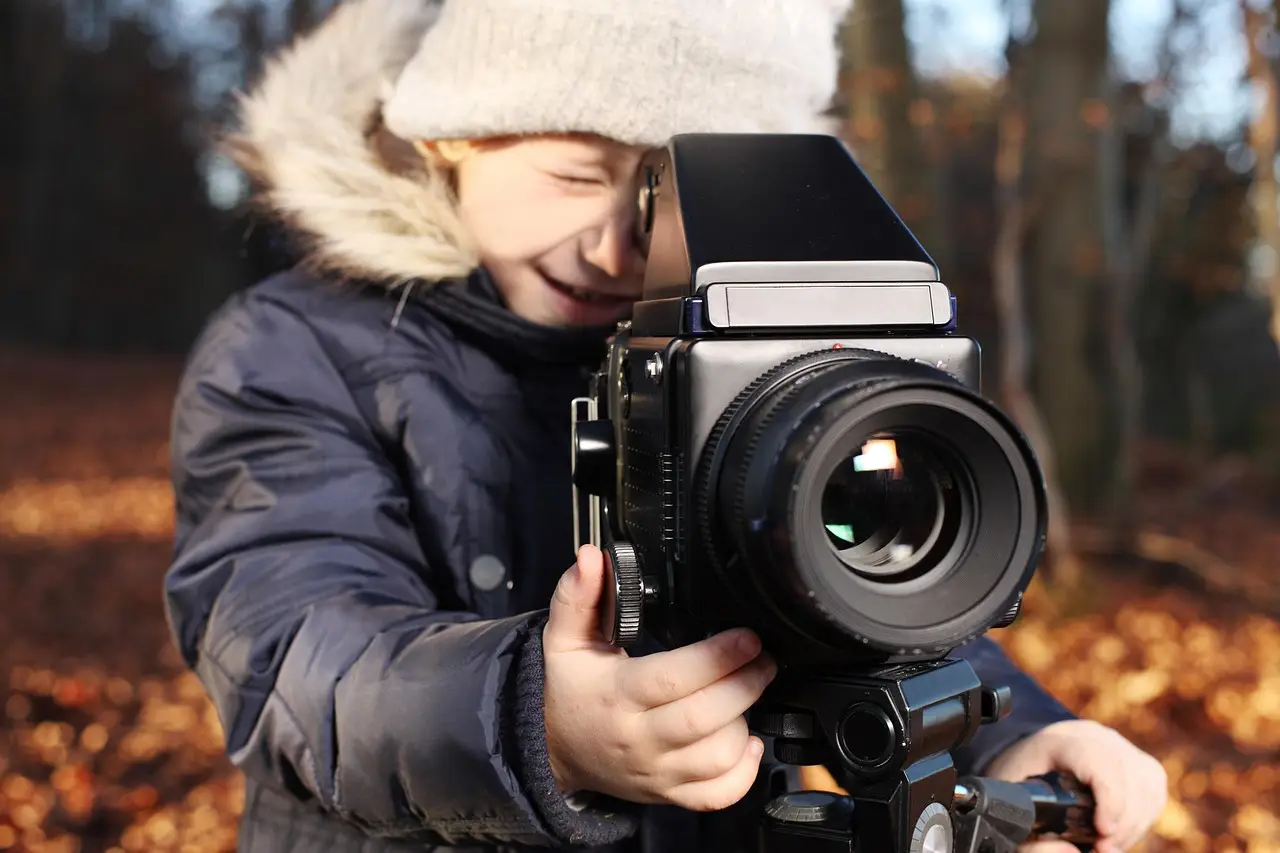
A Fujifilm GFX 100 II IR, modified to record infrared frequencies, has produced its first field results: aspen groves in Colorado's fall color, street scenes in Portland, and a filter-by-filter comparison spanning eleven different pieces of glass. The author, who openly admits to knowing "practically zero about infrared photography," frames the project as the first installment in an ongoing series rather than a finished body of work.
The journey started in Denver and Golden Gate Canyon, where the modified medium-format sensor captured autumn aspens, then continued with a photo walk through the photographer's hometown of Portland. Because the bare IR sensor records the full visible spectrum plus infrared, the author stacked a range of filters in front of it to isolate what each one changes.
What filters went in front of the sensor?
The lineup included:
- a K&F Concept circular polarizer
- a K&F Concept UV MRC
- an ICE IR/UV cut filter
- a K&F Concept Light Pollution Reduction filter
- a Hoya StarScape
- color filters in orange, green, blue, red, purple and yellow
After the initial shoots, the author realized a key omission — a true IR pass filter — and bought one from URTH at Pro Photo Supply in Portland, then shot downtown's Pearl District with the filter on and off to measure the difference.
How do you control the variables?
The method fixed white balance at a single point, used aperture-priority mode at EV0, and held ISO low, with most comparisons shot on a tripod. The modified camera turns everything a "wild red tint" at startup; the author's fix, drawn from community practice, balances white balance against bright green foliage, which neutralizes the red cast and lets the yellow aspens stand out.
The post-processing comparison produced clear rankings. The UV cut and light pollution filters looked similar to each other; the polarizer barely shifted color or tone. The ICE UV/IR cut filter did the most interesting work of the first batch, pulling the needles back toward green and making frames read more like conventional photographs.
What changed in post?
Rebalancing revealed a software constraint that practitioners should note. Capture One allows manual color temperature down to 800K — roughly the value infrared shooters recommend — while Adobe's floor sits at 2000K and demands custom profiles to go lower. Using a white aspen as the eyedropper target across every frame, the author standardized the set and found the IR cut filter preserved greenery while letting the yellow pop.
The channel-swap technique, learned from photographer Rob Shea's tutorials, moved the work into Photoshop. Capture One cannot invert red and blue channels; the workflow trims each channel in levels, then swaps blue for red so skies read blue and foliage reads red. The results inverted expectations: the closer a shot was to the visible spectrum, the stranger it looked flipped, while the red and orange filtered frames landed closest to the classic infrared aesthetic.
What does the IR pass filter actually do?
The URTH filter produced the series' strongest images. In paired shots taken with and without it, a car shifts to a completely different color while surrounding grass pops; mixed yellow, green, red and orange canopies become more uniform but separate harder from the sky. Run through the channel swap, those scenes clicked — foliage held its tone while everything around it shifted. Pushed to black and white, the author argues, infrared shows its real strength, because the eye gravitates straight to the bright leaves. A grab shot from a bridge, balanced to the bridge's white paint, settled into a subtle two-tone look that much of the series shares.
The honest takeaway: the author should have carried the IR pass filter through the entire Colorado shoot. The bare infrared sensor yields distinctive images, the full spectrum plus IR gets stranger, and the IR pass filter delivers the starkest results of all. More experiments are planned if the camera stays on hand, and the series will continue — a reminder that the modified camera perceives the world very differently than our own eyes do.
Key points
- The project used a Fujifilm GFX 100 II IR modified to capture infrared frequencies
- Eleven filters were tested, from a K&F Concept polarizer to a URTH IR pass filter bought at Pro Photo Supply in Portland
- Capture One drops manual color temperature to 800K; Adobe stops at 2000K
- Channel-swap workflow followed tutorials by photographer Rob Shea
- Shoots covered Golden Gate Canyon aspens near Denver and Portland's Pearl District
Source: PetaPixel
James Calloway
Show full bio
Market editor covering people, launches and day-to-day practice in Photography exhibitions, photographers, photo books, festivals and awards at Lens Gazette.