Prada Foundation's 'Global Antiquity' Stages 150 Objects of Ancient Exchange
Nearly 150 objects from 600 BCE to 1000 CE fill Milan's Prada Foundation, curated by Salvatore Settis with Rem Koolhaas — gaps and all. Runs through March 1, 2027.
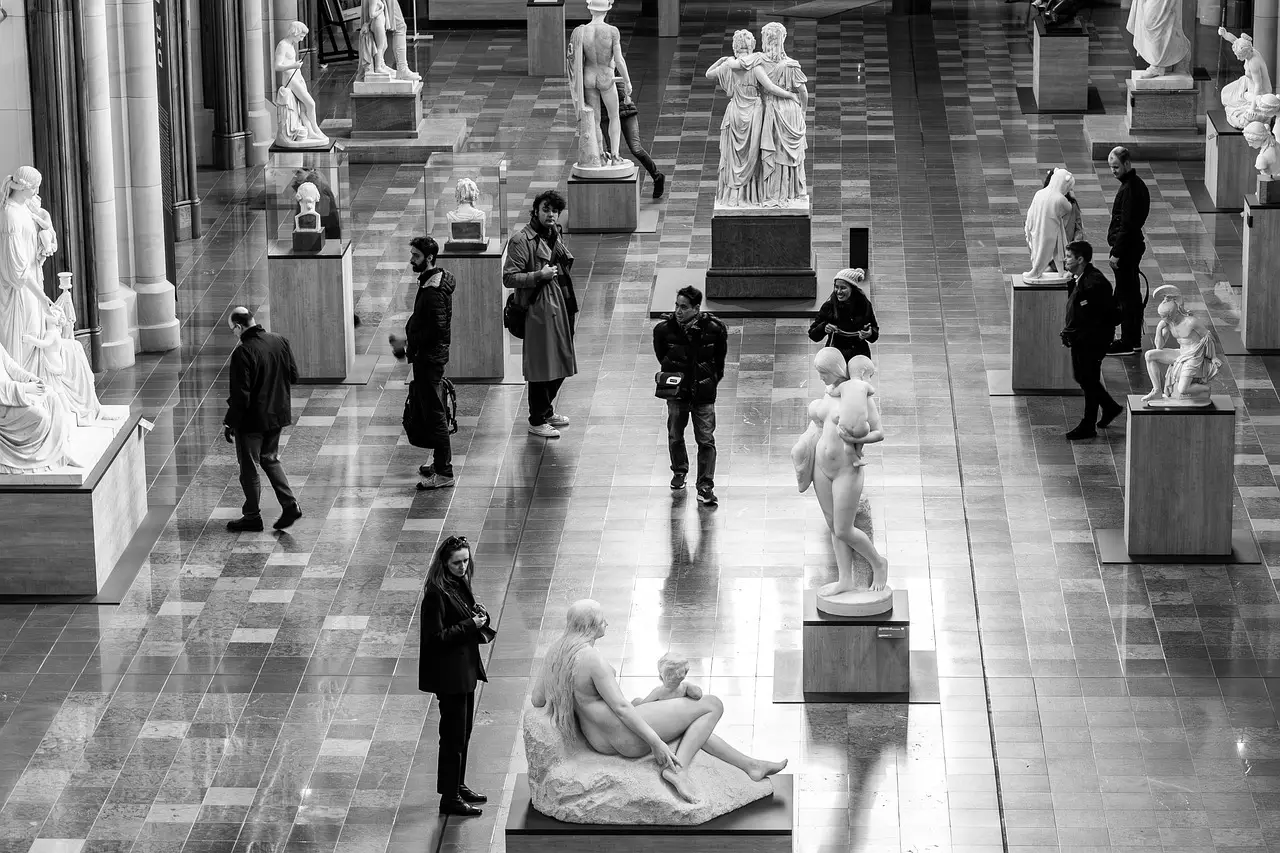
Nearly 150 ancient objects went on view at Milan's Prada Foundation in "Global Antiquity: Cultural Interactions in Afroeurasian Space 600 BCE to 1000 CE," the third exhibition in a trilogy that began with "Serial Classic" and continued with "Recycling Beauty" in 2022. Curator Salvatore Settis re-teamed with OMA founding partner Rem Koolhaas, the Fondazione's original architect, on a design that sets every work on fiberglass grids in a continuous hexagon. No pedestals, no hierarchy. "We wanted to create equality between them and the visitor," Koolhaas said. Every piece sits at eye level. The show runs through March 1, 2027.
What does the exhibition actually argue?
The premise is straightforward: the ancient world was wired together. Imagery, ideas, techniques, languages, theologies, myths and materials moved along trade routes from the Mediterranean to the farthest reaches of Asia, and the objects prove it. A Gandharan Buddha in grey schist — Gandhara sits between present-day Pakistan and Afghanistan — appears again on gold coins struck in Afghanistan with the name inscribed in Greek, again carved from Greek marble at the Egyptian temple of Isis in Berenike, and even in a Christian version in wood, found in Asia Minor. Same figure, four contexts.
Heracles makes a similar journey. The hero in his knotted lion skin shows up as a statue, on Alexandrian coins, wearing the identical tied-lion-skin look on a deity in Gandhara and on Tang dynasty funerary statues in China. Chess, likely invented in northern India in the 6th century, is present in a rock crystal set discovered in Spain and a bone set found in Uzbekistan. Brass astrolabes — conceived in Hellenic Greece, perfected in Arab and Persian territories in the 8th century — arrive on loan from Qatar and a foundation in Verona.
The grave goods steal the show, if beauty is the measure. Two young women from Rome's Syrian community, buried in the 2nd century, took gold jewels, dolls made of Indian ivory and an amber spindle from the Baltic with them. Nearby sits a gold diadem set with Sri Lankan sapphires that belonged to a woman buried in Colonna, near Rome. One woman's tomb, three continents' worth of materials.
What's missing — and why that matters
Here's where the story gets harder, and more honest. The three-year curatorial effort contacted over 60 international institutions for loans. Some said no. An astonishing Scythian gold bow case from the 4th century BCE — decorated with scenes from the life of Achilles, showing how Greek myths crossed the Eurasian steppes — could not leave the National Museum in Ukraine, despite, as Settis put it, huge efforts. "The Ukrainians really wanted to lend the piece, but it was impossible to convince an insurance company to cover it," he said. "A piece from Tehran was agreed, then the war in Iran started." Certain Chinese institutions, the record states plainly, refused to co-operate.
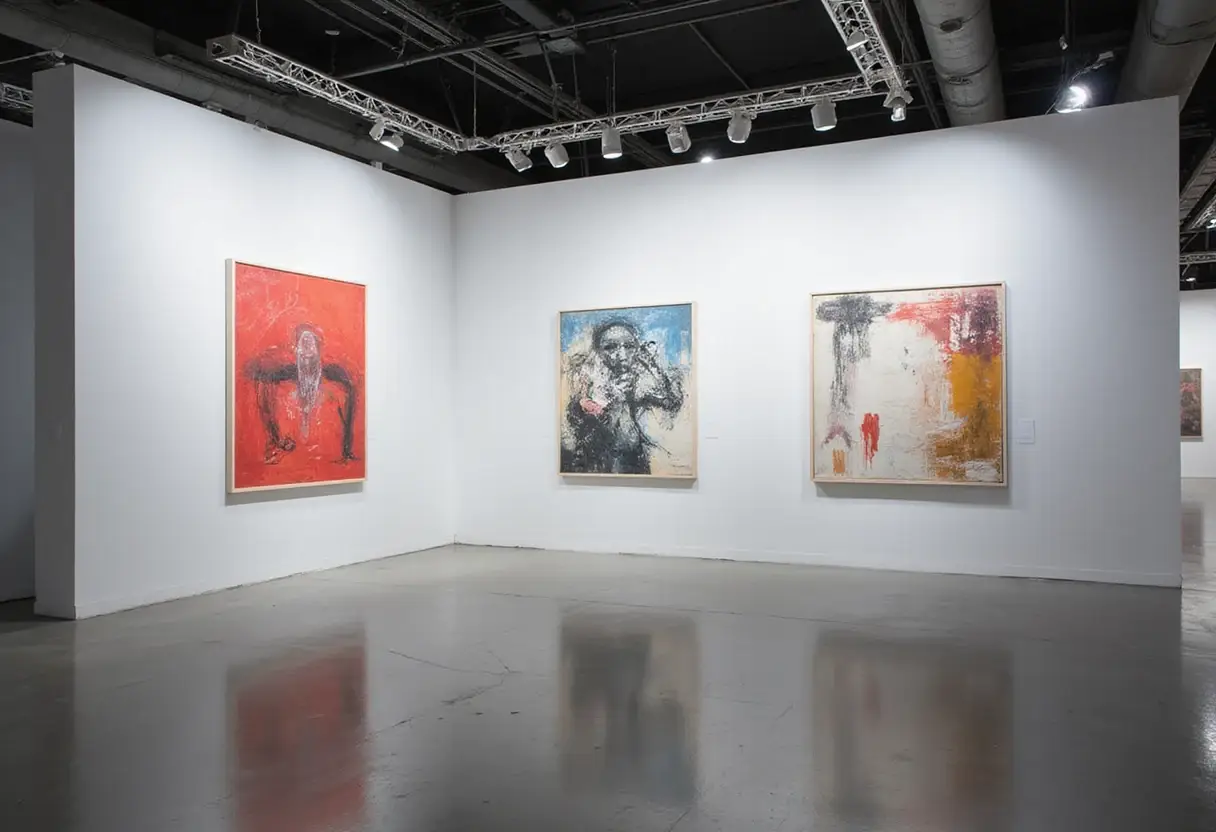
The absences are visible. Images stand where the objects were meant to be, a deliberate scar on the installation.
"I wanted to tell the truth, to talk about today's prohibitions and restrictions," Settis said. Koolhaas added that many loan conversations were really about "contemporary politics." A show about free exchange across borders, mounted in a decade of closed borders, quietly indicts the present.
Is this fashion logic or scholarship?
The institutional context deserves scrutiny. Since the Fondazione opened in Milan in 2015 on a former gin distillery campus, Miuccia Prada has made surprise the house style — a building coated in 24-carat gold leaf, a bar by Wes Anderson, a huge Lucio Fontana ceramic relief from a Milan movie palace in the cinema lobby. "Serial Classic," the first temporary show in the all-glass Podium, examined Roman copies of lost Greek originals, which read as neatly as a riff on fashion's endless re-editing.
Miuccia Prada frames the new show in loftier terms. "It teaches us that the past was not static," she writes in her catalogue introduction. A forthcoming scholarly volume carries an essay by Sanjay Subrahmanyam urging readers to "challenge the conception of a world made of impermeable cultural and political blocs." Fine words. Whether a luxury foundation's platform converts them into anything beyond a well-lit hexagon is the open question.
Koolhaas, for his part, drew a careful line in a talk after last week's opening. "The way things traveled shows a globality," he said, pointedly avoiding the word globalization. "It is a voluntary communication between civilizations, something which creates hybrids, something enriching." Whatever the gloss, the audience through March 2027 will decide for itself — eye level, no pedestals, gaps included.
Key points
- "Global Antiquity: Cultural Interactions in Afroeurasian Space 600 BCE to 1000 CE" is on view at the Prada Foundation, Milan, through March 1, 2027.
- Nearly 150 objects are displayed at eye level on fiberglass grids in a continuous hexagon, with no pedestals.
- The three-year curatorial process contacted over 60 international institutions; loans from Ukraine, Iran and China fell through, with images marking the gaps.
- The show is the third in a trilogy following "Serial Classic" and "Recycling Beauty" (2022), all curated by Salvatore Settis.
- Koolhaas designed the exhibition with the Fondazione's founding architect role at OMA.
Source: galeriemagazine.com
Daniel Okafor
Show full bio
News editor covering companies, deals and strategy in Photography exhibitions, photographers, photo books, festivals and awards at Lens Gazette.