Poster House Gives Günther Kieser His First New York Retrospective
Poster House opens Sculpting Sound on 12 November, tracing Günther Kieser's posters for Hendrix, Bowie and Fleetwood Mac through 11 April 2027, with a first English-language book.
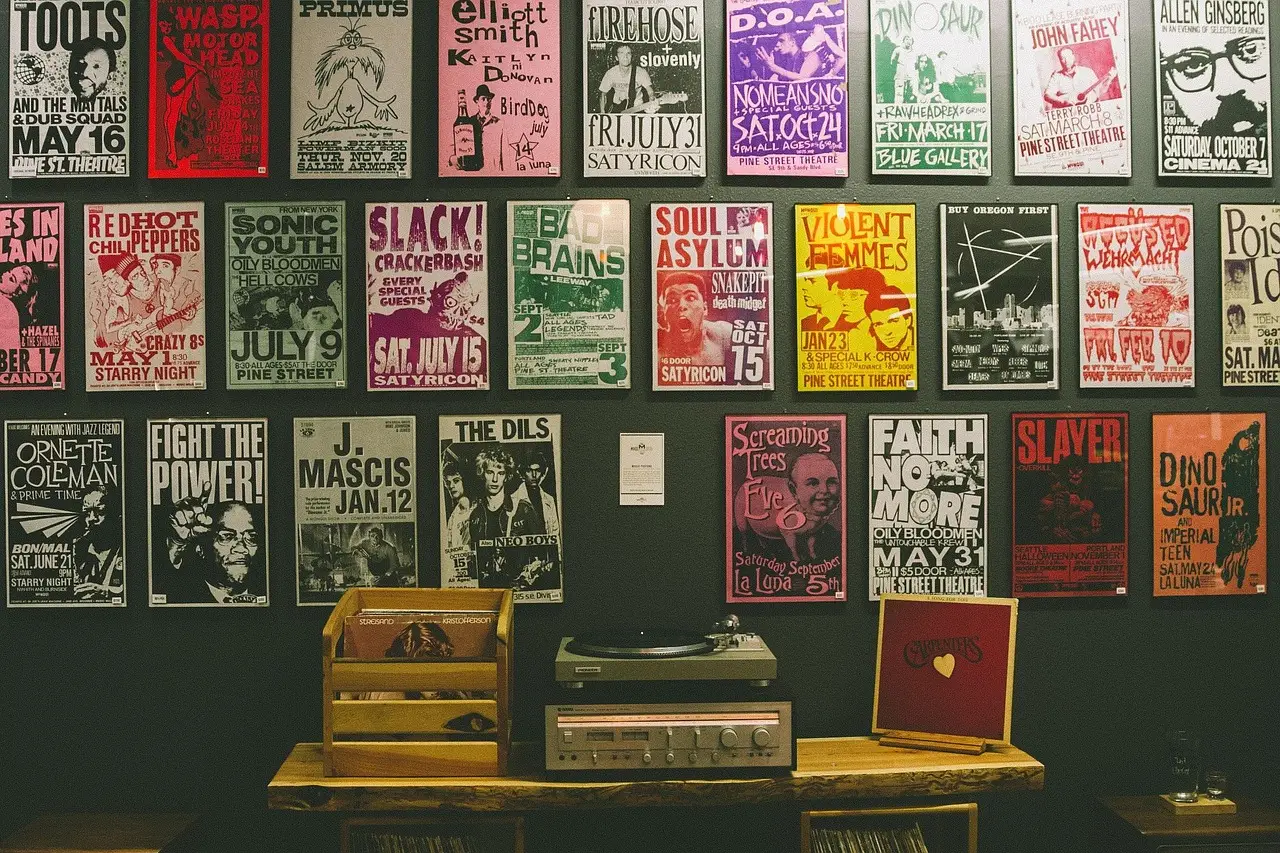
New York's Poster House opens Sculpting Sound: Günther Kieser's Music Posters on 12 November, and the exhibition runs until 11 April 2027, accompanied by the first English-language book on the German designer. Kieser built some of the most singular music poster designs of the 20th century for David Bowie, Jimi Hendrix, Diana Ross and the Supremes, drawing on sculpture, the free-form character of jazz and psychedelic art. For poster designers, the show's importance is straightforward: it canonizes a European approach to music graphics that treated the poster as modeled object rather than flat advertisement.
What does the exhibition actually contain?
The strongest-known work is Kieser's poster for Jimi Hendrix's West German tour, built around a photograph by Donald Silverstein. Since 1969, that poster has been reproduced at least three times. His 1983 David Bowie poster promoted the Serious Moonlight tour — 96 performances that drew 2.6 million fans and became the largest tour by any musician that year.
A 1969 poster for Diana Ross and the Supremes followed the September 1968 release of Love Child, the group's 11th No 1 single on the US pop charts. Kieser also designed the poster for James Brown's first-ever European show, held in Germany; an estimated 90% of tickets for his West German concerts were sold to Black American soldiers.
How did Kieser work with American music in Europe?
The American Folk Blues Festival toured Europe annually from 1962 to 1972, then again from 1980 to 1985, carrying Muddy Waters, Howlin' Wolf, John Lee Hooker and Big Mama Thornton across the Atlantic. Kieser, often collaborating with Hans Michel, created the posters, programs, stage sets and occasionally album cover art for each festival. Each poster featured an acoustic guitar set against various symbols of American culture.
For Martin Luther King Jr's essay written for the inaugural Berlin Jazz Festival in 1964, Kieser made a poster illustrating King's argument that jazz and blues let Black Americans express their struggles against oppression and find hope. He showed Black Americans dismantling stereotypes through tears in the images surrounding the men's faces. A separate jazz poster symbolizes the deconstruction and reinvention of the music during performance, with musicians playing off each other.
In 1966, concert promoters Lippmann + Rau brought folk and country singers from America to perform music rooted in the Appalachians and the Southern swamplands; Kieser depicted the performers in a black-and-white collage of vintage photographs. For another Lippmann + Rau concert honoring Carnival — a predominantly Catholic celebration held annually in Germany on the Sunday before Lent — he designed a poster for a bill that included the Preservation Hall Jazz Band from New Orleans and the Grammy-winning Woody Herman And His Orchestra from New York City.
What can practitioners learn from his technique?
Kieser thought like a sculptor, and he often played the music of the bands he designed for while working. His Ike and Tina Turner poster, made ahead of their 1971 West Germany tour and a year after the album Workin' Together, shows that physical approach in service of the commission rather than as an end in itself.
The clearest example is his Fleetwood Mac piece. Kieser sewed and stuffed a plush doll, embroidered the band's name on its chest and crowned it with the black hat that drummer Mick Fleetwood made his signature. Fleetwood named the doll Mr Wonderful, after the band's second album, and kept it in his personal collection. By May 1970, founding member Peter Green had left and the band moved away from its British blues roots.
His range extended beyond music. For the opening of the exhibition Zeitsignale at the BMW museum, which marked the company's turning points, Kieser built a model of Marlene Dietrich from a scene in the 1930 film The Blue Angel — swapping the barrel she sits on for the hood of a BMW 328, a model produced between 1936 and 1940. He also designed a series for Hessischer Rundfunk, one of Germany's nine regional public broadcasting corporations, including a poster for a psychotherapy documentary on 'ways out of compulsion and fear'.
One further crossover: the poster Kieser made for the German leg of Wings Over Europe — Paul McCartney's band touring from 9 July to 24 August 1972 in an open-topped double-decker bus — became the cover art for the live album Wings over Switzerland.
With its New York run stretching into spring 2027 and a first English-language monograph in tow, the exhibition positions Kieser's modeled, music-driven method as a durable alternative to the flat graphic idiom that dominates concert advertising today.
Key points
- Sculpting Sound runs at New York's Poster House from 12 November to 11 April 2027, with the first English-language book on Kieser
- Kieser's Jimi Hendrix tour poster, based on a Donald Silverstein photograph, has been reproduced at least three times since 1969
- His Bowie poster promoted the 1983 Serious Moonlight tour: 96 performances, 2.6 million fans, the year's largest tour
- James Brown's first European show poster: an estimated 90% of West German tickets went to Black American soldiers
- Kieser's Fleetwood Mac doll poster was named Mr Wonderful by Mick Fleetwood and kept in his personal collection
Source: theguardian.com
James Calloway
Show full bio
Market editor covering people, launches and day-to-day practice in Photography exhibitions, photographers, photo books, festivals and awards at Lens Gazette.