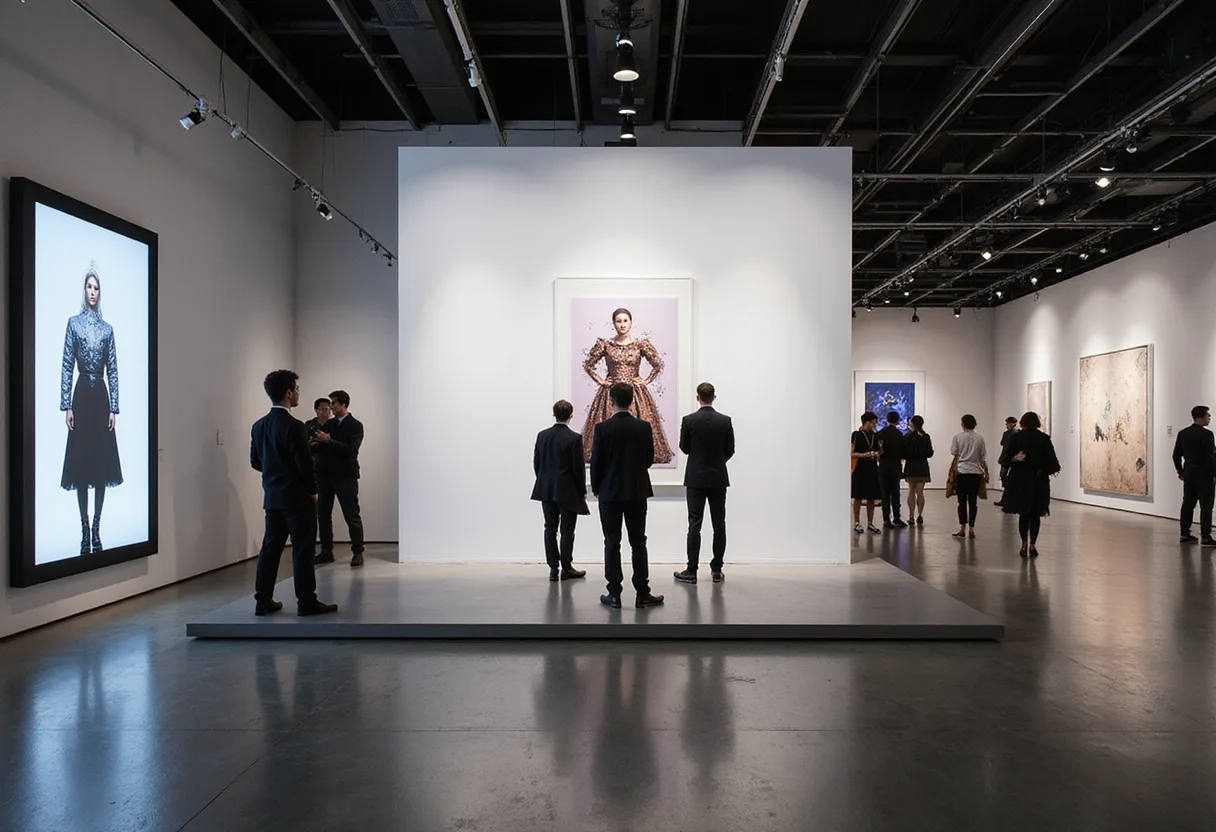
Jumaadi’s shadow play holds centre stage in Surakarta
Jumaadi’s first institutional solo in Indonesia for 30 years brings 147 buffalo-hide puppets, 13 carved hides and a shadow-play performance to Tumurun Museum, Surakarta, through 10 January.
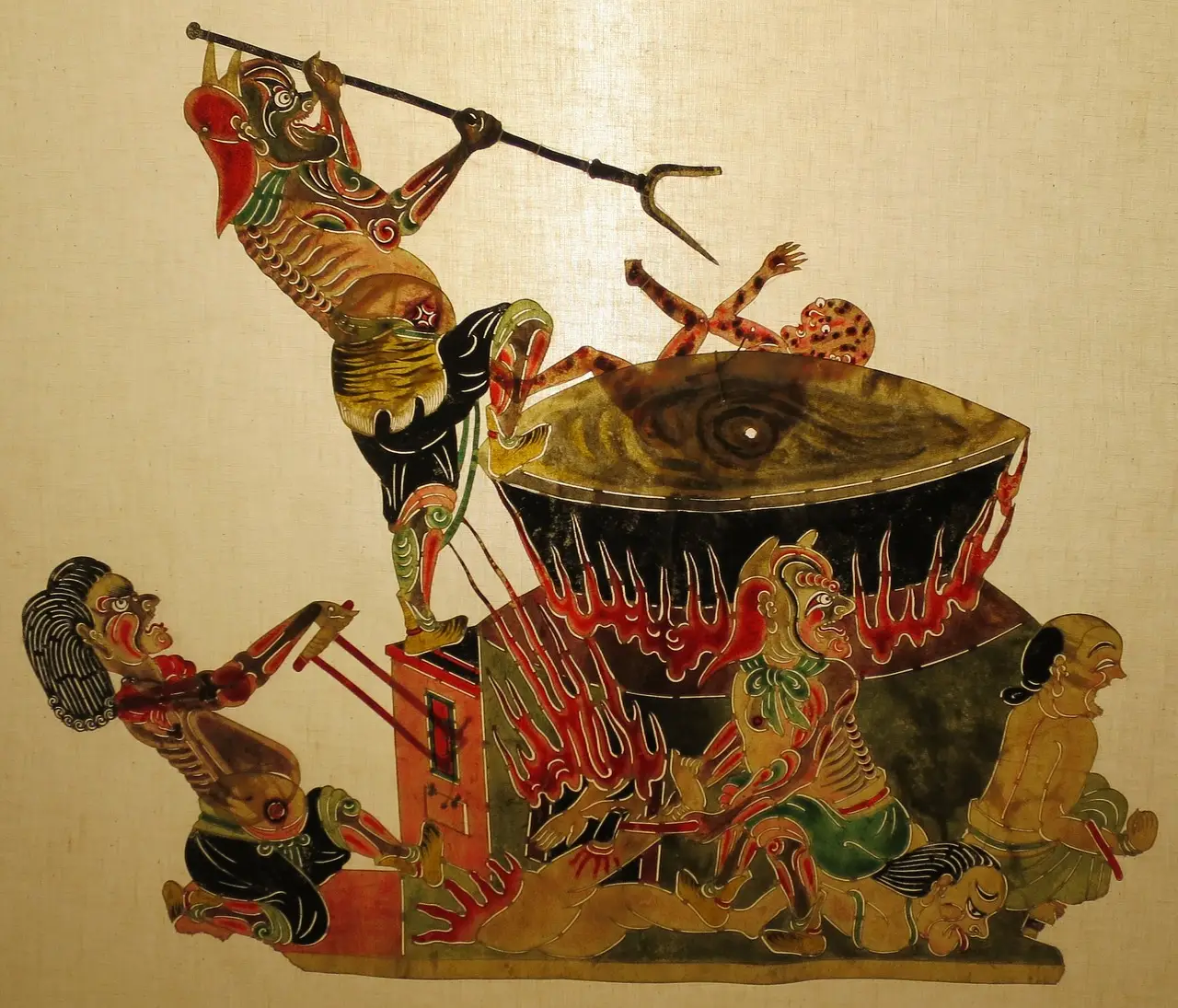
Jumaadi’s first institutional solo exhibition in Indonesia for 30 years brings 147 buffalo-hide wayang kulit puppets to Tumurun Museum, Surakarta.
The show, Jumaadi: Yang Bersayap Rangka Daun (The Winged One with the Skeleton of a Leaf), runs through 10 January.
The ArtReview Asia review in its Autumn 2026 issue describes recent drawings, paintings, installations and a performance, with the performance offered on three occasions and as a recording.
Jumaadi emigrated to Australia 30 years ago; this exhibition examines how he has extended the shadow-puppet tradition of his native country.
Tumurun’s exhibition space moves visitors through three distinct viewing conditions: a dark screening room, a wooden hut filled with suspended figures and a mezzanine of hanging hides.
What does the shadow play reveal?
In a dark screening room lined with paper cutouts, a two-channel black-and-white projection, Laut Masih Menjadi Misteri (The Sea is Still a Mystery, 2023), stages a maritime shadow play.
Fishing boats, gigantic crustaceans and odd plants populate the scene, with scale and silhouette doing the narrative work.
A nearby monitor shows the mechanics: Jumaadi moves the puppets closer to the lamp, then sneaks them out of the screen, their silhouettes blurring to suggest distance.
Right outside, storyboards drawn on pleated paper sit in a glass case, making the exhibition’s workings unusually explicit.
The review’s verdict is apt: “the play is at its most enchanting when its primary elements – light and shadow – speak for themselves.”
Visibility, in other words, is the point at which the illusion risks becoming an explanation.
How do 147 puppets become a social map?
The exhibition presents a versatile approach to wayang kulit, the traditional Indonesian shadow-puppet art, with exaggerated features and generally side-on profiles serving human relationships and natural cycles.
Acrylic paintings on cloth extend the same imaginative field. At the centre, Orang Terkasih dan Bayang Bayangnya Abadi (The Eternal Shadows of Loved Ones, 2025–26) strings 147 colourful buffalo-hide cutouts in rows between the pillars of a wooden hut, according to the review.
Their shadows mingle across the wall, assembling a complex social constellation.
Husband–wife and parent–child pairs share that space with chimeric creatures: humans with twin crocodile heads, and others enveloped by fiery red snakes.
It is a formal proposition as much as a narrative one. Overlapping bodies make kinship visible; cast shadows make something less stable, less certain of its place.
The installation turns the traditional puppet theatre into an original cosmological vision in which physical and spiritual realms intermingle. The social reading arrives before the mythological explanation, which is just as well.
Why hang the hides beside the wall?
The review counts 13 intricately carved buffalo hides on the museum’s mezzanine ceiling, each compressing myriad scenes into one surface.
Every hanging hide can be read recto verso, but their placement close to the walls preserves a double reading. As the review explains, “the most elegant standpoint” allows visitors to see the painted work and its shadow imprinted behind it.
That spatial choice matters. It asks for an image and its afterimage in the same glance.
- In Sepasang Malaikat #2 (A Pair of Angels, 2026), an oval-shaped hide painted in acrylic, a male and female angel swoop towards a kiss with wings spread. A fringe of tiny humans holding hands rings the perimeter, while waves and trees with fetuses for roots fill the rest.
- The review describes Kaki Langit (The Sky’s Feet, 2026) as a foot-shaped puppet charting a journey from life to death. Nodal root systems shelter a curled body in the toes and heel; the sole holds a larger, head-down body and an array of skulls.
- Repeated engravings of plants, birds and circular patterns surround the foot, extending nature’s vocabulary from womb to tomb.
Taken together, these objects make shadow an active social and cosmological medium, not an ornamental effect.
As the exhibition continues through 10 January, the three performance dates and their recording offer the next test: whether visitors can read Jumaadi’s shadows as a social language rather than a technical flourish.
Key points
- Jumaadi’s first institutional solo exhibition in Indonesia for 30 years runs at Tumurun Museum, Surakarta, through 10 January.
- The centrepiece, Orang Terkasih dan Bayang Bayangnya Abadi (2025–26), strings 147 buffalo-hide wayang kulit cutouts between the pillars of a wooden hut.
- Thirteen intricately carved buffalo hides hang from the museum’s mezzanine ceiling, each carrying numerous scenes.
- Laut Masih Menjadi Misteri (2023) is a two-channel black-and-white projection accompanied by behind-the-scenes footage.
- The exhibition’s performance takes place on three occasions and is also available as a recording.
Source: artreview.com
Olivia Hart
Show full bio
Staff writer covering people, launches and day-to-day practice in Photography exhibitions, photographers, photo books, festivals and awards at Lens Gazette.