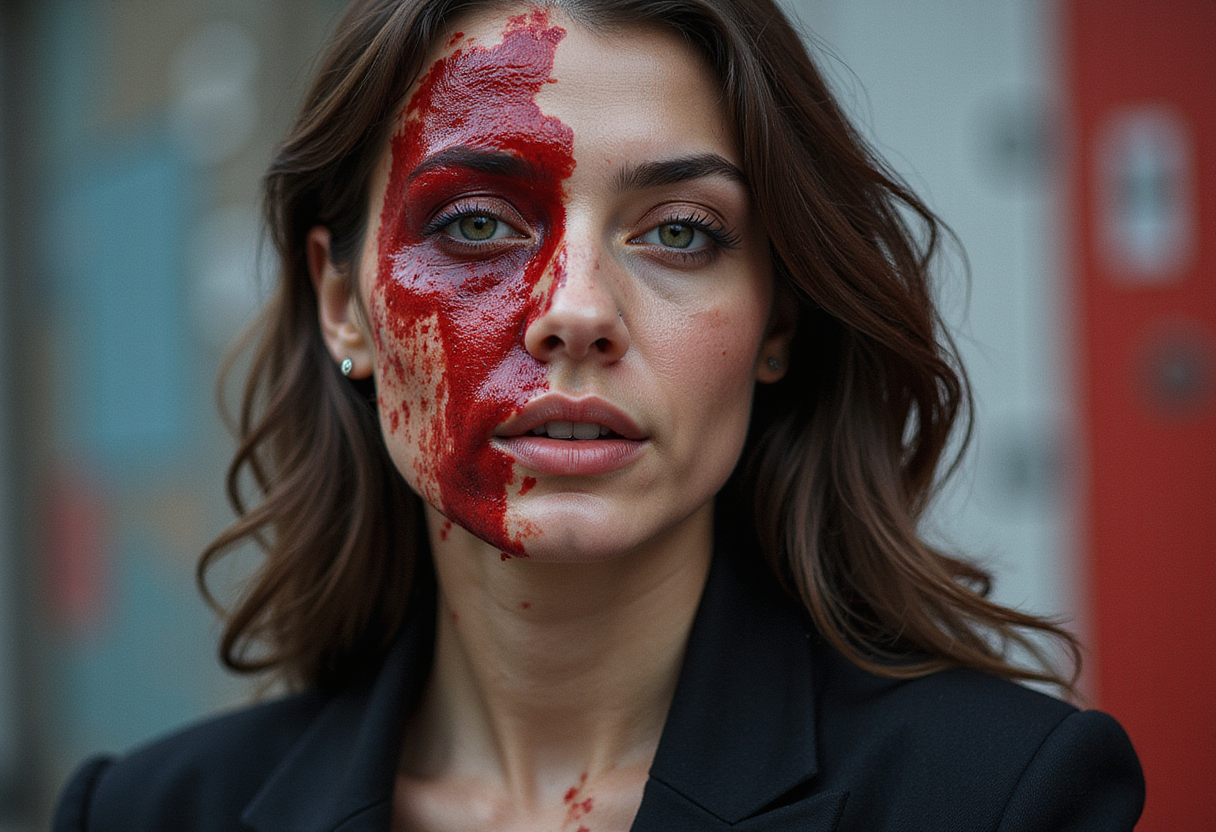
Photographers captured a Bosnian execution. Did the camera move the killer?
New Lines Magazine has published 'They Photographed an Execution in Bosnia. Did They Influence the Killer?' — an investigation into whether photojournalists become actors in the violence they document.
Updated
By Daniel Okafor
New Lines Magazine has published an investigation examining photographers who captured an execution in Bosnia, raising a stark question: did their presence shape the killer's actions?
The piece, headlined "They Photographed an Execution in Bosnia. Did They Influence the Killer?", arrives at a moment when conflict-zone photojournalism faces renewed scrutiny. Its central question treats the camera not as a neutral witness but as a possible actor in events the lens was meant only to record.
That framing matters. Photojournalists have long argued their role is documentary — to bear witness, to make visible, to hold accountable. New Lines is asking whether that role can also be interventionist. When a killer knows the shot will be taken, and published, does that change the calculus of what happens next?
What does this question change for the trade?
Bosnia carries a specific weight here. The conflicts of the 1990s produced some of the most circulated atrocity imagery of the late twentieth century — images that shaped international perceptions of ethnic cleansing. Those images are still contested, still cited, still used as evidence and as accusation. A serious inquiry into how photographers operated during that period deserves attention even when its evidence is uncomfortable.
The New Lines investigation appears to treat the question as empirical rather than philosophical. The phrase "did they influence" is a claim a reporter can test — through timelines, through testimony, through the photographs themselves and what they show about positioning, distance, and the killer's awareness of the camera. What makes such an investigation credible is its willingness to follow the evidence into uncomfortable places.
If the reporters found that photographers' presence changed behavior at the scene, that conclusion needs sources, documents, and a method the reader can audit. If the evidence points the other way — that the killings would have proceeded identically with or without the lens — that finding also needs the same scaffolding. Either way, the reader should be able to trace the chain.
The piece lands in a media environment where every conflict photograph now arrives with a frame. Agencies caption images in ways that shape narrative, and social platforms circulate those captions stripped of context — a single frame now travels faster than the newsroom memo that once vetted it. New Lines is stepping into that contested space and asking what the documentary record itself does not show.
There is a second-order question the title does not ask but the reader should: who is accountable for the photograph? The photographer who pressed the shutter? The outlet that published? The viewer who shares the image as evidence of something it may not show? New Lines appears to treat this as more than a thought experiment.
The profession has paid less attention to what the camera does to the perpetrator than to what the camera does to the victim. New Lines is, in effect, asking whether the standard ethics of photojournalism need a clause on this. It is the kind of question that, once raised, does not go back in the box.
The investigation will draw detractors. Some will argue that any discussion of the photographer's effect on the killer shifts blame from perpetrator to witness. Others will argue the opposite — that to ignore a documented influence is its own form of distortion. Both positions have merit. New Lines has chosen to test the question rather than resolve it by assertion.
For the photojournalism community, the practical stakes are real. War photographers and conflict reporters operate under physical and psychological conditions that already narrow the space for ethical deliberation. Adding a new variable — the camera as possible participant — raises the cost of every future decision in the field.
That cost may be worth paying if it produces more honest reporting. The alternative is a documentary record that pretends to be transparent about what happened, while concealing what the act of taking it changed. The lens can never be a perfect witness. The trade has long known that. New Lines is asking whether it has been honest about the gap.
New Lines Magazine has opened this inquiry. The work now is to see whether its evidence can carry the weight of its question — and whether the photojournalism trade is ready to follow that evidence wherever it leads.
Key points
- New Lines Magazine published the investigation titled 'They Photographed an Execution in Bosnia. Did They Influence the Killer?'
- The piece poses the central question of whether photojournalists' presence at the scene shaped the killer's actions
- Bosnia's conflicts of the 1990s produced some of the most widely circulated atrocity imagery of the twentieth century
- The investigation appears to test its question empirically through timelines, testimony, and analysis of the photographs themselves
Source: Google News: World Press Photo
Daniel Okafor
Show full bio
News editor covering companies, deals and strategy in Photography exhibitions, photographers, photo books, festivals and awards at Lens Gazette.