Mail & Guardian Publishes Photo Essay Linking Two Displacement Histories
Mail & Guardian photo essay 'The photographs that connect two histories of displacement' uses a single comparative sequence to frame two forced-migration archives in dialogue.
Updated
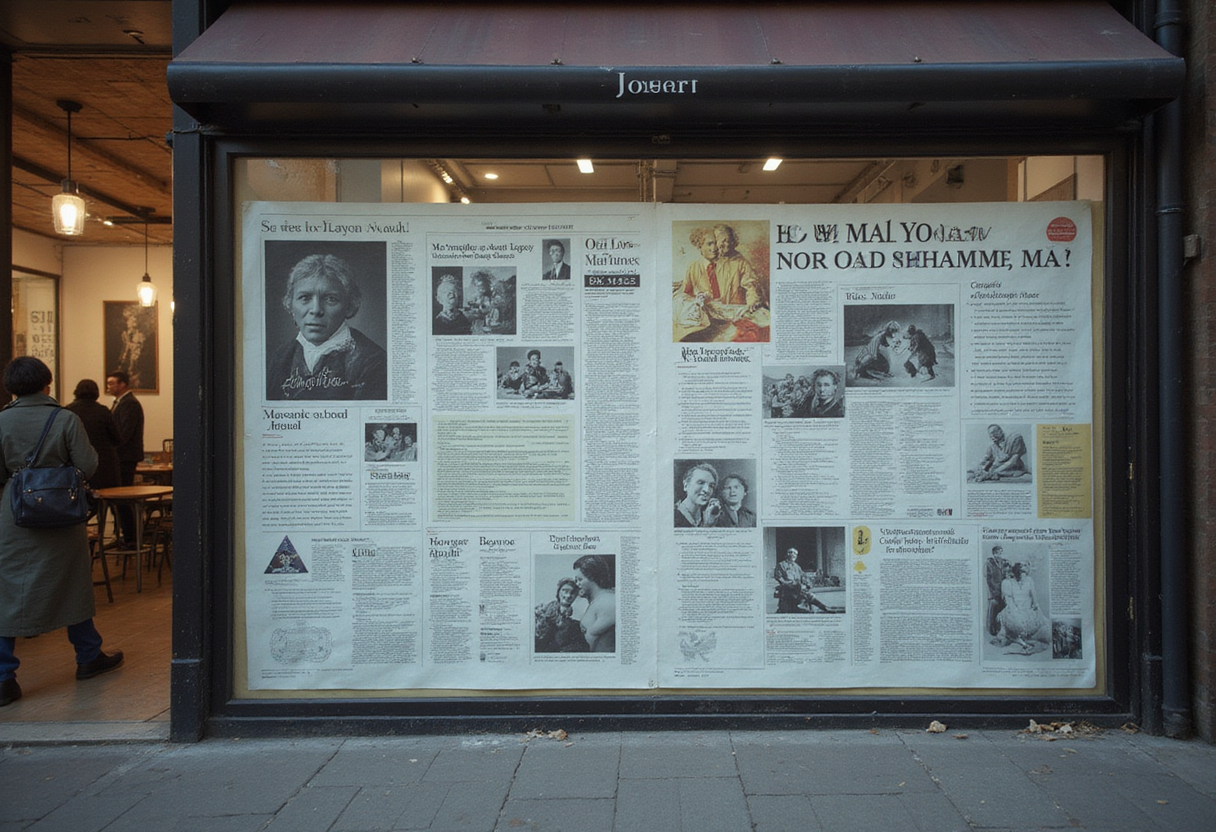
The Mail & Guardian has published a photo essay titled "The photographs that connect two histories of displacement," framing a single body of work as a hinge between two displaced communities whose stories rarely share a frame.
The South African weekly, founded in Johannesburg in 1985 as the Weekly Mail and renamed in 1994, has for four decades used its picture pages to interrogate forced movement, from apartheid-era removals to cross-border displacements of the post-apartheid era. A photo essay that asks viewers to read two histories through one set of images extends that editorial tradition into a comparative, image-led register.
What does the title promise?
The headline gestures toward a curatorial proposition familiar from contemporary photography: the use of a single portfolio, or a parallel pair of portfolios, to expose structural similarities between distinct events. Photographers from Fazal Sheikh, who has documented refugee communities across multiple continents, to David Goldblatt, whose long South African career set a precedent for slow comparative attention, have built bodies of work on this method. The Mail & Guardian framing suggests an essay that operates in the same register — not illustrated journalism, but a sequenced argument in pictures.
Why link two histories rather than document one?
Comparative photo essays carry a specific rhetorical risk. When a photographer places a 1956 removals image beside a present-day frame, the pairing can aestheticise suffering through formal rhyme. The strongest work in this mode refuses that rhyme, using seriality to underscore difference as well as repetition. A photo essay titled in these terms sits within a tradition the paper's picture editors have long championed.
What does displacement look like in South African photographic practice?
South African photography has produced some of the most rigorous archives of forced movement anywhere. The Market Photo Workshop, founded in 1989, trained generations of image-makers whose work documents internal displacement. Santu Mofokeng's archival projects and his later photographs of the Highveld set a benchmark for reflexive documentary practice. More recently, Lindokuhle Sobekwa's Isona extended the lineage into an intimate autobiographical register, while Jo Ractliffe's As the World Turns used landscape to think about absence. A photo essay linking two histories draws on that institutional memory.
How should such a work be read?
The Mail & Guardian's title asks readers to hold two histories in mind at once. That is harder than it sounds. Comparison in photography succeeds when pictures refuse easy equivalence, when one portrait refuses to stand in for another, and the essay uses sequence, scale, and silence to let two stories press against each other without collapsing them. The title, on its own, signals that ambition.
Where does this leave the form?
Photo essays in South African journalism continue to find new institutional homes. The Goodman Gallery has long supported documentary projects; the Johannesburg Art Gallery holds major photography archives; the David Goldblatt archive at the University of Cape Town's libraries anchors a generation of scholarship. A Mail & Guardian photo essay that holds two displacement histories in a single sequence points to the publication's continuing investment in the form, and the question of how the pictures sustain the title's promise is the one readers will judge on the page.
Key points
- Mail & Guardian published a photo essay titled 'The photographs that connect two histories of displacement'.
- The Mail & Guardian was founded in Johannesburg in 1985 as the Weekly Mail and renamed in 1994.
- The Market Photo Workshop was founded in 1989 and has trained generations of South African image-makers.
- The essay's headline frames a single comparative sequence linking two histories of forced migration.
- Santu Mofokeng, Lindokuhle Sobekwa, and Jo Ractliffe are referenced as part of the South African displacement-photography lineage.
Source: Google News: photography exhibition
Daniel Okafor
Show full bio
News editor covering consumer brands and retail at Lens Gazette.