Orlando Museum Turns Its Galleries Over to Carlton Ward Jr.'s Wild Florida
The Orlando Museum of Art exhibits 70 Carlton Ward Jr. photographs of Florida panthers, sharks and bears, surveying his conservation work on the state's wild corridors.
Updated
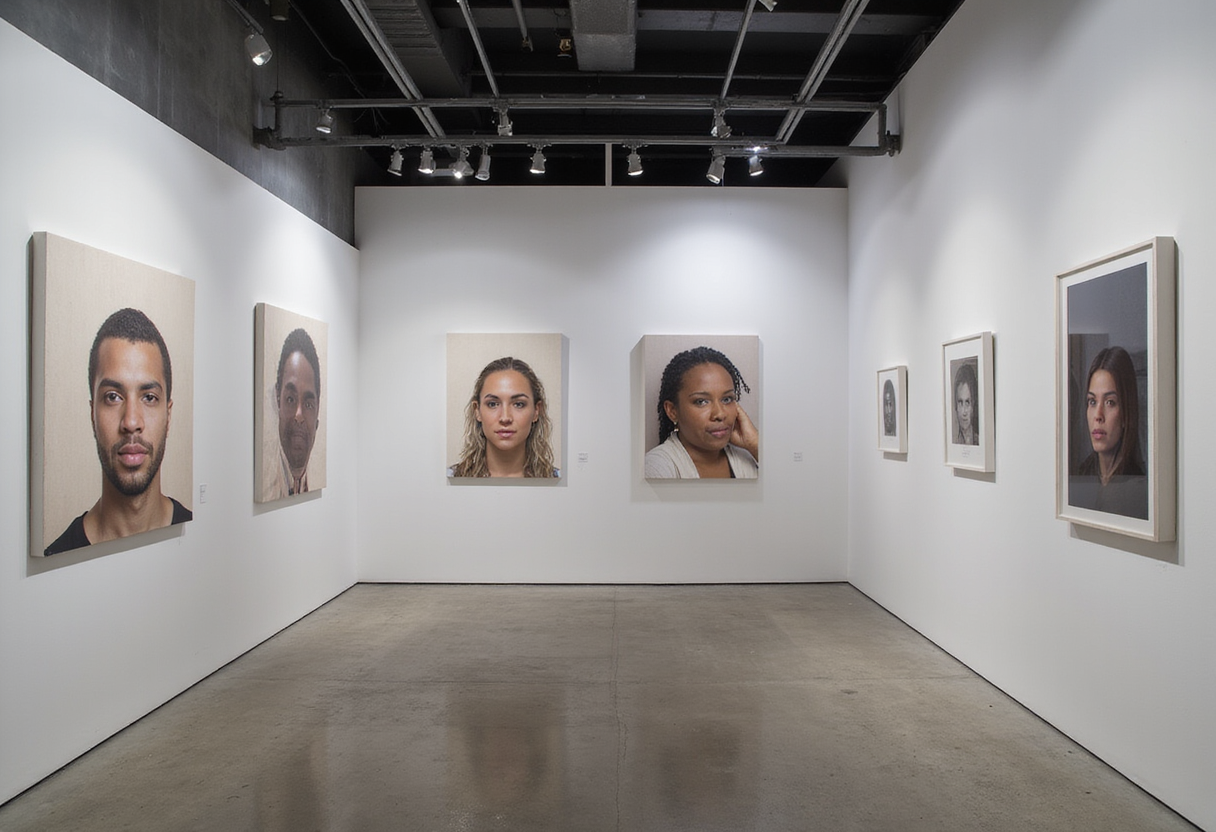
The Orlando Museum of Art has mounted an exhibition of 70 photographs by Carlton Ward Jr., the Florida-based conservation photographer whose work has become inseparable from the campaign to preserve the state's remaining wild corridors.
The show spans the signature subjects that have defined Ward's career: Florida panthers moving through cypress and palmetto at night, sharks patrolling coastal waters, and black bears roaming the longleaf pine forests of the peninsula's interior. Together, the 70 images amount to a portrait of a Florida that exists stubbornly alongside the state's sprawling development — a wilderness of apex predators and rare species that most residents will never see firsthand.
Ward occupies a distinctive position in American conservation photography. A trained ecologist as well as a photographer, he has spent years working with camera traps — remote, motion-triggered rigs that allow him to photograph elusive animals without a human presence disturbing them. The resulting images, often made in total darkness with infrared or low-light technique, carry an eerie intimacy: a panther lit only by the faint glow of a flash, eyes catching the lens at the exact moment it crosses an invisible line in the swamp.
It is this body of work that underpinned the Florida Wildlife Corridor project, the conservation initiative Ward co-founded that has sought to secure a connected stretch of habitat from the Everglades northward to the Georgia line. His photographs have functioned less as decoration than as argument — visual evidence placed before legislators, landowners and the public to make the case that the corridor is real, inhabited and worth funding.
The Orlando exhibition gathers panthers, sharks and bears into a single viewing experience, and the juxtaposition is the point. Each animal represents a different strand of Florida's ecology: the panther, an endangered umbrella species whose survival requires vast connected range; the shark, the indicator of healthy coastal and marine systems; the bear, whose movement patterns helped researchers map the very corridors Ward's cameras now monitor. Seventy photographs give the museum's audience room to see not just individual animals but the through-line of habitat that connects them.
For an institution better known in recent years for controversy than for programming, a large-scale exhibition devoted to a nationally recognized photographer with deep Florida roots marks a deliberate and legible institutional choice. Ward's work sits comfortably in a museum context because it operates on both levels at once: documentary in its purpose and rigorously composed in its execution. His frames borrow something from the patient aesthetics of earlier naturalists working with large-format cameras, even as his methods belong entirely to the present decade of remote-sensing wildlife imaging.
What viewers will find across the 70 pictures is a Florida that resists the state's postcard mythology. These are not sunset beaches or airboat clichés. The light is harsh or absent, the terrain dense, the animals wary. Ward's craft lies in making that difficulty legible — in holding a viewer's attention on a single animal long enough for the stakes of its habitat to register.
The exhibition at the Orlando Museum of Art continues the momentum of Ward's corridor campaign, which has moved steadily from photographic expeditions into policy, land acquisition and public advocacy. As the show brings panthers, sharks and bears before a museum-going public, it extends the work's audience beyond the legislature and the conservation world — and into the galleries of a city whose own growth sits squarely within the landscape these photographs argue to protect.
Key points
- The Orlando Museum of Art is exhibiting 70 photographs by Carlton Ward Jr.
- The show features Florida panthers, sharks and bears among its subjects.
- Ward is a conservation photographer known for work documenting Florida's wildlife and habitats.
Source: Google News: photography exhibition
Grace Kim
Show full bio
Senior reporter covering consumer brands and retail at Lens Gazette.