B.C. Museum Honours Victoria's First Female Photo Entrepreneur
A British Columbia museum exhibition honours Victoria's first female photo entrepreneur, reading her career through the business records that prove she owned and ran the studio herself.
Updated
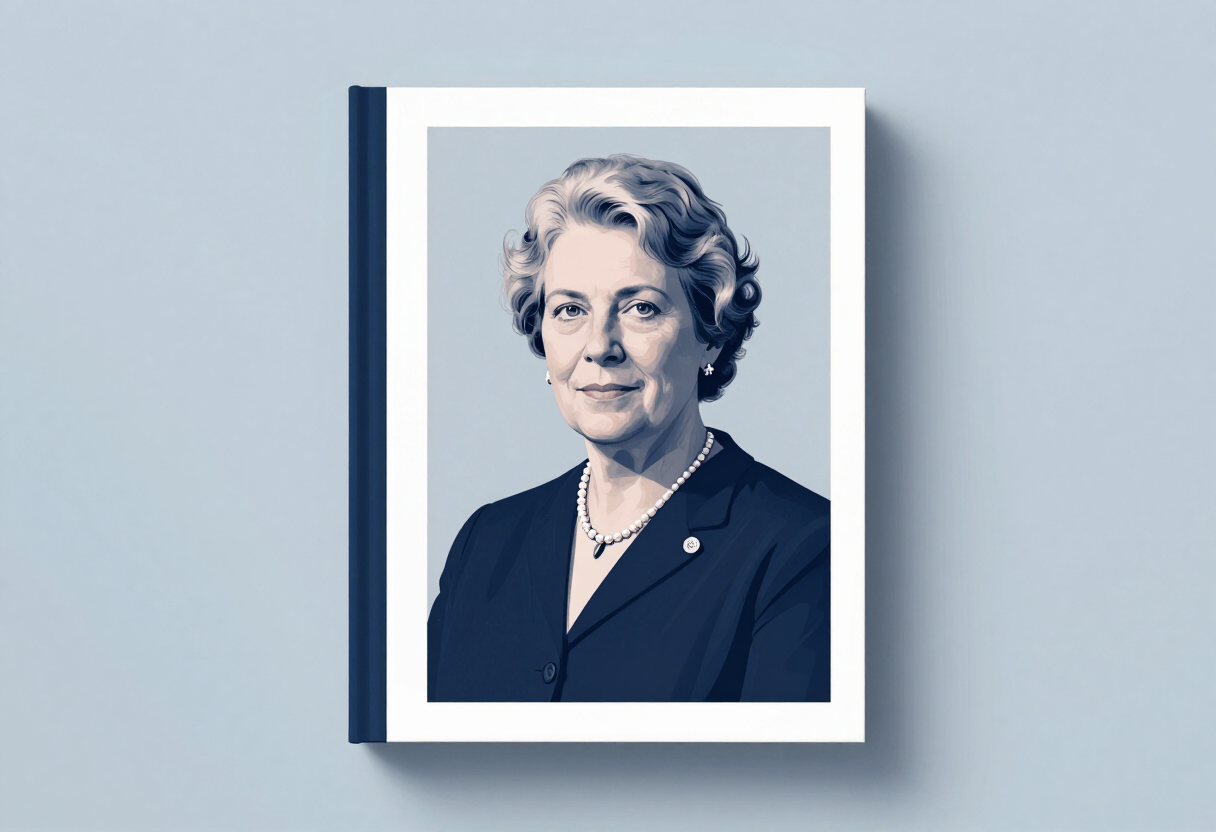
A museum in British Columbia has mounted an exhibition honouring the woman recorded as Victoria's first female photo entrepreneur — a figure who ran her own commercial photography business at a time when the trade was almost entirely a male preserve.
The exhibition, previewed by vicnews.com under the headline "By the book: B.C. museum honours Victoria's first female photo entrepreneur," turns on a simple but telling premise: the story of a woman in photography can be told through the ledgers, registers and business records she left behind, not only through the pictures. The phrase "by the book" in the show's framing signals that approach. Here, the archive itself is the exhibit.
That framing matters. Histories of nineteenth- and early twentieth-century photography on the Pacific coast have often concentrated on the male studio owners whose names appeared on cabinet cards and mount imprints. Women worked in those studios — as retouchers, printers, colourists and, in rare cases, as proprietors — but their labour rarely carried a signature. A museum exhibition that centres a female entrepreneur's own books and business practice reassigns authorship where the historical record has blurred it.
Victoria is fertile ground for this kind of institutional correction. As British Columbia's colonial capital, the city attracted portrait studios early, serving an administrative, mercantile and military clientele that wanted its image made and kept. Running a photographic business there demanded more than technical command of the wet-plate or dry-plate processes of the day. It demanded capital, premises, chemistry, staffing and a steady public — a commercial apparatus that a woman assembling and controlling on her own account was, in that era, genuinely exceptional.
The exhibition's emphasis on the entrepreneur's books speaks to how historians and curators now read photographic archives. Ledgers record sittings, prices, clients and dates — the mundane data from which a portrait economy can be reconstructed. Who sat for photographs, how often, and at what cost tells a social history no single image can. For a female proprietor, the business records also carry evidentiary weight the photographs alone cannot: they prove ownership, decision-making and financial risk borne in her own name.
The honouring gesture is itself institutional news. Regional museums in British Columbia have increasingly worked to recover figures overlooked in earlier, male-dominated narratives of the province's visual culture. An exhibition of this kind does two things at once: it adds a name and a business history to the canon of Canadian photography, and it models a curatorial method — ledger-led, document-led — that other institutions can apply to their own holdings. Where prints have been lost, dispersed or never attributed, the paper trail of commerce may be the most reliable route back to the person.
What the display cannot fully recover, of course, is aesthetic judgement. Commercial portraiture of the period followed studio conventions — painted backdrops, headrests, standard poses, contact-printed mounts — and an entrepreneur's surviving output may be indistinguishable, image by image, from that of her competitors. The significance lies elsewhere: in the fact of the enterprise, in its persistence, and in the documented presence of a woman's name above a photographic door in colonial-era Victoria. That is a claim few of her contemporaries anywhere in Canada could make.
Visitors drawn by the headline will find, if the show delivers on its premise, a quieter kind of photography exhibition — one in which account books, order forms and studio records carry the argument, and in which the strongest image may be the portrait of a business rather than of any single sitter.
The exhibition stands as part of a broader institutional turn in British Columbia toward recovering the province's overlooked photographic practitioners. If the museum continues to mine its documentary holdings in this way, further forgotten figures of the colonial and post-colonial camera trade are likely to surface in seasons to come.
Key points
- A museum in British Columbia has opened an exhibition honouring Victoria's first female photo entrepreneur.
- The exhibition's 'by the book' framing centres on the business records and ledgers that document her ownership of a photography studio.
- The show contributes to a wider institutional effort in British Columbia to recover overlooked figures in the province's photographic history.
Source: Google News: photography museum
Olivia Hart
Show full bio
Staff writer covering industry trends and analytics at Lens Gazette.