Clyde Butcher Looks Back on Six Decades of Photographing the Everglades
Clyde Butcher, the large-format photographer who made the Everglades his lifelong subject, reflects on 60 years of work as retrospective exhibitions survey his career.
Updated
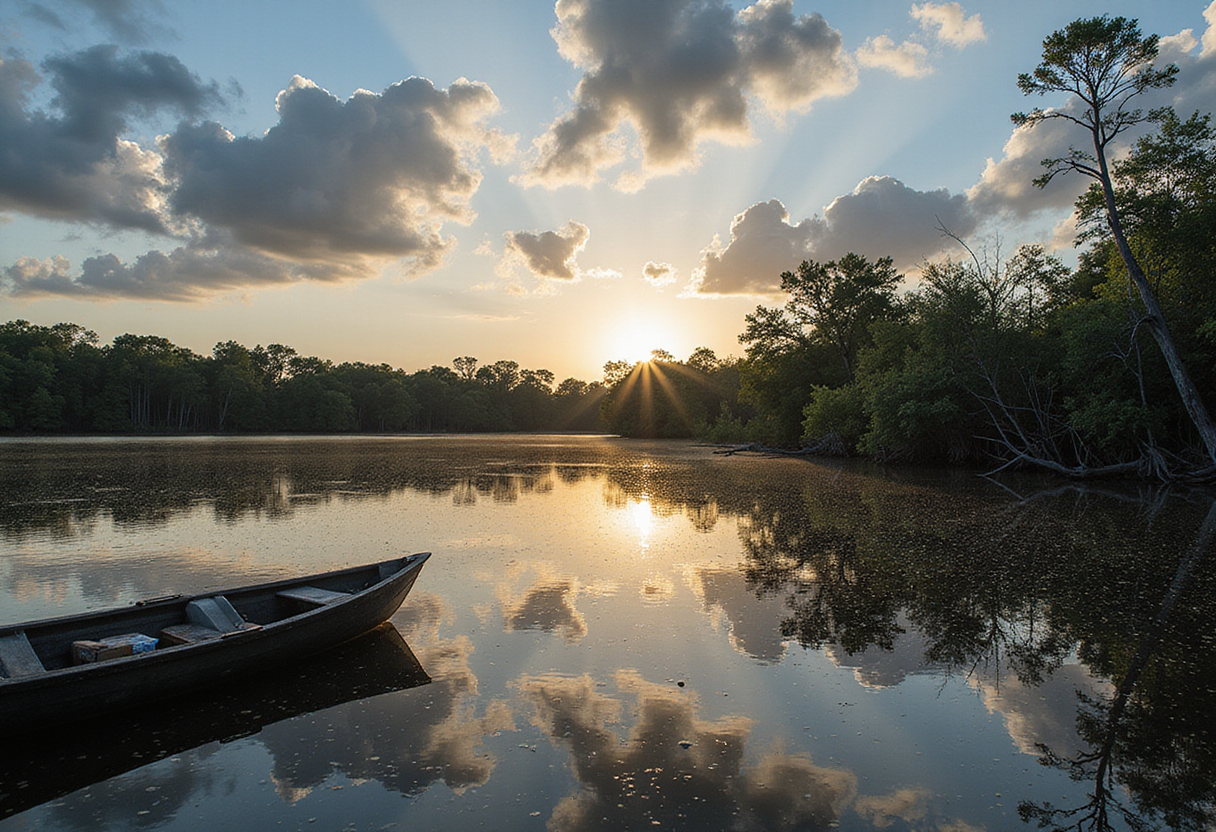
Clyde Butcher, the photographer whose large-format black-and-white images of the Everglades have made him one of Florida's most recognizable wilderness chroniclers, is reflecting on a career that now spans 60 years as retrospective exhibitions bring his work back before the public.
Butcher's name has long been tied to the swamps and cypress stands of South Florida. Over six decades he has built a body of work centered on the wetlands that most Floridians and tourists pass by, photographing them with the patience and scale more often associated with the American West tradition of Ansel Adams. His prints, made with a large-format view camera, render the Everglades in sweeping tonal detail: tangled roots, black water, shafts of light through cypress canopies.
The current moment of retrospection comes as institutions revisit that long career. The Orlando Sentinel reports that retrospective shows are now surveying Butcher's decades of work, giving audiences a chance to trace the arc of a photographer who chose the swamp as his lifelong subject when few others saw pictorial possibility in it.
Butcher's path to the Everglades was not straightforward. He arrived at landscape photography through an early career in architectural work before turning fully to wilderness imagery. What set him apart in Florida was his refusal to treat the Everglades as scenery. His images emphasize the region's texture and immensity rather than postcard prettiness, and his slow, deliberate process mirrors the environment itself: wading into the water, setting up heavy equipment, and waiting for conditions that can take days to arrive.
That commitment has earned him a particular place in the state's cultural life. His photographs have functioned simultaneously as art and advocacy, and they have been credited with helping shape public perception of the Everglades at a time when the ecosystem faces persistent threats from development and water management. A photograph of a seemingly endless marsh, printed at mural scale, makes an argument that speeches rarely match.
The retrospective framing matters. Sixty years is long enough for a body of work to be assessed on its own terms, and Butcher's career now invites the question of how his swamp landscapes will sit within the broader history of American landscape photography. He worked in a tradition that runs through Adams and the Sierra Club-era wilderness imagery, but his subject was subtropical wetland rather than western grandeur — a choice that looked unfashionable when he made it and prescient now, as Florida's wild places have shrunk around his tripod holes.
For audiences, the retrospective shows offer something the individual prints, sold through his Venice, Florida, gallery over the years, could not: the cumulative view. Seen together, the images chart both an artist's development and a landscape's decline, two timelines that Butcher's camera has recorded in parallel.
At an age when most photographers have long since stopped hauling a view camera into waist-deep water, Butcher continues to speak about his work with the conviction of someone who believes the Everglades still need an interpreter. The retrospective exhibitions suggest that institutions agree — and that the next chapter of his career may be less about making new pictures than about securing the place of the ones already made.
Key points
- Clyde Butcher has spent 60 years photographing the Everglades in large-format black and white
- Retrospective exhibitions are currently surveying his career
- His prints, sold through his Venice, Florida, gallery, have helped shape public perception of the Everglades
Source: Google News: photographer retrospective
James Calloway
Show full bio
Market editor covering industry trends and analytics at Lens Gazette.