Oppo Puts Three 200MP Sensors in One Phone, Then Holds the Reins
Three 200MP sensors, 17 stops of claimed dynamic range and a two-day battery — but Oppo's software, not you, picks the resolution, and its AI zoom can't be fully disabled.
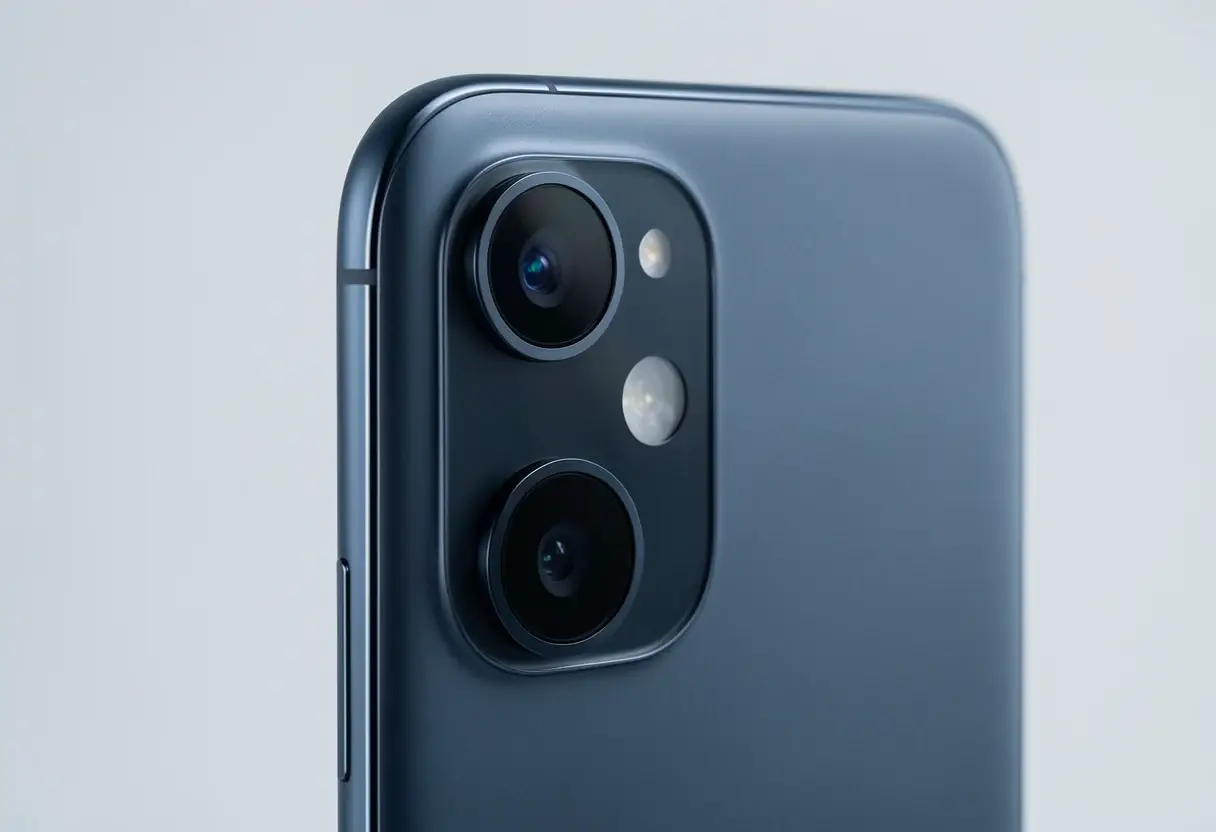
Oppo's Find X10 Pro Max is the first smartphone to carry three 200-megapixel rear cameras, and after testing it in Toronto, Lisbon and Mallorca, the verdict is simple: it's a genuinely fine camera that keeps too many decisions for itself.
The hardware alone earns attention. The main camera pairs a Samsung Isocell HPC Type 1/1.3 sensor with an f/1.5 lens and OIS at a 24mm equivalent. The 70mm periscope telephoto uses an Isocell HP5 Type 1/1.56 sensor at f/2.1. The 124-degree ultra-wide reuses that same sensor at f/2.2 with autofocus but no stabilization — and it's one of the largest ultra-wide sensors on any phone, with visibly better light capture and macro bokeh than its predecessors.
Who decides the resolution?
Not you. Across the range from 0.5x to 9.9x hybrid zoom, the phone shoots 26-megapixel images when it judges the light adequate, and drops to 12 when it doesn't — with no setting to override it. Vivo, Apple and Samsung all let you pick a middle resolution yourself. The workarounds are Hi-Res mode at 50 or 200 megapixels, or Master mode's JPEG Max and RAW Max at 50, with full manual control. RAW Max, as on the Find X9 Ultra, is a bracketed image with dynamic range applied; standard RAW stays at 12.
What is Oppo actually chasing?
Natural authenticity, built on three pillars the company names True Detail, True Color and True Cinema. The Lumo pipeline integrates Hasselblad color science with a 24-channel True Color Camera to dodge aggressive HDR and oversaturation, and DeepPix HDR claims 17 stops of dynamic range. The reviewer found color that's neither Apple-saturated nor Samsung-dull, consistent across all three lenses — though deep contrast sometimes struggles to hold balance, and low-light long exposures are less consistent than Action mode.
The AI is the weak flank. Rendering artifacts can appear at 6x hybrid (140mm equivalent) and clearly kick in at 13.2x (308mm), and it can't be fully switched off. The irony is plain: a phone marketing authenticity uses machine learning to deliver it. Zoom crops at 80–120x work on buildings and the moon; on moving people, vehicles or signage, results are, in the reviewer's word, disastrous.
What about the video and the teleconverter?
Video gets its biggest upgrade yet: 4K at 120fps on all three rear cameras, plus Dolby Vision, O-Log2 and Open Gate recording, the latter using nearly the full sensor for 25% more vertical and 66% more horizontal room in post. There's no 4K at 240fps, and Vivo still leads here.
The optional Teleconverter Kit — possibly priced near $500, unconfirmed — is well-built, lighter than before, with better stabilization. It's also locked to auto mode: no manual controls, no RAW, no high-res JPEG, no XPan. The mount blocks the other two lenses, and engineers told the reviewer in Berlin, on the eve of IFA in September, that widening it would strain the mount. Their response to complaints: "stay tuned."
Is it a good phone underneath?
Yes, and that's half the story. The 8000mAh battery (7150mAh in Europe) delivers up to two days of use, charges fully in 30 minutes, and Oppo claims 80% capacity after five years. MagSafe was left out to save 0.4mm of thickness, so cases handle magnets. The 6.78-inch LTPO screen runs at 144Hz and 2000 nits, with 95% BT.2020 coverage via custom OLED materials Oppo says extend display lifespan by 30%. A Dimensity 9600 chip, 12–16GB RAM, IP69 rating and seven years of updates round it out. The "Luna White" finish nods to the Hasselblad 500 ELM, the first camera on the lunar surface.
At €1,800 to start, against Huawei's Pura 90s Pro Max, Vivo's X500 Pro Max and Xiaomi's 18 Pro Max, Oppo has built what feels like a camera with a phone attached. If it ever lets photographers choose their own resolution and switch the AI off, it'll be the whole story, not half.
Key points
- First phone with three 200-megapixel rear cameras; tested in Toronto, Lisbon and Mallorca
- 8000mAh battery (7150mAh in Europe) charges to 100% in 30 minutes; 80% capacity claimed after five years
- Video: 4K at 120fps on all three rear cameras, plus Dolby Vision, O-Log2 and Open Gate
- Software alone decides 26MP or 12MP output; AI zoom rendering cannot be fully turned off
- Starts at €1,800; teleconverter kit possibly near $500 and locked to auto mode
Source: PetaPixel
Olivia Hart
Show full bio
Staff writer covering people, launches and day-to-day practice in Photography exhibitions, photographers, photo books, festivals and awards at Lens Gazette.