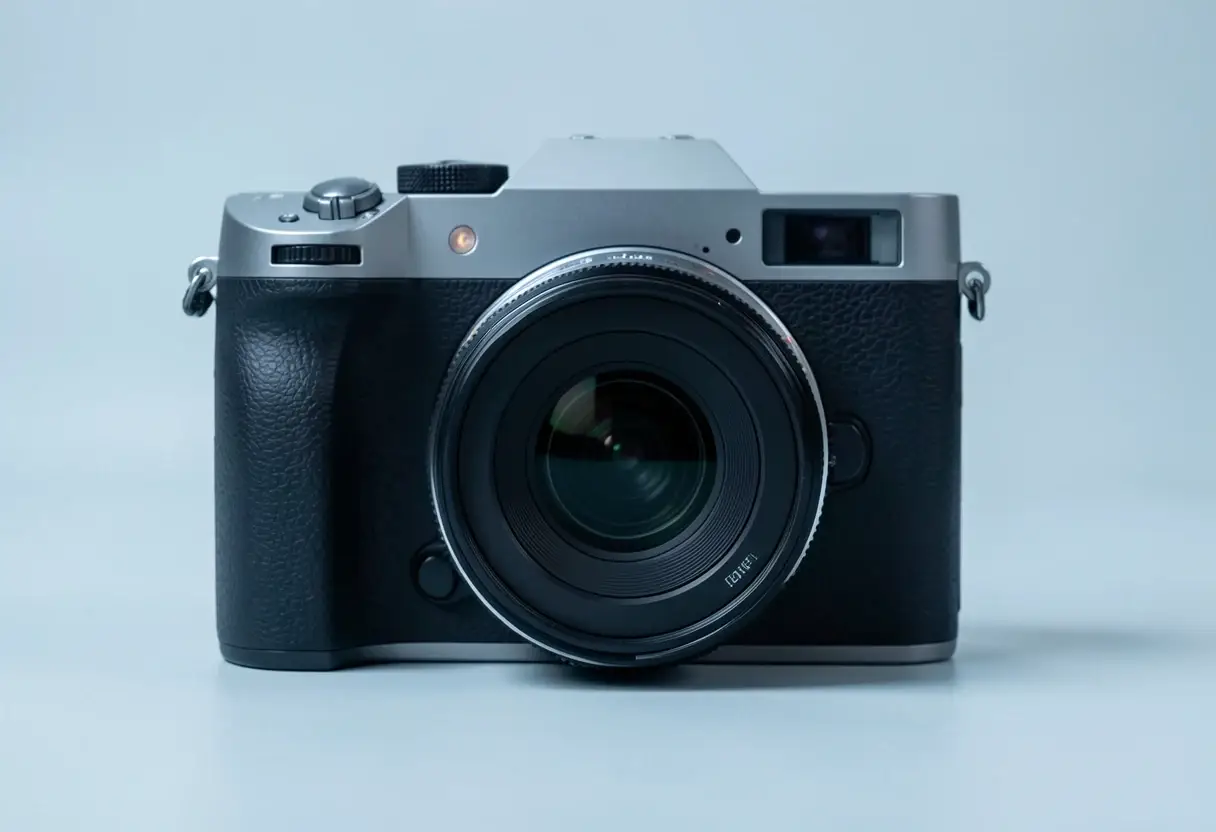
Sigma FP2 Review: A Stubborn Brick That Finally Focuses on Users
The $2,199 Sigma FP2 pairs a 24MP partially stacked full-frame sensor with excellent autofocus in a 470g brick — the first Sigma body this reviewer enjoyed using.
The Sigma FP2 costs $2,199, weighs 470 grams with battery and card, and stands as the first Sigma camera body this reviewer has genuinely enjoyed using. That verdict carries weight. Sigma has a long history of odd camera design, and its previous bodies frustrated photographers with strange ergonomics, rigid controls, and menus that forced one way of working.
The FP2 does not abandon the brick-like FP formula. It refines it. A full-frame, partially stacked 24-megapixel sensor now sits inside an even more compact body. The stacked readout reduces rolling shutter, which matters here because the camera still has no mechanical shutter at all. The sensor handles that omission well.
What has improved on the body?
The headline changes are practical. Sigma fitted a new battery, apparently identical to the Panasonic BLK22, and battery life rises to 370 CIPA-rated shots. The rear LCD now offers 2.1 million dots and articulates vertically for waist-level and overhead shooting. It is barely bright enough on sunny days, but detail is strong.
A dedicated "color" button opens the new color modes. The reviewer gravitated toward the teal-and-orange and sunset-red profiles, each adjustable for contrast, shadows, highlights, haze, and overall filter opacity. Customization runs deep across the whole camera: an AF-ON button, autofocus controls, aperture dials, and exposure compensation can all be reassigned. This is the most usable control scheme Sigma has ever shipped.
Takeaway: the FP2 adapts to the photographer, rather than the reverse.
Where does the design still fail?
The attachment system is the problem. Making the camera functional requires many small parts, each sold separately. Even attaching a strap needs screw-in lugs that are easy to lose. There is no hot shoe and no built-in electronic viewfinder. Sigma's workaround is a side-mounted hot shoe adapter or an optional 5.76-million-dot EVF — but you cannot use both at once.
The EVF, in particular, looks and feels wrong. Sigma reshaped its profile to avoid blocking the USB port, and the result is a bulky silhouette that does not fit most camera bags. The reviewer argues a multi-interface hot shoe with a compact slide-on EVF would have been far more elegant. A second command dial and more custom buttons would also help, since the rotating D-pad often triggers AF controls by mistake. There is no autofocus joystick, and the touchscreen does not work in menus.
Takeaway: the modularity adds cost, bulk, and friction.
How does it shoot?
Autofocus is the strongest technical story. Building on the Sigma BF's impressive subject tracking, the FP2 adds more advanced bird and animal detection. It found eyes and locked focus accurately, and it tracked inanimate objects reliably too. The reviewer describes the result as "Sony-like" — a compact camera that focuses in a very natural way.
Burst shooting reaches 20 frames per second, and the buffer holds roughly 180 RAW frames before slowing. The camera has 70GB of internal storage plus a UHS-II SD slot, a combination the reviewer praises as genuinely useful.
What about video?
The FP2 shoots 4K at 60p, 120p with a crop, and 6K open-gate at up to 30p. Codecs range from efficient H.264 and H.265 up to ProRes RAW HQ, with raw requiring external SSDs. The H.265 L-log mode offered plenty of grading range. A full-size HDMI port is a major improvement over the previous iteration. Assist tools include waveforms, leveling, and shutter angle.
Ports remain scarce. There is a mic jack but no headphone jack; a USB adapter solves that but then occupies one of the two ports needed for the EVF or an external SSD. Video autofocus holds well when camera and subject move together, but it sometimes loses subjects walking toward or away from the lens, and the reacquisition is jarring. The Panasonic S1 II does this slightly better.
Thermal performance splits the difference. The camera recorded 6K open-gate continuously for an hour and a half thanks to heatsink fins behind the LCD. At 4K 60p, it shut down after 33 minutes. There is no active cooling and no in-body stabilization.
Takeaway: strong video specs, with real limits on ports, autofocus, and heat.
Should you buy it, and against what?
Yes, with conditions. The reviewer's verdict: "The image quality and focusing performance are excellent. It's fast, capable, and certainly a true hybrid camera." The design will polarize buyers, but the sensor, autofocus, and color modes are substantial improvements over the FP line.
The alternatives frame the value question. The Panasonic S9 is cheaper, has IBIS, and shares the compact form factor. The Panasonic S1 II offers superior video, similar stills performance, and once the FP2 is loaded with attachments, a comparable price. The reviewer judges the S1 II the more elegant package, while the FP2 suits creators who want a modular camera for gimbals and cages.
Sigma has clearly listened. The FP2 is, in the reviewer's words, "a massive step in the right direction," and it suggests the FP line will keep pushing toward accessible, customizable hybrids rather than a conventional body.
Key points
- The Sigma FP2 costs $2,199 and weighs 470 grams with battery and card.
- It uses a 24-megapixel full-frame partially stacked sensor with no mechanical shutter.
- It shoots 20 fps bursts with a buffer of about 180 RAW frames, and 6K open-gate video up to 30p.
- Battery life is rated at 370 CIPA shots; 6K recording ran 90 minutes before 4K 60p overheated at 33 minutes.
- The reviewer calls it the first Sigma camera body enjoyable to use, despite awkward bolt-on accessories.
Source: PetaPixel
Grace Kim
Show full bio
Senior reporter covering companies, deals and strategy in Photography exhibitions, photographers, photo books, festivals and awards at Lens Gazette.