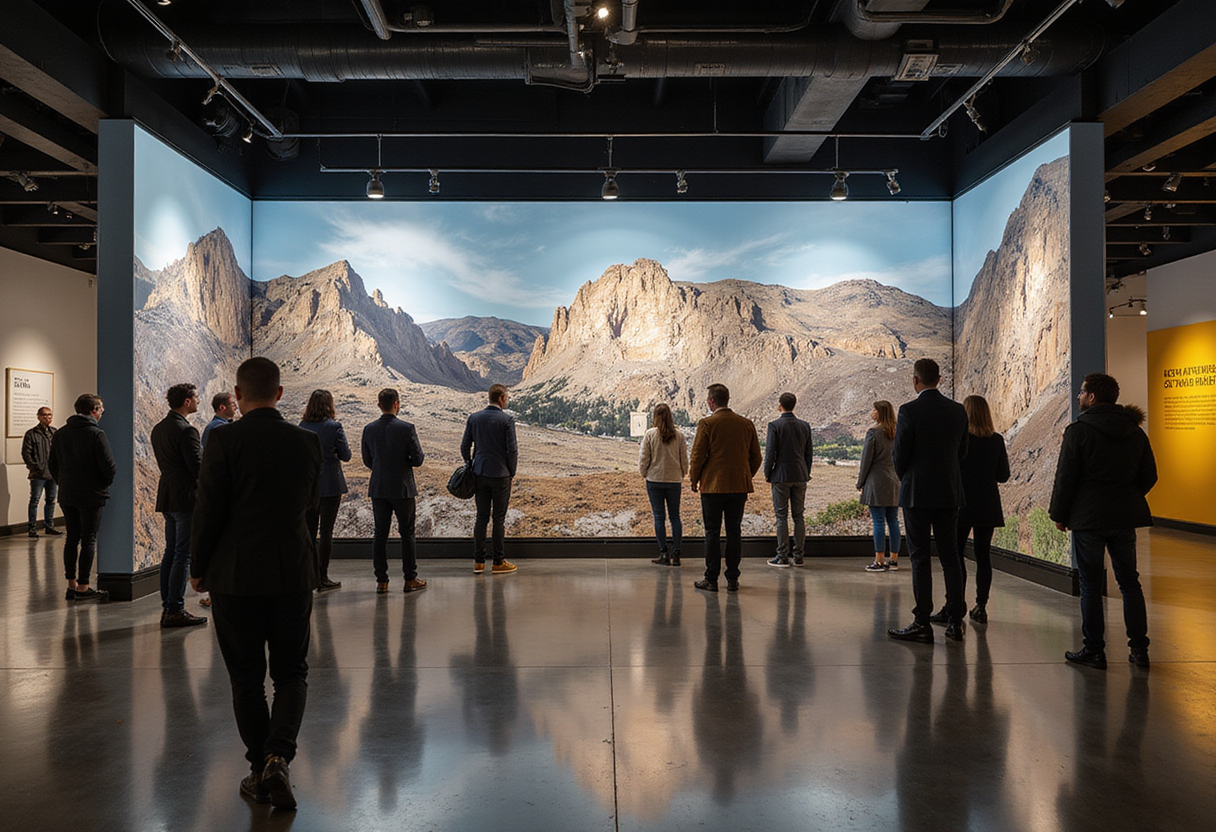
National Geographic Opens Museum of Exploration After Years
National Geographic has opened its Museum of Exploration, a flagship venue years in development that turns the publisher's 137-year photographic archive into a permanent public institution.
Updated
National Geographic has opened its Museum of Exploration, a flagship venue the publisher spent years developing to translate its archive of expeditions into a public-facing institution.
Smithsonian Magazine's coverage, carried by wire, frames the launch with a single phrase from the headline: an invitation "to take you on an adventure." The source material does not detail the full exhibition program, opening date, or curatorial team. Many specifics remain to be confirmed on-site and in subsequent reporting.
For a brand built on the still image, the move carries obvious weight. National Geographic photographers — Steve McCurry, Paul Nicklen, Frans Lanting, Jimmy Chin, and a long roster of staff and contract shooters — have shaped how two generations of readers see the planet. A museum formalizes that influence in brick and wall text rather than in a monthly mailer.
What does the museum hold?
The source confirms only the venue's existence and its adventure framing. It does not name galleries, list curators, or specify which photography series anchor the show. What it does establish is institutional intent.
A physical home for the exploration impulse that has defined the publisher since January 27, 1888, when thirty-three explorers and scientists pooled resources to launch a journal at the Cosmos Club in Washington.
The magazine's pages hosted milestones any photo editor would recognize. The first complete photograph of Everest from the summit. Some of the earliest color underwater photographs. A signature ochre border framing all of it for more than a century. The Museum of Exploration now asks visitors to walk through that history instead of flipping past it.
What does the work include?
A working archive, formalized. National Geographic's image library runs into the millions of frames across film and digital, much of it shot under editorial assignment. The museum gives the publisher a venue to display that archive at scale — with the wall labels, lighting budgets, and foot traffic a magazine spread cannot match.
For photographers who built careers under the yellow border, that context matters. A McCurry frame from a 1984 National Geographic cover reads differently hung on a museum wall than bound inside a magazine. The shift reframes a news image as historical artifact without forcing the photographer to wait for a posthumous retrospective.
For working photojournalists, the venue offers equal billing with natural history and science storytelling. That recognition has been hard to come by. American newspapers shed hundreds of staff picture-desk positions across the last three decades. Photo ecosystems have lacked a permanent home for working images since the 1990s shuttering of those desks.
What does this change for visitors?
It changes what a subscription could not. Subscribers receive a magazine. Visitors now receive a building. The museum gives the publisher a way to reach school groups, tourists, and families who never opened a back issue but will walk through a gallery.
That audience expansion matters. Magazine newsstand sales have shrunk to a fraction of their late-twentieth-century peak. A flagship venue recovers the audience a subscription route no longer reaches.
Where the work goes from here
The source leaves the programming calendar open. Whether the museum leans on rotating exhibitions of contemporary photographers, anchors itself in the historical record, or splits the difference will determine its critical standing and its visitor draw.
National Geographic has the catalog to do either. The brand has long carried an outsized influence on how the public reads exploration, science, and the natural world. The opening confirms intent: the publisher wants that identity to live in a building, not just on a page.
Key points
- National Geographic's Museum of Exploration has opened to the public, according to Smithsonian Magazine coverage carried by wire.
- The source describes the project as years in development and frames it as an invitation to adventure.
- The source did not name curators, exhibitions, or specify an opening date.
- National Geographic was founded January 27, 1888 by thirty-three explorers and scientists at the Cosmos Club in Washington.
- The Museum of Exploration formalizes a working photographic archive of millions of frames across film and digital.
Source: Google News: photography museum
Marcus Bennett
Show full bio
Correspondent covering companies, deals and strategy in Photography exhibitions, photographers, photo books, festivals and awards at Lens Gazette.