Monroe Gallery Turns Its Walls Toward Democracy in Peril
Monroe Gallery of Photography in Santa Fe opens an exhibition of images of division and democracy in peril, restaging press photography as civic evidence.
Updated
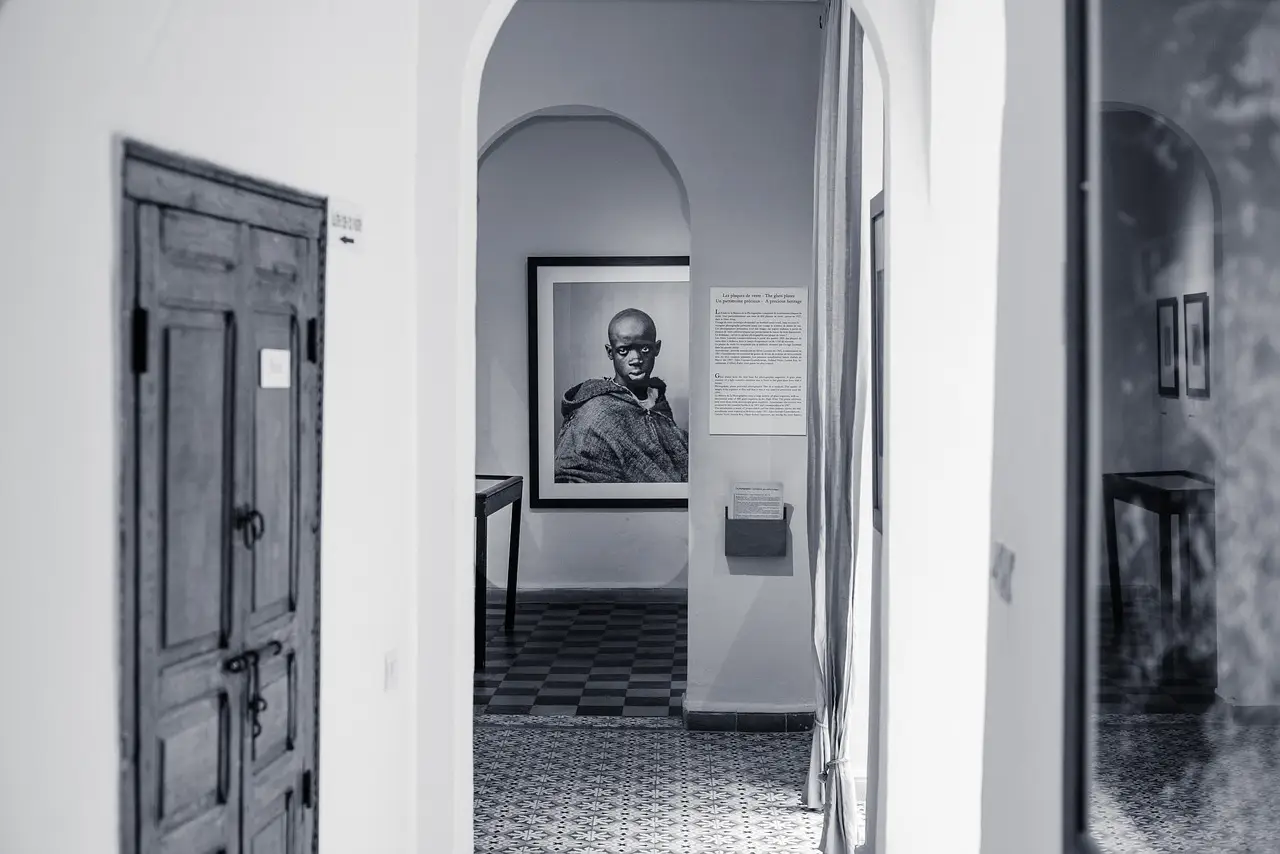
The Monroe Gallery of Photography in Santa Fe has opened an exhibition devoted to images of division and democracy in peril, as the Santa Fe New Mexican reports. The show's premise is blunt. It treats press photography not as decoration but as evidence — a running record of democratic life under strain.
The gallery, a specialist in photojournalism and historic documentary work, has built its reputation on exactly this kind of material. Its exhibition program repeatedly returns to the photo essay as a civic instrument. This new show continues that line. It places photographs of political conflict and public unrest in a single space and asks the viewer to read them as one connected argument.
What does the exhibition actually show?
The title tells the story in miniature. The words are "division" and "democracy in peril," and the images follow suit. The New Mexican's coverage frames the exhibition as a sharp focus on those two themes. That framing matters. It signals a curatorial stance that is unafraid of political content at a moment when many institutions hedge.
The Monroe Gallery does not usually hedge. Its inventory and its past shows lean on images made where history was happening. Photographs of protest, of power, and of public confrontation sit at the center of this tradition. An exhibition about democracy under threat draws on that archive directly. The camera becomes a witness, and the gallery wall becomes the courtroom where the testimony is displayed.
Why does this matter now?
Exhibitions of this kind carry a double weight. They function as art shows and as public statements. A gallery in Santa Fe — a city with an established photography audience and a dense museum culture — choosing this subject is itself a decision worth noting. The exhibition arrives amid intense national debate over elections, institutional trust and political violence in the United States.
Photojournalism has always done this work. The strongest images of division outlive the news cycle that produced them. They enter museum collections, textbooks and retrospectives. A show like this compresses that process. It takes work that first appeared in newspapers and magazines and re-presents it in a gallery setting, where the viewer slows down and looks longer.
That shift in speed changes the work. A photograph seen for two seconds on a screen is information. The same photograph studied on a wall for two minutes becomes something closer to history. The gallery's bet is that the second kind of looking has civic value.
How does the gallery's history shape the show?
The Monroe Gallery of Photography has operated in Santa Fe as a commercial gallery with a documentary mandate. Its exhibitions routinely honor photojournalists, including figures whose images shaped public understanding of war, civil rights and American political life. An exhibition on democracy in peril sits squarely within that program rather than outside it.
This continuity gives the show institutional grounding. It is not a departure or a novelty act. It is the gallery doing what it has always done — showing the photographic record of public life — pointed at the most urgent question in that record today: whether the democratic process itself holds.
The curatorial risk is obvious. Political material can flatten into preaching. The best photojournalism exhibitions avoid this by letting the images carry the complexity, by showing division rather than arguing about it. On the evidence of the New Mexican's report, the framing here keeps that balance: the title names division and peril, not heroes and villains.
What can visitors expect?
Visitors should expect documentary photography with a political spine. The gallery's exhibitions typically pair well-known press images with lesser-seen frames, and its wall texts favor context over commentary. The gallery is located in downtown Santa Fe, a short walk from the city's plaza, and exhibitions there run for extended periods with rotating focuses.
For photographers, the show is a reminder of where the discipline's center of gravity lies. Photojournalism's claim to importance has never rested on technique alone. It rests on presence — being on the street, at the rally, at the door, when the events that define a period take place. The craft serves the record.
The larger picture
The exhibition joins a broader institutional turn. Galleries and museums across the United States have increasingly programmed shows about civic life, voting and political conflict in recent years. The Monroe Gallery's contribution stands out for its medium-specificity: it argues through photographs, not around them.
The viewer leaves with the record itself — framed prints of a country arguing with itself, made by photographers who stood in the middle of the argument. That is the gallery's proposition, and it is a serious one. Whether the show travels, expands or becomes part of the gallery's touring program afterward will show how far this argument can reach beyond Santa Fe.
Grace Kim
Key points
- The Monroe Gallery of Photography in Santa Fe has opened an exhibition on images of division and democracy in peril.
- The exhibition was reported by the Santa Fe New Mexican.
- The gallery specializes in photojournalism and historic documentary photography.
- The show presents press photographs of political conflict as a connected documentary record.
Source: Google News: photography exhibition
Grace Kim
Show full bio
Senior reporter covering companies, deals and strategy in Photography exhibitions, photographers, photo books, festivals and awards at Lens Gazette.