Over 200 Images From a 1970s U.S. Photo Project Are Now on View
In the 1970s the U.S. government commissioned photographers to document the nation. More than 200 of their powerful images are now on public view.
Updated
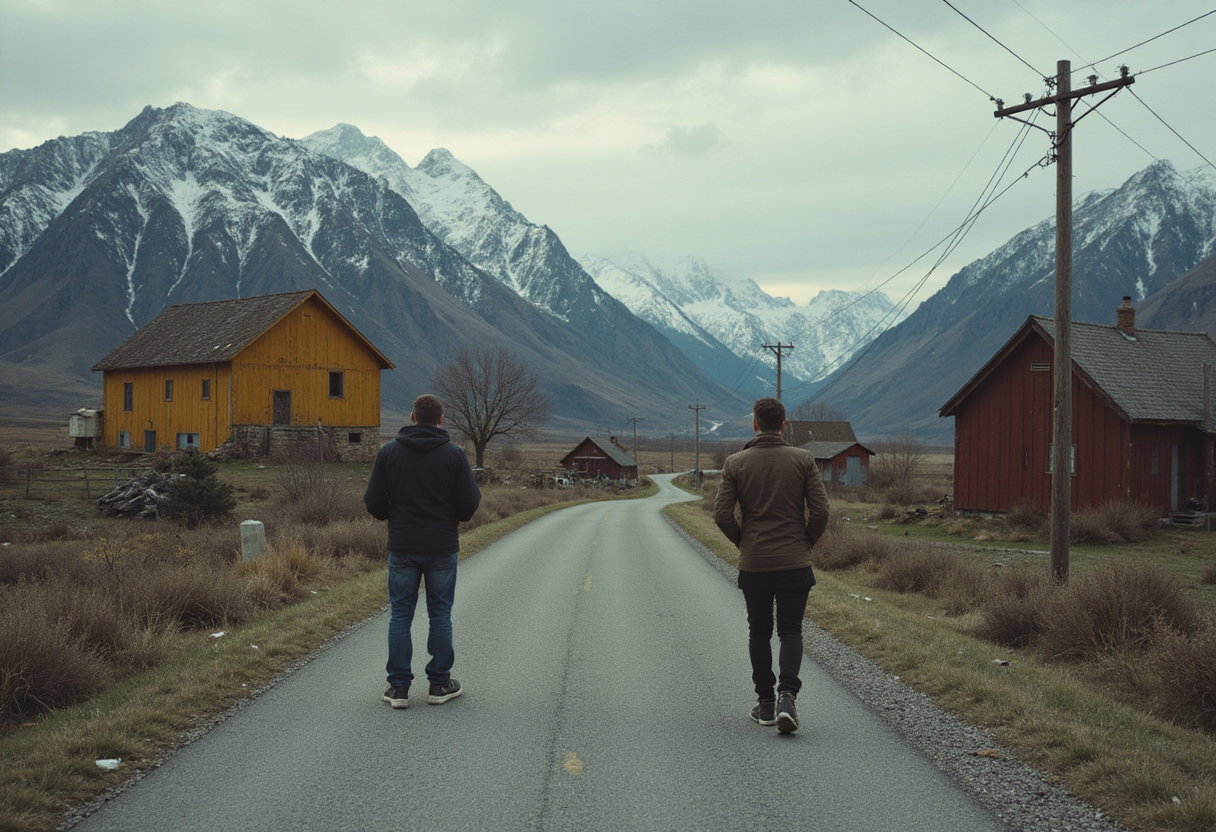
More than 200 photographs from a 1970s federal commission are now available for public viewing, giving audiences direct access to one of the United States government's most ambitious documentary projects. In that decade, Washington hired photographers to record the country's people and places. The pictures they made now circulate again, and they have lost none of their force.
The scale of the undertaking matters. This was not a private expedition or a magazine assignment. It was a state-sponsored effort to look at America with a camera, carried out by photographers working under federal commission across the country.
What did the project set out to do?
The commission had a straightforward premise. Send photographers out. Let them document the nation as it was — its citizens, its towns, its working life, its terrain. The goal was a record, not an advertisement.
That premise places the project in a long institutional lineage. The American government had used photography as a public instrument before, most famously during the Depression era, when federal programs sent cameramen into the field to record rural poverty. The 1970s commission continued that tradition in a changed country, one confronting industrial decline, environmental strain and shifting social mores.
The result is a body of work that reads today as both archive and argument. These images show what the state chose to look at, and what the photographers found when they arrived.
Why do the pictures still carry weight?
The newly viewable selection of more than 200 images demonstrates the project's range. The photographers worked across geography and social class. They photographed ordinary people in ordinary settings. They recorded places that were changing and places that were being left behind.
The strength of the work lies in its specificity. A commissioned document can flatten into propaganda. This one did not. The photographs preserve individual faces, particular streets and dated details that no retrospective reconstruction could recover, and that concreteness is exactly what gives the archive its continuing hold on viewers.
There is also a craft lesson here. The photographers worked with the tools of their era, and the constraint served the work. The pictures are composed, patient and observant. Technique stays subordinate to subject.
What does public access change?
Availability is the story's second act. For decades, bodies of commissioned work of this kind sat in institutional files, seen mainly by researchers. Digitized and exhibited selections change that equation. More than 200 images now reach an audience far beyond the archive's walls.
This matters for how the project is understood. A photograph seen by fifty scholars is a document. A photograph seen by thousands becomes part of the public picture of a decade. The commission's original aim — to show the country to itself — is now fulfilled at a scale the 1970s could not have imagined.
Where does the project go from here?
The current presentation suggests renewed institutional appetite for this material. As more of the commission's output moves into view, expect scholars and curators to keep mining it for evidence of how America saw itself fifty years ago — and for how much of that country remains recognizable now.
Key points
- In the 1970s the U.S. government commissioned photographers to document the country's people and places.
- More than 200 images from the project are now available for public viewing.
- The project belongs to a lineage of state-sponsored American documentary photography.
- The newly accessible images span geography, social class and working life across the United States.
Source: Google News: photography exhibition
Grace Kim
Show full bio
Senior reporter covering companies, deals and strategy in Photography exhibitions, photographers, photo books, festivals and awards at Lens Gazette.