Maxwell Alexandre, Susan Meiselas and 50 Carnaby Street Head Four Free London Shows
Four free four-star London shows: Alexandre's 'white figuration' at Carlos/Ishikaha, Meiselas's carnival strippers, Song's brushstrokes and 50 Carnaby Street remembered.
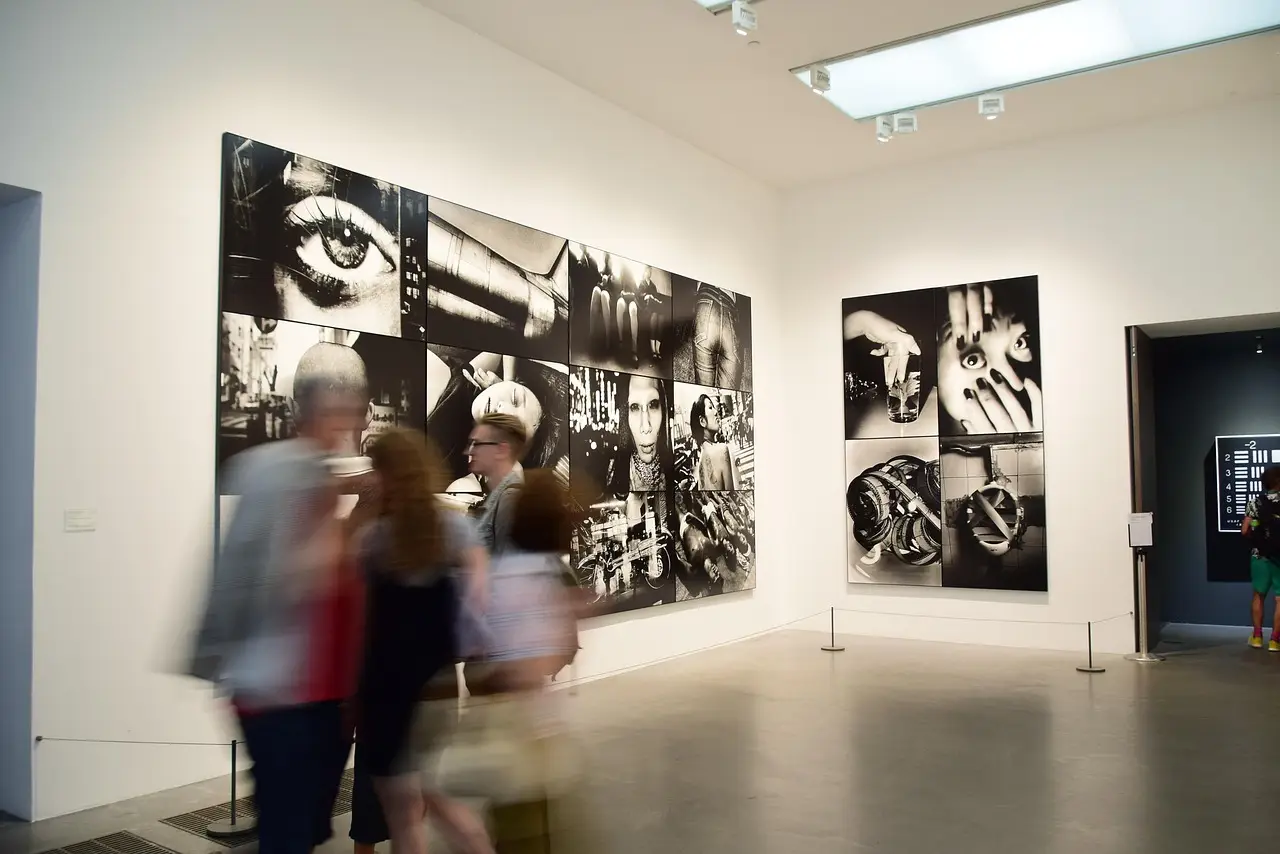
Four free London exhibitions open this week, each rated four stars: Maxwell Alexandre at Carlos/Ishikawa until 28 November, Susan Meiselas at Huxley-Parlour Photographs until 21 November, Hyun-Sook Song at Sprüth Magers until 23 January 2027, and Studio/Chapple's Sunset Club at Sadie Coles HQ.
What is 'white figuration'?
A vast red concrete wall splits Maxwell Alexandre's new work in two: the wall of the Flamengo sport club in his native Rio de Janeiro, a crimson monolith separating rich from poor and black from white.
Alexandre joined the upmarket club in the early 2020s. He had walked past its red walls countless times as a child — the club sits on the edge of the favela he comes from, the biggest in Brazil. Inside he found serenity, sunbathing, prosperity and whiteness, surrounded by what the source describes as pasty bodies with rippling pink skin.
He had built his early career painting the black figures of his favela, and success had bought him access to this new world where he knew he could not paint the same figures. The result: dozens of paintings of lush tropical trees and white bodies in repose, lounging, chatting and playing by the pool within that red wall — his new approach, which he calls "white figuration".
The red walls dominate the first space, where a figure stands on a diving board and palm fronds wave in the distance. A second room runs floor-to-ceiling with paintings on brown paper of club members, some shown beside figures from art history. Boys stand in the sun, men splash, girls talk, women sunbathe. The painting reads as idyllic, hazy, almost nostalgic.
It is also a rejection of the expectation that black artists churn out black figures for white audiences and collectors — Alexandre refusing to play that game. It feels less like mockery than an attempt to make sense of a divided city, an art history that does not represent him, and a world that expects you to remain what you no longer are. It all looks like heaven, but heaven here is a complicated place.
What did Meiselas capture backstage?
The exhaustion in Susan Meiselas's photographs is so palpable it is almost draining. She spent three years in the mid-1970s following a group of striptease performers touring the American sprawl, slowly gaining their trust and capturing them at their most intimate, unguarded and, in the reviewer's word, knackered.
She photographs from backstage. Night after night the women dance for wide-eyed, drooling men — seen gawping from between the dancers' legs — before crashing from the effort, smoking distractedly, lounging on sofas or crumpling into bed. The images record the end result of physical labour: total collapse.
In many frames dancers peek through the curtain back onto the stage, waiting their turn and watching things turn ugly for the performer currently on it. The more posed images give the viewer little, but when Meiselas catches the dancers unaware, lost in the moment, the pictures are, in the reviewer's judgement, pretty special. These are stories of exploitation and entertainment, work and exhaustion, leaving behind nothing but physical and emotional depletion.
How little can a painting need?
Hyun-Sook Song says so much with so little. The Hamburg-based Korean painter builds a whole world from a handful of brushstrokes: written into every mark are her memories of deeply rural mid-century South Korea, her shock at the monstrous urbanity of modern Germany, and her desperate need to find sanctuary in painting.
The titles declare the minimalism — works called 11 Brushstrokes or 6 Brushstrokes over 1 Brushstroke — though the paintings are more complex than that implies. Song lays each canvas flat and paints every mark in a long, sweeping, full-body motion, physically pushing her ideas into the work.
Every canvas carries a dark green or black ground, and each swooping stroke creates a gossamer white veil across the darkness. A brown line cuts across nearly all of them — a stick that seems to lift the impossibly thin curtains. The white marks reference the raw silks collected in her youth; the brown marks nod to the boundary posts that delineated her childhood landscapes. Ideas of separation and division, of veils lifted, of quiet and peace run throughout. The paintings are almost unbearably fragile, and all the more beautiful and meditative for it.
Why does 50 Carnaby Street matter?
Before Carnaby Street became one of London's main tourist taps, it was a proper cultural hub. Number 50 alone housed six different music venues between the 1930s and the 1980s — from the Sunset Club in the 1950s to Columbo's in the 1970s — where activism met music, jazz gave way to steel bands and sound systems, and black met white.
A tiny show in Sadie Coles' downstairs project space, organised by Studio/Chapple gallery, celebrates the address just around the corner from the original building. The walls are painted deep brown; handmade speakers by Maya Ramnarine play old jazz and ska records; paintings show dancers moving in tightly crowded spaces and performers playing to packed rooms.
Not every work convinces, but the idea holds, and two paintings stand out. Georgia Semple's dark, atmospheric vision shows the Russ Henderson Steel Band — Britain's first steel pan ensemble — playing to a crowd of joyful figures slowly swaying. Amida Deen's work travels to the 1970s, with people pressing together in a room of fiery red and heat-soaked orange as dub pours from the speakers.
The show is a small love letter to music history, clubbing and dancing — you can almost smell the sweat. With Alexandre closing on 28 November and Meiselas a week earlier on 21 November, visitors planning a single trip should move fast; Song's brushstrokes, by contrast, stay on view at Sprüth Magers until 23 January 2027.
Key points
- Maxwell Alexandre's 'white figuration' show runs at Carlos/Ishikawa, London, until 28 November
- Susan Meiselas spent three years in the mid-1970s photographing carnival strippers; on view at Huxley-Parlour until 21 November
- Hyun-Sook Song's brushstroke paintings show at Sprüth Magers until 23 January 2027
- 50 Carnaby Street hosted six music venues between the 1930s and 1980s, celebrated at Sadie Coles HQ
- All four exhibitions received four-star reviews and are free to visit
Source: theguardian.com
James Calloway
Show full bio
Market editor covering people, launches and day-to-day practice in Photography exhibitions, photographers, photo books, festivals and awards at Lens Gazette.