Marubi Museum Joins Archivi Aperti in Initiative's First Move Beyond Italy
Albania's National Museum of Photography "Marubi" joins Italy's Archivi Aperti for its first cross-border edition, bringing Shkoder's photographic heritage into an international dialogue.
Updated
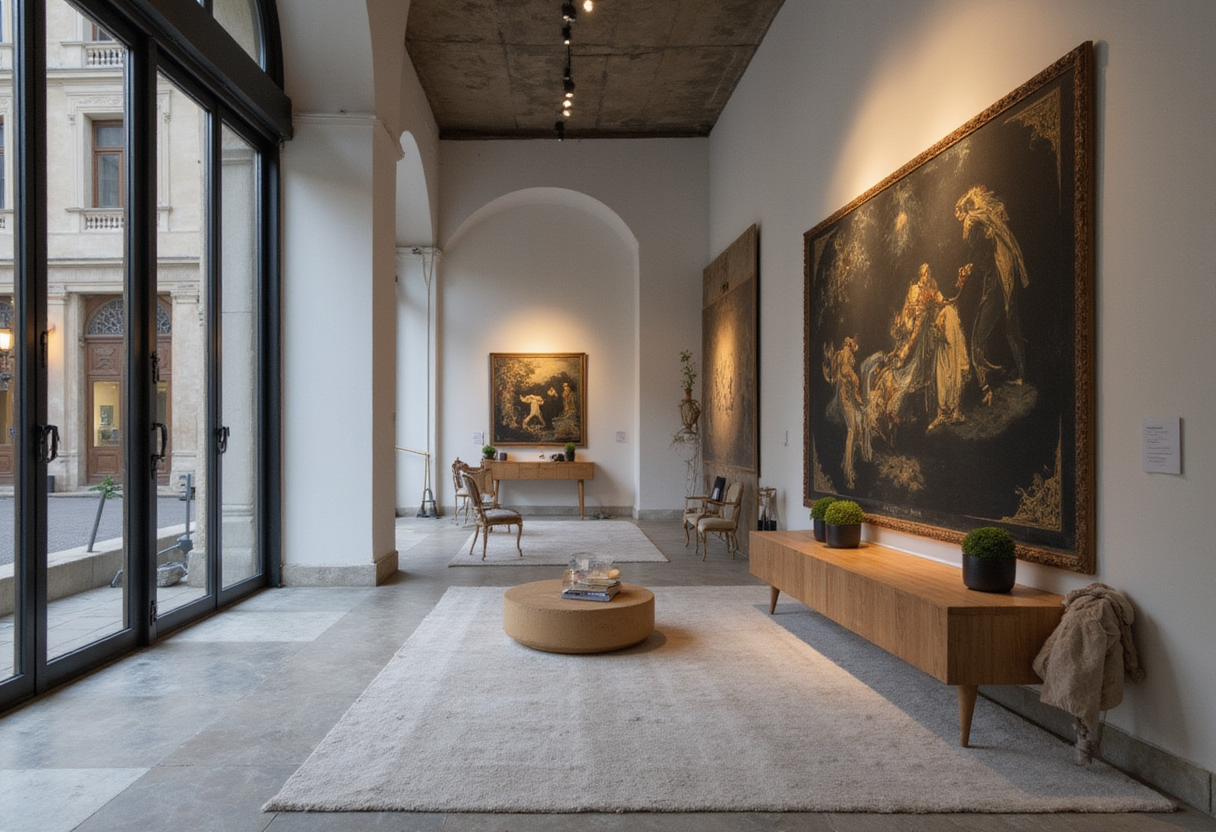
Albania's National Museum of Photography "Marubi" will take part for the first time in Archivi Aperti (Open Archives), the Italian initiative devoted to photographic archives and heritage — and in doing so will carry the programme beyond Italy's borders for the first time in its twelve-edition history.
The 12th edition of Archivi Aperti runs from October 16 to October 25 and spans 12 regions of Italy, uniting museums, archives and photographic institutions under a single framework. Marubi, based in the northern Albanian city of Shkoder, joins as the newest member of Rete Fotografia, the network that anchors the initiative. Its participation marks the first expansion of Archivi Aperti outside Italy, and it brings Shkoder's photographic heritage into an international conversation that has, until now, remained an entirely Italian affair.
For a museum that holds one of the Balkans' most significant photographic legacies, the invitation carries institutional weight. The Marubi collection traces its origins to the studios of the Marubi family, whose photographic practice in Shkoder began in the 19th century and documented Albanian society across generations of upheaval and change. The museum now stands as the country's national institution for photography, and its entry into Rete Fotografia places it alongside Italian counterparts in a shared programme of exhibitions, archive openings and public events.
This year's edition takes as its theme "Reflected Identities: Society Through Photography", an invitation to consider what photography does when it documents, interprets and shapes a society's collective memory. The theme sits comfortably with the Marubi's own holdings, which function less as a collection of discrete images than as a sustained social record.
The museum framed its participation in exactly those terms. "A photographic archive preserves more than images: it preserves faces, places, events, transformations and stories that together form our collective memory," the Marubi said in a statement. "Preserving, studying and opening these archives allows us to revisit the past from new perspectives and bring to light stories and viewpoints that may have remained unseen."
That argument — that archives gain their value through access rather than mere custody — is the animating principle of Archivi Aperti itself. The initiative's model turns institutional repositories into public sites for a fixed period each year, inviting audiences into collections that otherwise remain in storage. Marubi's inclusion extends that logic across the Adriatic.
The museum is direct about what the cross-border step means. Its participation, it said, will place Shkoder in a new dialogue about photography, archives and memory — a dialogue conducted not through rhetoric but through the shared material of negatives, prints and plates held on both sides of the sea.
"From Italy to Albania, photography becomes a bridge connecting memory, territory and identity," the museum said.
The pairing is not incidental. Italy and Albania share intertwined histories of migration, politics and culture, and photography on both sides of the Adriatic has long served as a record of those movements. An initiative themed around reflected identities finds a natural counterpart in a collection that documented a society watching itself change — in studios, in streets, in the faces of successive generations.
What the October programme will actually contain at the Shkoder venue remains, for now, unannounced. Marubi said it would publish its full programme for Archivi Aperti 2026 at a later date, leaving open the question of which bodies of work, which rescues from the archive, will meet the public first.
That unanswered question is itself part of the story. If the move beyond Italy proves durable, Archivi Aperti could shift from a national celebration of photographic heritage into a genuinely Mediterranean network — with Shkoder, home of the Marubi dynasty, as its first non-Italian anchor.
Key points
- Marubi museum participates in Archivi Aperti for the first time, the initiative's first expansion beyond Italy
- The 12th edition runs October 16–25 across 12 Italian regions, themed "Reflected Identities: Society Through Photography"
- Marubi joins as the newest member of Rete Fotografia and will announce its programme for Archivi Aperti 2026 later
Source: Google News: photography museum
Olivia Hart
Show full bio
Staff writer covering industry trends and analytics at Lens Gazette.