Katerina Angelopoulou's The Fumes of Mars: Witness After the Mati Fire
Katerina Angelopoulou survived the 2018 Mati wildfire that killed 104 people. Her GOST book The Fumes of Mars rebuilds the truth the state buried.
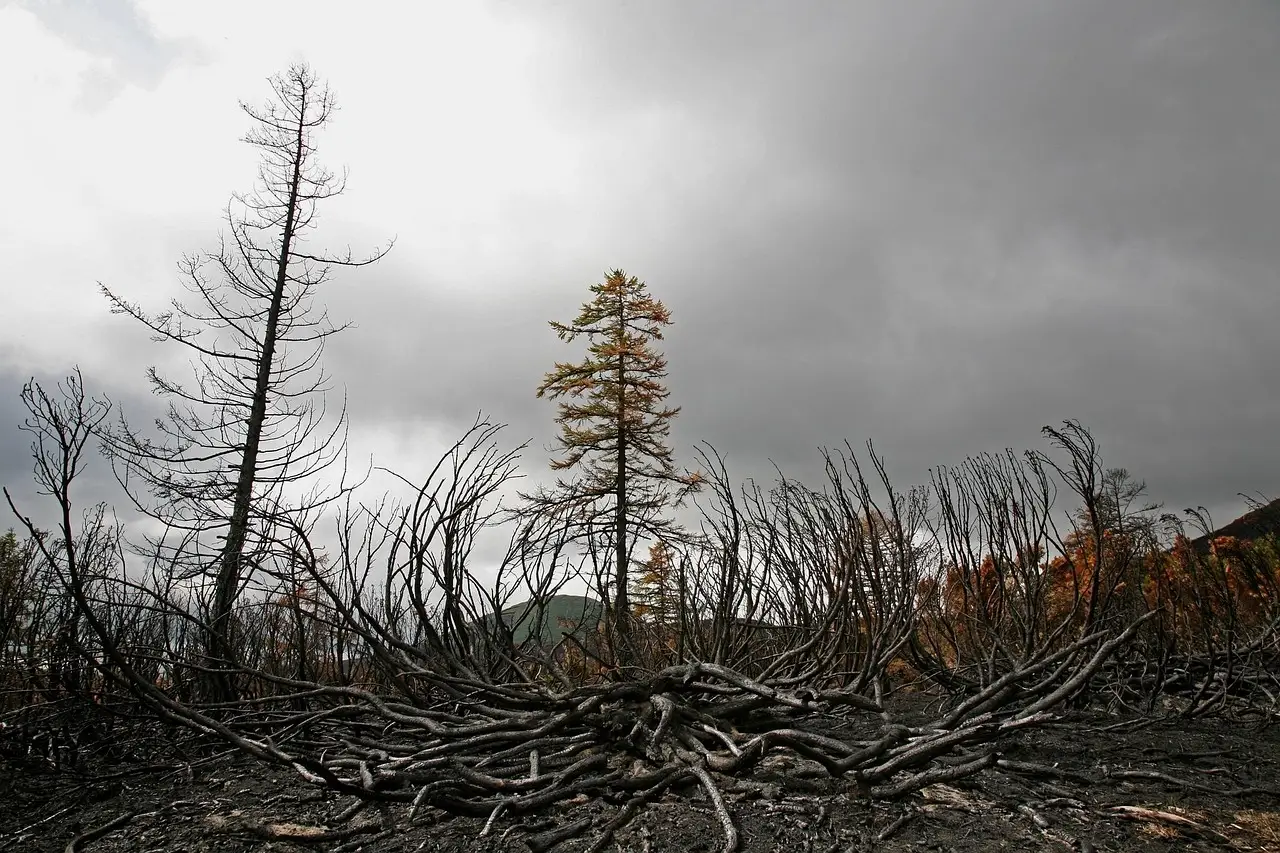
A wildfire killed 104 people in the Greek town of Mati on 23 July 2018, and Katerina Angelopoulou survived it at her mother's doorstep. Her book The Fumes of Mars, published by GOST at £45, turns that survival into a forensic act of witness. It combines her own smartphone snapshots, survivor testimonies, maps and official records into a counter-narrative against the state's account of the disaster.
The book's central argument is about images and distance. Angelopoulou draws on the literary theorist Anna Kornbluh, who warns that a culture obsessed with the instant and the unmediated erodes our capacity for critical, collective thinking. Algorithms, surveillance systems and generative networks now look and interpret without human mediation. The real violence of the contemporary image, on this view, is not graphic content. It is the removal of the buffer that critical reflection requires. That erasure is a political act.
What happened in Mati?
The fire ripped through Mati, a middle-class town on the eastern coast of Attica near Athens, within hours. Forensic evidence suggests another 14 to 18 unidentified people remain buried in a collective grave in the area. The army, fire department, police and political leadership failed to coordinate, communicate or execute basic evacuation protocols.
Angelopoulou was visiting from the United States with her three-year-old daughter when the fire arrived. "My mother, my daughter, who was three at the time, and I were caught by the fire directly at our doorstep," she says. They reached the sea, 100 metres away, and stood in the water for four to five hours as the tragedy unfolded. On her phone, she made instinctive snapshots. "Sometimes we take pictures of things that shock us, to revisit them later to make sense of what happened," she reflects. She only confronted those images in 2021, when she began her inquiry.
A second violence followed the first. The government concealed what had happened and blamed residents, claiming illegal homes and walls had blocked escape routes to the sea. Uncritical media repeated the claim. "That is the narrative that, unfortunately, was propagated by the media, which had no specific information about the area, but just used it as a shield," Angelopoulou notes. The day after the fire, the Minister of Internal Affairs publicly claimed there were no operational mistakes. Data later showed officials knew the scope of the tragedy while downplaying it in real time.
How does the book build its case?
Angelopoulou read every scrap of public testimony, monitored international media and examined official statements. She paired her personal photographs with maps tracking the fire's geographical spread, and matched these against the recorded movements of police and fire engines. The result is a forensic timeline that exposes flaws in the official account.
The book juxtaposes charred home interiors with expansive, eerie landscapes and written survivor testimony. Every element is verifiable. "I wanted to make sure that everything that is in there can be found elsewhere," she says. "It became very important to make a point that you can get a more rounded and truthful story of what has happened if you don't just take your information from one TV channel, or one government source, or one newspaper."
The work also traces the parable of the "last image" — the final picture a person might record. Angelopoulou later photographed her late father's salvaged belongings as archaeological remnants, isolating charred objects with deliberate, forensic composure. "Losing the house I grew up in was devastating," she says. "It felt, in the biggest sense, like a loss of where I came from."
Why does collective testimony matter?
In legal discourse, a single trauma witness is routinely dismissed as unreliable. The state weaponises this scepticism, omitting community stories while propagating its own narrative. Angelopoulou inverts the dynamic. Survivors who could not coordinate their accounts describe the same breakdown of state apparatus from different geographical vantage points. The unreliable witness dissolves into reliable collective truth.
The raw smartphone snaps from the aftermath carry their own ambiguity — a photograph can inflate or flatten a catastrophe. Tethered to a cross-referenced network of testimony, they shed it. Angelopoulou's practice points toward photography as a tool for restoring context, history and analytical depth to human suffering, and for dismantling the institutional monopoly on truth.
Key points
- The Mati wildfire of 23 July 2018 killed 104 people near Athens, with 14–18 more believed buried in a collective grave.
- Katerina Angelopoulou survived the fire with her mother and three-year-old daughter, standing in the sea for four to five hours.
- The Fumes of Mars is published by GOST, priced £45.
- Angelopoulou began her inquiry in 2021, three years after the disaster.
- The Minister of Internal Affairs claimed no operational mistakes the day after the fire, contradicting later data.
Source: 1854.photography
Grace Kim
Show full bio
Senior reporter covering companies, deals and strategy in Photography exhibitions, photographers, photo books, festivals and awards at Lens Gazette.