Johnnie Shand Kydd’s Ramsholt reframes the Suffolk marshes
Johnnie Shand Kydd’s Ramsholt turns a daily 50-minute walk through Suffolk into black-and-white studies of marshland, family memory and a landscape vulnerable to climate pressure.
By Grace Kim
Johnnie Shand Kydd’s new book Ramsholt contains photographs made during one repeated 50-minute walk through the Suffolk marshes. Every frame stayed within that narrow circuit near the village where his mother, now 93, first moved 40 years ago.
Why did Shand Kydd turn from the YBAs to marshland?
The interview opened in Naples. Five minutes into a half-hour telephone call, Shand Kydd described a birthing ritual performed by the city’s femminielli, men who adopt feminine identities and social roles within a centuries-old Neapolitan tradition. He had received an invitation to document the ceremony, which ended with the delivery of a plastic doll.
“Afterwards, I was sweating so much ... It was something so primal, I literally reeked,” he said. That experience fits his attraction to larger-than-life people and cities. The British photographer began his career documenting the hedonistic rise of the Young British Artists, including Emin and Hirst.
Ramsholt turns that attention elsewhere. He wanted to recover magic and beauty in overlooked places: mudflats, reedbeds and weather-beaten trees around a small Suffolk village. The book exchanges the human subjects of his earlier portraits for patient observation of terrain, while keeping the dramatic instinct and narrative energy that made his earlier work with people so immediate and forceful.
He has slowed his pace without surrendering the storytelling instinct that shaped both his YBA portraits and the Naples anecdote.
Takeaway: Shand Kydd’s new work tests whether careful landscape looking can carry as much narrative force as his photographs of people.
What does a 50-minute walk reveal?
Familiarity had dulled Shand Kydd’s response to the place. He began looking afresh during a daily walk with his old lurcher, Finn. The route remained fixed at 50 minutes. By stopping and opening his eyes, he found a way to reappraise terrain he thought he knew.
He made the project slowly and deliberately, using a Rolleiflex and a large-format 5×4 camera. The instruments supported his stated aim rather than becoming the subject.
He favoured subtler light, muted seasons and early mornings over the harsh contrasts of midday. His early attempts were, by his own account, abysmal. Once he slowed down, the landscape began to disclose itself.
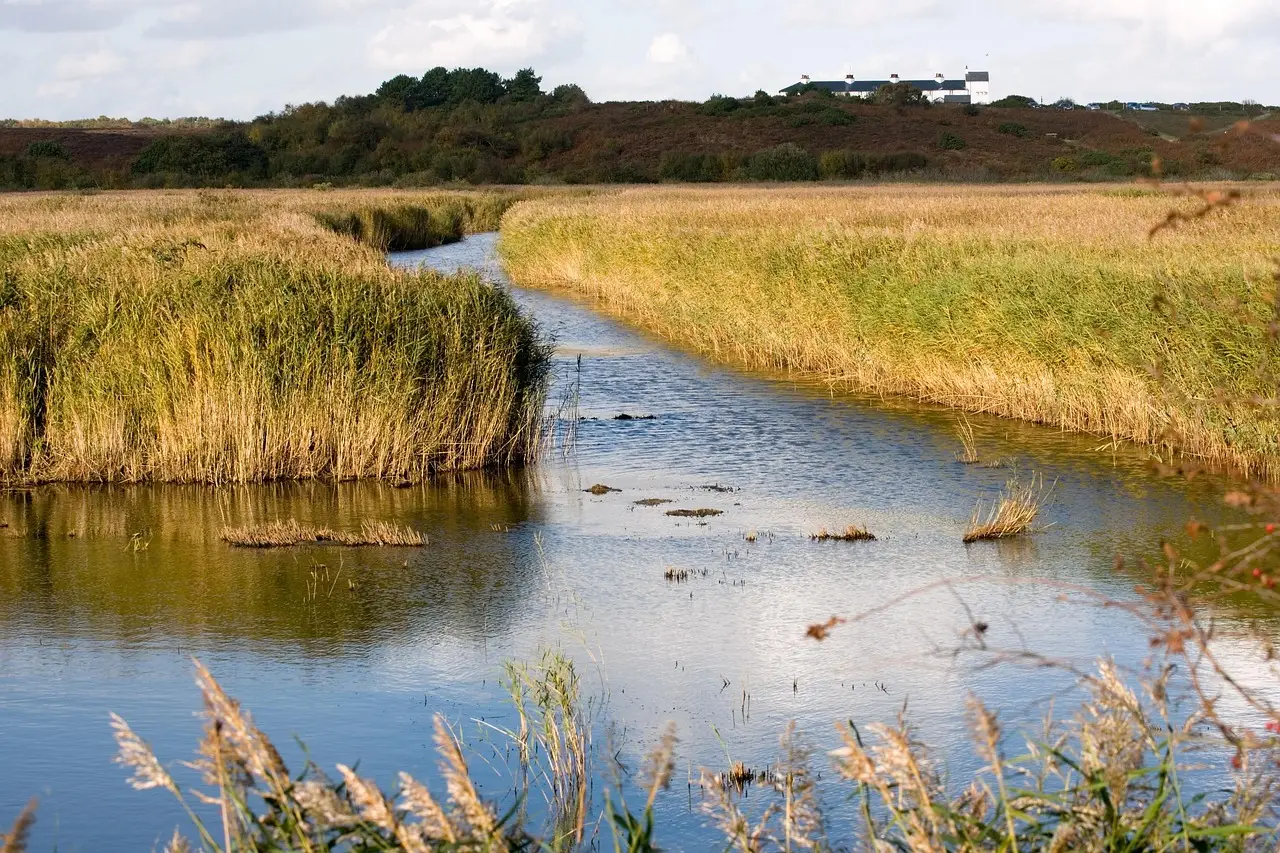
The pictures are black and white, and often stark, lyrical or haunting. Fog settles over marshland, sparse fields sit neatly ploughed, and jagged reeds repeat in still water, giving the sequence its severe physical geometry and rhythm. Wheat stubble resembles a ragged troop of dazed soldiers. A cluster of chestnut burrs resembles open-mouthed chicks. Graphic trees complete the cast.
Takeaway: A narrow route becomes broad in the photographs because attention, rather than distance, supplies the scale.
How does editing turn observation into memoir?
Shand Kydd, accustomed to photographing people, had to rediscover a visual language. He says editing became decisive: in the landscape, the revelations arrived after capture rather than at the instant of taking the picture. He compared the sequence to writing music, with repetitions, peaks, troughs and crescendos. That process makes the pages feel paced rather than merely arranged.
The book also contains Shand Kydd’s own text. He connects the history of Ramsholt and its residents, past and present, with his family links to the village. His brother Adam’s ashes were scattered in the River Deben and along lanes he loved. In the village church, Shand Kydd repeats the names of dead friends and family members like a mantra.
The result is autobiography, but not a literal matching of pictures and memories. He resists any simple equation between an image and its cause. The photographs work through mood, memory and melancholy instead. Their distance from the family story gives that story room to breathe, while repeated trees and water surfaces create a visual continuity beneath the personal narrative.
Takeaway: The book becomes personal without reducing each photograph to a family caption, because image and recollection remain partly independent.
Why does a quiet landscape become a warning?
A quiet message runs through the book. Nothing lasts, whether the subject is a loved one, a landscape or tracks in sand. Shand Kydd found that much of what he photographed had already disappeared. He sees the marsh as vulnerable to climate change and other pressures.
“Things can just go in an instant and once that happens, you can never get them back,” he said. That warning gives the book urgency beyond the pleasure of looking. Its pages invite daydreaming, but they also ask for attention to beauty, pathos and mystery in ordinary natural places.
The restrained sequence makes duration tangible. Each return to reeds, water or ploughed earth turns repetition into a measure of change.
Takeaway: As the Suffolk coast changes under climate pressure, Ramsholt offers both a record of loss and a working method: revisit one place, notice what remains and record what may soon vanish.
Key points
- Every photograph in Ramsholt came from the same 50-minute daily walk near the Suffolk village.
- Shand Kydd used a Rolleiflex and a large-format 5×4 camera for the project.
- His mother, aged 93, first moved to Ramsholt 40 years ago.
- His brother Adam’s ashes were scattered in the River Deben and along lanes he loved.
- The book pairs black-and-white photographs with Shand Kydd’s self-written text on Ramsholt and his family history.
Source: anothermag.com
Grace Kim
Show full bio
Senior reporter covering companies, deals and strategy in Photography exhibitions, photographers, photo books, festivals and awards at Lens Gazette.