Lamassu and Abbasid galleries await as Baghdad museum opens early
The Iraq Museum returns on 1 December after a two-year closure, while Baghdad, Mosul and three governorates press ahead with new collections and openings.

Iraq’s national museum, the Iraq Museum in Baghdad, will reopen on 1 December, ending a two-year closure for renovations, Ali Al-Dakhili, the country’s Minister of Tourism and Antiquities, said in an official government Facebook post last week.
The museum’s initial reopening date was January, so the December return comes ahead of that earlier plan. At publication, neither the ministry nor museum director Luma Yas Jasim al-Douri had replied to a request for comment.
What will visitors see?
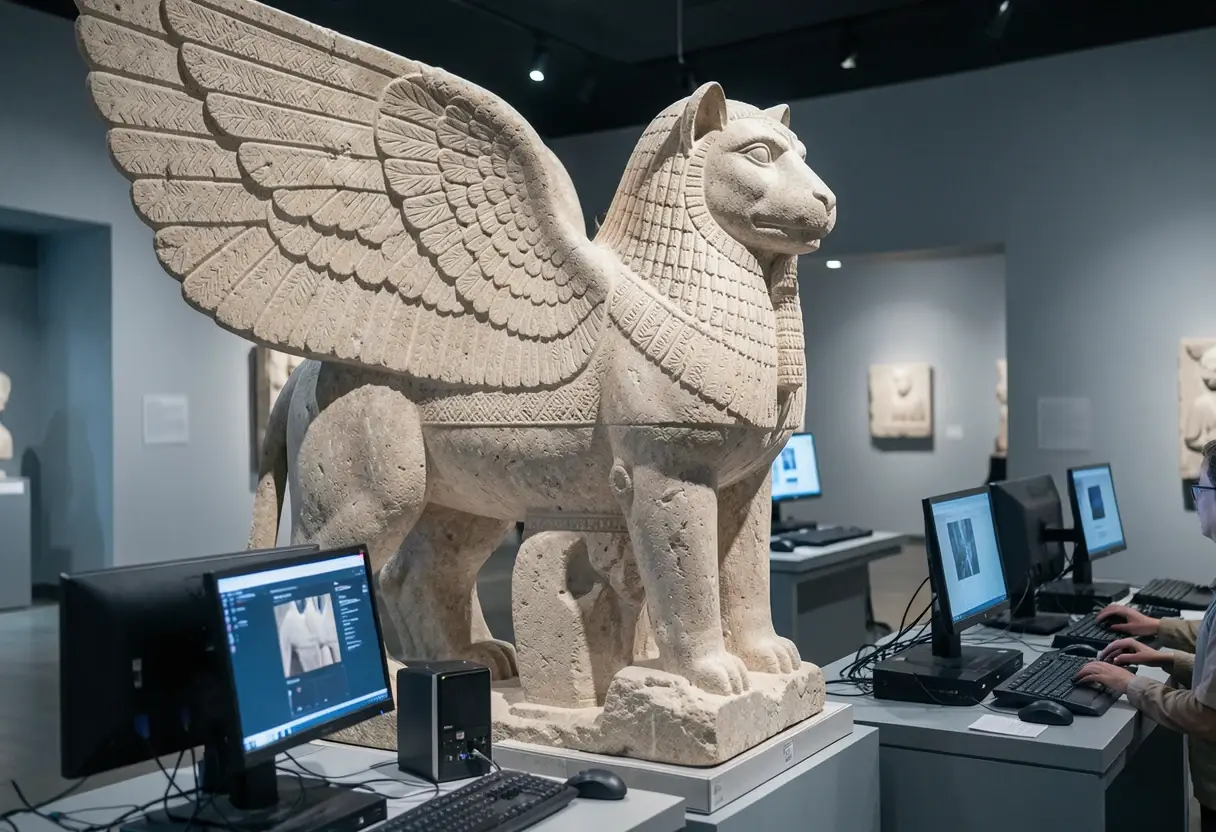
According to Iraqi News, which obtained an official ministry document about the reopening, prepared displays and specially curated wings include Assyrian statues and reliefs: monumental winged bulls, or lamassu; stone carvings depicting Assyrian kings; and cuneiform collections.
New Abbasid and Islamic galleries will present intricately carved wooden mihrabs, monumental calligraphic friezes, mosaics and stone relics. The renewed display spans Assyrian sculpture and written archives as well as later Islamic decorative arts.
The Iraq Museum houses tens of thousands of Mesopotamian, Sumerian, Babylonian and Assyrian antiquities. It has also closed for various periods since it was looted in 2003 during the US-led invasion, a history that gives the 1 December return particular institutional weight.
That history makes the reopening more than a date in a diary. The prepared displays bring collections back into public view, while the wider museum network still includes institutions closed, damaged or awaiting completion.
What does the reopening mean for Iraqi heritage policy?
The reopening is a priority for Al-Dakhili, who was sworn in last month as part of the new government under Ali al-Zaidi. In an official statement on 25 October, he called the museum important and said plans were under way for “a new building that befits the historical and civilisational value of Iraq”.
Another Facebook post from the Ministry of Tourism and Antiquities said tourism could attract foreign investment. The ministry was formerly called the Ministry of Culture, Tourism and Antiquities until the tourism portfolio separated from it in October as part of government restructuring under Al-Zaidi.
Dozens of foreign delegations have recently visited Ur, the site of the Sumerian ziggurat and the birthplace of the Prophet Abraham. Ur lies in Dhi Qar governorate at Nasiriyah, where Al-Dakhili is from.
Paul Collins, keeper of the Middle East Department at the British Museum, has worked with Iraqi colleagues on partnerships supporting museums and heritage in the country. He told The Art Newspaper that the reopening “is an important moment, reflecting Iraq’s strong commitment to preserving its world-renowned cultural heritage and promoting heritage tourism”.
Is this part of a wider museum programme?
Several museums have opened in Iraq in recent months, while others have been announced:
- On 15 November, the Abbasid Palace in Baghdad reopened to the public in an official ceremony, according to Iraqi News.
- Last month, Iraq’s first Jewish museum opened in Baghdad inside the restored Shamash Jewish School, founded in 1928. It displays personal objects, photographs and documents from Iraq’s once-prominent Jewish community, and pays tribute to vocalist Salima Murad and Sassoon Heskel, who served as the modern state of Iraq’s first finance minister.
- A World Monuments Fund spokesperson said the long-awaited Mosul Museum will reopen next spring. It was looted after the 2003 invasion and ransacked by ISIS in 2015.
- Al-Dakhili announced that three new museums in Nineveh, Diyala and Diwaniyah governorates are imminent.
- For Babil Governorate, Al-Dakhili said logistical procedures were under way to complete a museum within the Presidential Palace. The palace is Saddam Hussein’s old palace, located within the site of Babylon; the museum will feature archaeological and heritage collections for the governorate, highlighting its status in the history of human civilisation.
The programme now links a national collection in Baghdad with archaeological sites at Ur and Babylon and a looted museum in Mosul. Its scale ranges from Assyrian sculpture and cuneiform to personal objects, photographs and documents in the Shamash school.
On 1 December, the lamassu, cuneiform collections and Abbasid woodwork will at least have a public room again. The next test is whether the museum programme can turn a run of openings into sustained stewardship.
Key points
- The Iraq Museum in Baghdad will reopen on 1 December after a two-year renovation closure.
- Prepared displays include Assyrian lamassu and cuneiform, plus new Abbasid and Islamic galleries.
- The museum houses tens of thousands of Mesopotamian, Sumerian, Babylonian and Assyrian antiquities.
- The Abbasid Palace in Baghdad reopened on 15 November.
- Mosul Museum is due to reopen next spring, while three museums in Nineveh, Diyala and Diwaniyah are imminent.
Source: theartnewspaper.com
Olivia Hart
Show full bio
Staff writer covering people, launches and day-to-day practice in Photography exhibitions, photographers, photo books, festivals and awards at Lens Gazette.