Ghost in the wave: Vilhelm Gunnarsson photographs Iceland’s surf
Icelandic press photographer Vilhelm Gunnarsson documents the Atlantic-battered south coast in black and white, linking Reynisfjara’s iconic cliffs and black sand to fatal sneaker waves.
By Daniel Okafor
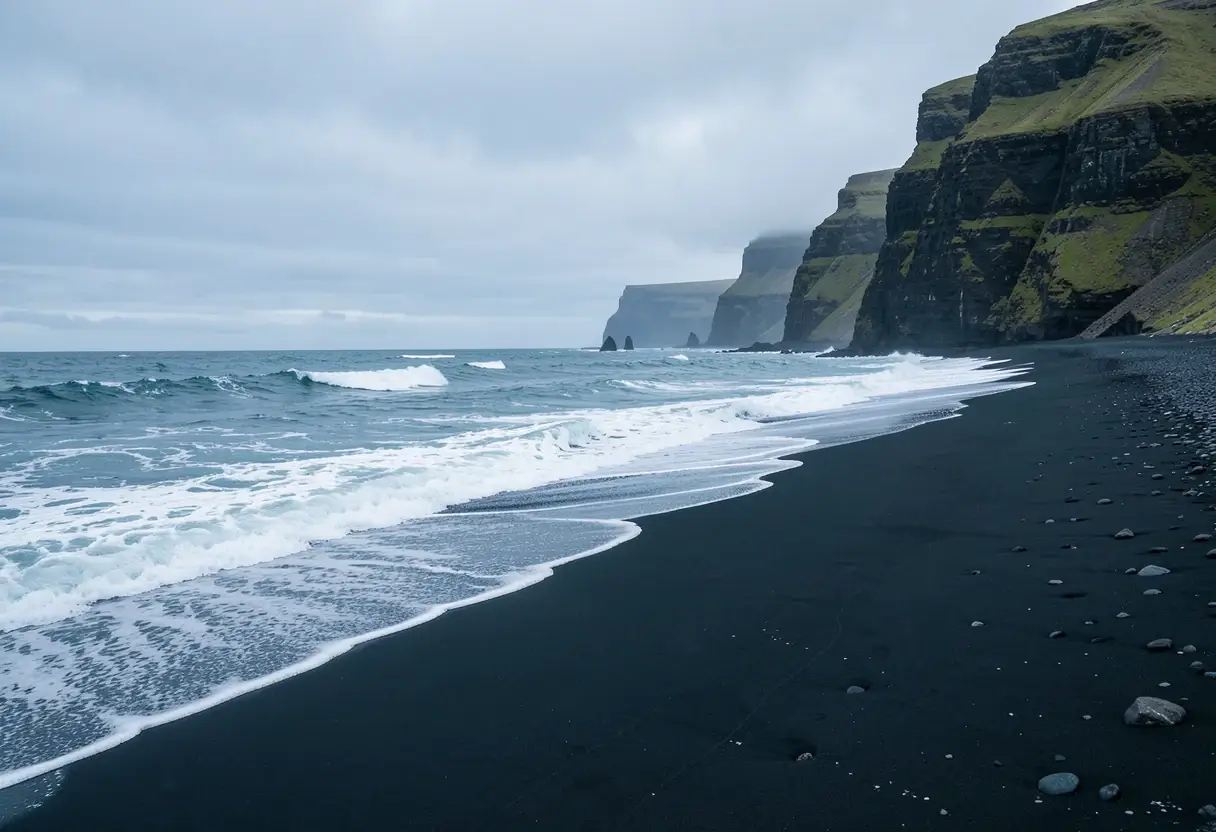
A nine-year-old German girl died at Reynisfjara Beach in what the account dates to “last year”; several other people have been swept out to sea and drowned there. Vilhelm Gunnarsson’s stark black-and-white photographs from Iceland’s south coast place that history beside surf, cliffs and black sand.
What does the ghost in the wave reveal?
At the centre of the project is one image in which a face appears inside a breaking wave. Gunnarsson calls it his “ghost” photograph. Its visual ambiguity is part of the point, although the source gives no account of how the shape formed and cannot establish whether it is a wave, a reflection or a chance alignment.
Gunnarsson said: “That is why my image of the ghost is so important: it reminds people to be cautious, because you never know what lurks in the depths of the ocean.”
That caution has a documented setting. At Reynisfjara, sneaker waves can surge far up the beach without warning, pull people into the sea and cause serious accidents when visitors approach too closely or underestimate the swell—even in good weather.
Reynisfjara’s high cliffs, basalt columns and the Reynisdrangar sea stacks form one of Iceland’s most recognisable views, Gunnarsson said. His wider project documents the south coast to show the ocean striking land with force, while also recording its changing beauty in every kind of weather.
The geography supports his argument. The coast is rocky and raw at its western end, then gives way to black-sand beaches farther east. Compared with a conventional beach postcard, his frames put the wave in the position of evidence: it has mass, reach and consequence. Weather and exposure become part of the subject, not incidental atmosphere.
Black and white sharpens that approach. Colour would separate water, rock and sand, but the monochrome treatment fixes attention on density, spray and gesture. A wave acquires a physical history in the frame: where it broke, how far it crossed the shore and what the wind did to the water.
Gunnarsson also locates the project within Iceland’s dependence on the North Atlantic rather than treating the coast as empty scenery.
“The ocean is close to my heart, as it is to many Icelanders. We live on an island in the middle of the North Atlantic, where the sea is our lifeline. Iceland has some of the richest fishing grounds in the world, and the ocean brings warm currents that make our country habitable.”
Iceland, a Nordic island nation of just over 400,000 people, gains a literal lifeline from those waters through some of the world’s richest fishing grounds; warm currents also make the country habitable, he said. That context gives the series public stakes, though it does not supply a formal institutional framework.
How did Gunnarsson work in the surf?
His method is practical rather than theatrical. All the images were made with Canon cameras except one captured by drone. He says he enjoys working outside in bad weather, including strong winds and sea spray, and protects his equipment by judging when the spray arrives and when to turn back.
That restraint matters. The point is not to prove that a camera can withstand Atlantic weather; it is to keep the camera present long enough for the surf to alter the frame. Gunnarsson’s judgement about when to turn back determines whether a usable image survives at all.
Gunnarsson is a working press photographer in Iceland, and his earlier subjects for PetaPixel included tourists seeing a volcanic eruption for the first time, lava engulfing the Blue Lagoon, and geothermal landscapes photographed by drone. That record suggests a reporter’s eye: people, public spectacle and land in the same frame.
Where does the series go next?
The source names no exhibition, book, gallery commission or publication date; it presents a photographic project and credits every photograph to Gunnarsson. That absence limits what can be claimed. Without an institutional presentation or a complete sequence, the ghost remains a striking single frame, not yet a demonstrated system for reading all of Iceland’s coast.
The project’s next test will be whether Gunnarsson can turn that warning into a sustained body of work, preserving the tension between the Atlantic’s beauty and its danger without letting one spectacular accident define the whole coast. More images are available through his website and Instagram, but the source announces no venue, publication or future show.
Key points
- A nine-year-old German girl died at Reynisfjara Beach in what the source calls “last year”.
- Several people have been swept out to sea and drowned at Reynisfjara Beach.
- Iceland has a population of just over 400,000.
- All but one image in the project was made with a Canon camera; the exception was captured by drone.
- The series covers Reynisfjara’s cliffs, basalt columns, Reynisdrangar sea stacks and the south coast’s black-sand beaches.
Original: icelandmonitor.mbl.is
Daniel Okafor
Show full bio
News editor covering companies, deals and strategy in Photography exhibitions, photographers, photo books, festivals and awards at Lens Gazette.