Four Days, Nearly $10,000: Testing Leica's First Formula One Camera
Leica's first Formula One camera costs almost $10,000. Four days with the carbon-fiber Q3 43 F1 edition reveals a meditative street camera dressed in racing nostalgia — and a tester who won't buy it.
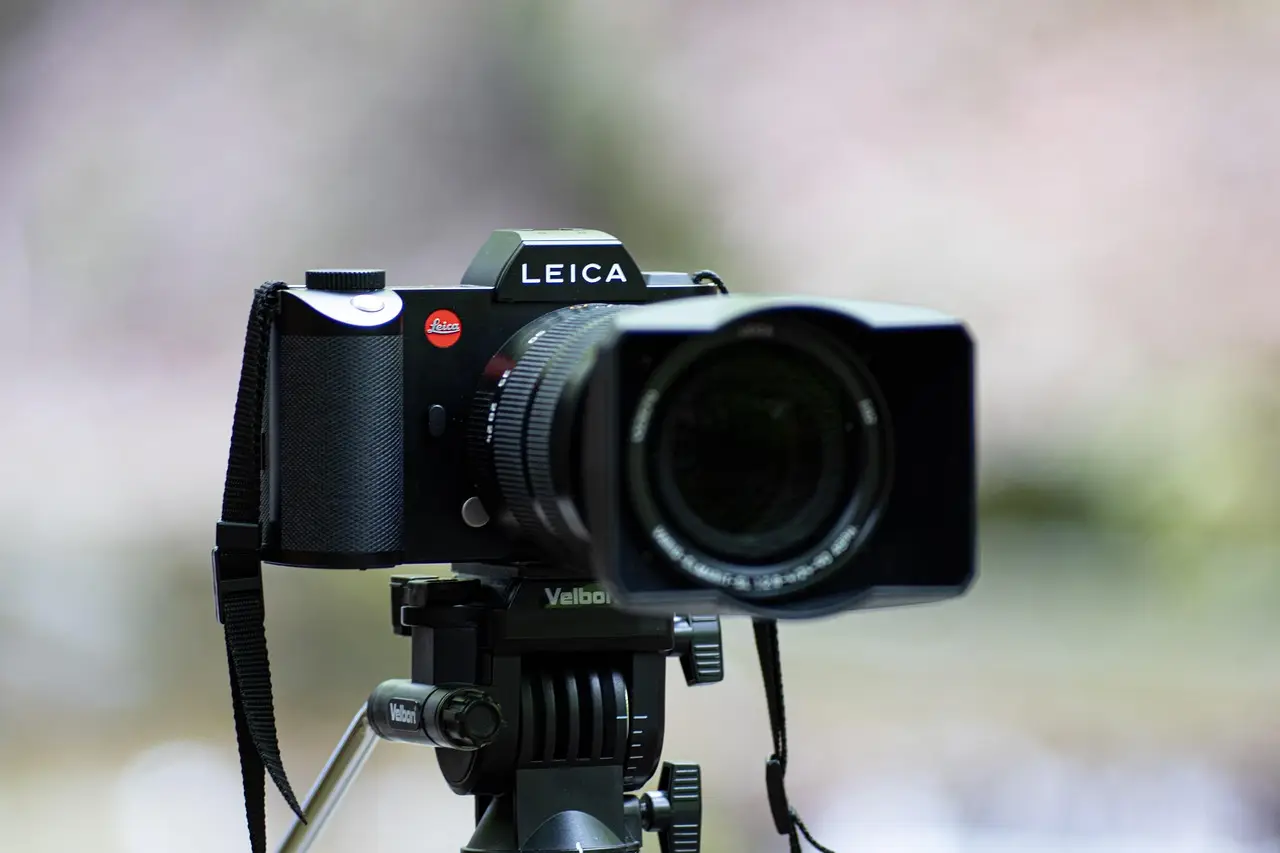
Leica's first Formula One camera costs almost $10,000, and after four days with it, one tester says he won't be buying it. That is the most honest sentence you can write about the Leica Q3 43 F1 edition, a limited-run compact that arrived this week in a brown cardboard box and borrows its identity from a sport that builds cars out of the same material as its grips.
The reviewer, a longtime F1 fan who says he can list every World Champion back to the 1980s, admits the sport's new popularity — driven by Netflix's Drive to Survive and, in his words, Charles Leclerc's boyish good looks — is probably why this camera exists at all. New fans, new merchandise, new special editions. So far as he knows, this is Leica's first foray into F1. A caveat belongs there: brands rarely confirm what came before, and neither does he.
What does the F1 edition actually change?
The base camera is the Q3 43, a fixed-lens compact with a 60-megapixel sensor and a 43mm lens. The F1 treatment is almost entirely tactile:
- Carbon fiber grips, a material F1 teams have used to build cars for roughly 40 years because it is light and strong
- Non-slip microvelour covering modeled on a racing steering wheel
- A soft-release shutter button with carbon inlay and a red rim, which the reviewer compares to an old-school stopwatch
The microvelour deserves its paragraph. The pictures don't do it justice, he writes, calling it a beautiful touch he couldn't stop running his fingers over — like when you've just shaved your head. His mother called the camera handsome. The BMX riders he showed it to were particularly impressed with the finish. Everyone he handed it to over four days was taken with it.
Photography and Formula One do share a genuine history, and the reviewer reaches for the strongest example he has: Nigel Mansell and Ayrton Senna glancing at each other while driving nearly 200 miles per hour in Barcelona in 1991, wheels inches apart, each daring the other to brake first. The sponsor on Mansell's wing reads Canon, which backed Williams in the team's glory days. That photograph is his favourite F1 image of all time. It is also, notably, a Canon picture — not a Leica one.
Can it actually shoot racing?
Here the marketing collides with the machine. The reviewer wanted to shoot pulsating auto action and quickly realized that, despite the F1 logo on the front, this is not a camera for high-speed subjects. It is still a Leica Q3. It wants you to slow down and think carefully about what you're shooting.
He quotes Chris Niccolls's review of the standard Q3 43: "There is a simplicity and a meditative experience to be had, wandering the streets with a compact camera on your shoulder." That, he says, is true. It's a strange confession for a racing-branded camera — the closest thing to a verdict that this is a lifestyle object first and a sports tool not at all.
As a camera, though, he fell for it. He'd never shot a Q3 at any focal length, and he calls it perfectly proportioned and a joy to use, one that took no time to set up. He particularly liked the little zoom button that crops into the sensor, stepping from the 60-megapixel 43mm field of view down to a five-megapixel 150mm end. Useful? Yes, though five megapixels is a small file by any modern measure, and he doesn't dwell on that.
Is it worth it?
The camera was already on its way back to Leica as he wrote. He will miss it, he says. But at almost $10,000, it is very unlikely he will buy one.
That closing line is the review's real conclusion. The Q3 43 F1 is a beautiful object with racing cosmetics on a contemplative core, priced beyond almost everyone who might want it. Whether Leica extends the F1 partnership beyond this limited run — more editions, deeper tie-ins, actual motorsport photography credentials — remains unsaid, and the company hasn't hinted either way.
Key points
- The Leica Q3 43 F1 edition costs almost $10,000
- It is, so far as known, Leica's first-ever foray into Formula One
- The camera features carbon fiber grips and a 60-megapixel sensor with 43mm lens
- A crop mode extends the view to a five-megapixel 150mm equivalent
- The reviewer tested it for four days before returning it to Leica
Source: PetaPixel
Daniel Okafor
Show full bio
News editor covering companies, deals and strategy in Photography exhibitions, photographers, photo books, festivals and awards at Lens Gazette.