Formula 1 Suspected of Using AI to Fake Camera Transitions in Broadcasts
Formula 1 is suspected of using AI to create impossible camera transitions, including a seamless pit-lane shot of Max Verstappen in Singapore that no real camera could film.
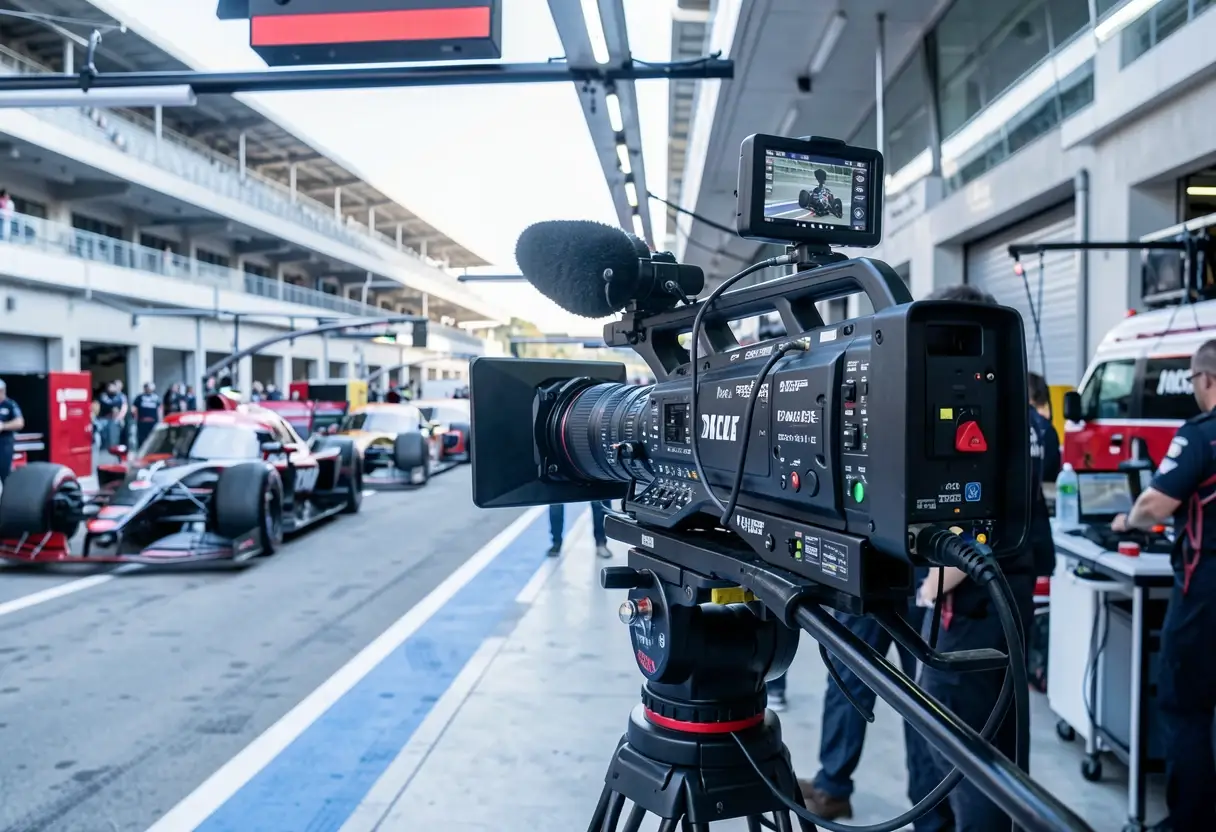
Formula 1 has been accused of using artificial intelligence to manufacture television shots that no physical camera could ever capture. The evidence is a single, seamless transition: a pit-lane camera appears to lift off and fly with Max Verstappen's Red Bull as the four-time world champion pulls away from his stop at the Singapore Grand Prix, joining him just above the cockpit within one unbroken shot.
The series posted the clip itself on October 11 with the caption "Seamless." That word choice now looks like an own goal. The shot drew immediate suspicion across social media, where viewers concluded that no camera operator, crane or cable rig could move that fast, that smoothly, from the pit lane to a position hovering over a departing car.
A second clip has already vanished. It showed George Russell's Mercedes being joined mid-race by a camera standing at the side of the track in Baku, in a transition of the same impossible kind. That Azerbaijan video has apparently been scrubbed from the internet, presumably at the request of Formula 1, though PetaPixel confirms it viewed the footage before it disappeared. The removal is not proof of guilt. But it does nothing to quiet the questions.
What is actually happening in the shot?
The mechanism is simpler than the footage suggests. Matt Amys, a digital creator who produces explainers about how Formula 1 works, says the broadcast team has been using AI transitions since at least the Dutch Grand Prix in August.
Crucially, the AI is not inventing the racing. "It's not generating racing footage," Amys says. It generates only "the bit between two real camera shots."
His explanation is precise. "There's no real camera moving between [the two shots]," Amys told PetaPixel. "The way I believe this works is that you give it the first point and the end frame of these two real camera positions, then you tell it to create the missing movement between those two camera positions, which will then generate a camera automatically that never happened in real life."
In plain terms, two genuine frames bracket a synthetic one. The system imagines the journey between them. The result is a virtual camera path that no operator ever filmed.
The takeaway: the racing is real, but the flight between two real shots is manufactured from nothing.
Can viewers spot the fakes?
Yes, and Amys describes the tells. The synthetic segment betrays itself in small ways. Text on the car's decals becomes illegible during the transition, because the AI cannot resolve fine lettering it was never truly shown. The footage also slows down before suddenly speeding up again, a rhythm break visible in the Singapore clip of Verstappen.
The takeaway: the artefacts are visible if you know where to look, and the decal text is the easiest check.
Is this use of AI acceptable?
Opinion has split, but not along the usual battle lines. AI in photography and film usually triggers fierce complaint. Here, a significant share of viewers accepted the technique as harmless.
One commenter, DavidBrooker, writing on a Reddit thread discussing the matter, put the case plainly: "I think in terms of artistic integrity a scene or cut transition is one of the least offensive uses of AI out there."
The argument has some force. The racing itself remains untouched. Lap times, tyre wear, pit crews and driver skill are all physical facts. What the AI adds is a few seconds of connective tissue between two honest camera positions, replacing a hard cut with an impossible swoop.
The counterargument also has force. Broadcast is a photographic form, and its credibility rests on the idea that the pictures correspond to events. Once a viewer knows some shots contain imagined motion, every extraordinary image becomes a question. Was that crane shot real? Was that aerial real? A sport that sells itself on authenticity pays a price each time it borrows imagery that never existed.
There is also the governance question. PetaPixel contacted Formula 1 for clarification and received no reply. Silence from the rights holder leaves fans to rely on frame-by-frame forensics and the analysis of independent creators. For a series that polices technical infractions on the car to the millimetre, an undeclared synthetic layer in the broadcast sits awkwardly.
The takeaway: the technique may be inoffensive, but an undisclosed one erodes trust in everything else on screen.
What happens next?
Formula 1 arrives in Texas this weekend with the story still open. No official statement has clarified whether AI-generated transitions are policy, experiment or accident, and the deleted Russell clip from Baku suggests the series would rather the subject stay quiet.
That position will get harder to hold. Detection is improving, creators like Amys are documenting the tells, and every new impossible shot will now be examined frame by frame. The likely endpoints are two: Formula 1 either discloses which transitions are synthetic, or keeps generating them quietly and lets viewers decide what they are watching.
The takeaway: the races are decided on track, but the argument over what a broadcast may invent is only beginning.
Key points
- The suspect Verstappen pit-lane transition was posted by Formula 1 on October 11 from the Singapore Grand Prix.
- Matt Amys says F1 has used AI transitions since at least the Dutch Grand Prix in August.
- A similar AI-suspected clip of George Russell in Azerbaijan has been wiped from the internet.
- PetaPixel contacted Formula 1 for comment and received no reply.
- Tells include illegible decal text and sudden speed changes during the transition.
Original: x.com
Grace Kim
Show full bio
Senior reporter covering companies, deals and strategy in Photography exhibitions, photographers, photo books, festivals and awards at Lens Gazette.