Edge Control Turns Hidden-Camera Images on Race and Beauty
"Edge Control" is a new art exhibition built on hidden camera images, using covert photography to interrogate how race and beauty are watched, judged and recorded.
Updated
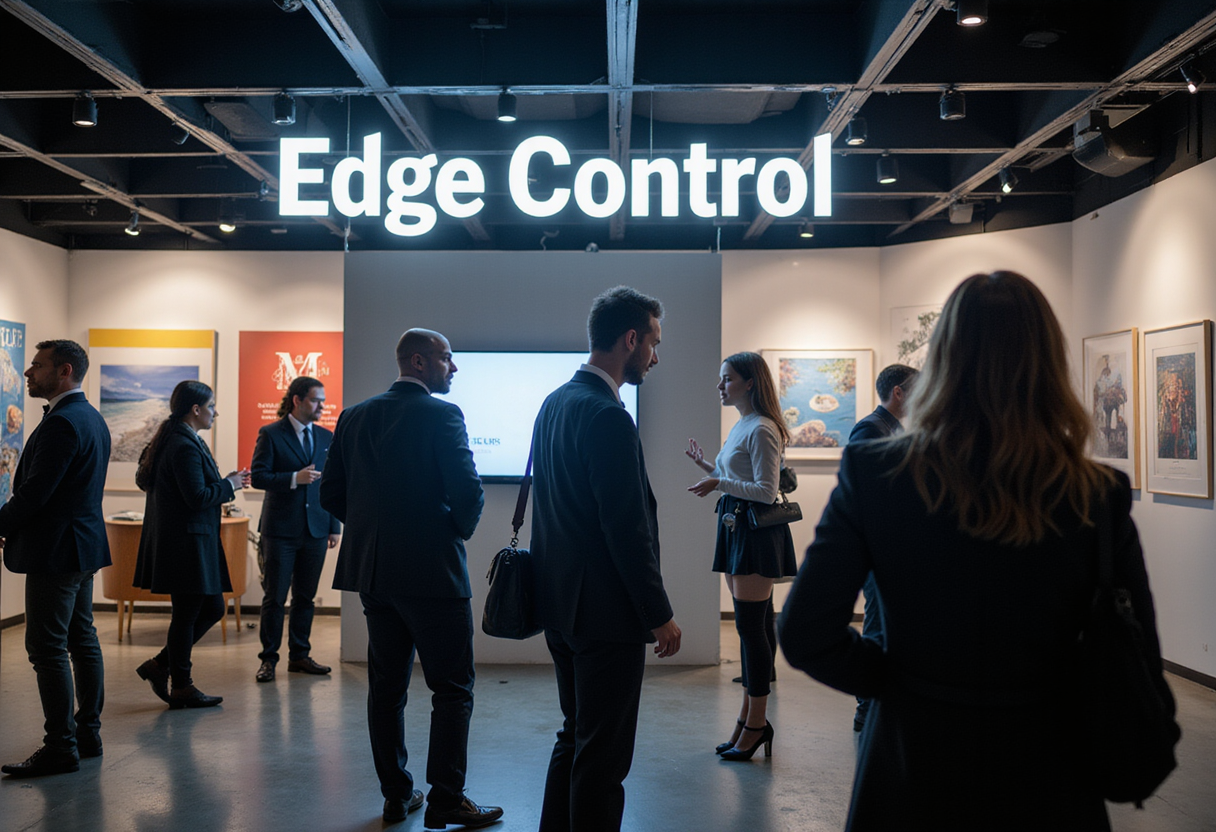
"Edge Control" is an art exhibition built around hidden camera images, and it uses them to interrogate race and beauty. That is the hard fact at the centre of this story, and it is an unusual one. Covert photography rarely enters the gallery as a deliberate artistic method; when it does, the ethical and political stakes are immediate.
The exhibition's title carries a double edge. "Edge control" names a hairstyling practice central to Black grooming culture — the brushing and gelling of the hairline into a smooth, sculpted edge. The phrase belongs to the vocabulary of beauty salons and bathroom mirrors. Attached to an exhibition about race and beauty, it signals that the show is interested in the labour of appearance: the daily, intimate work of presenting a face to a world that judges faces along racial lines.
Why hidden camera images?
The curatorial choice is the story. Hidden camera imagery sits at the far end of photography's ethical spectrum. The subject does not know the camera is there, does not consent, and cannot compose a self. Documentary photography has argued about this boundary for a century — from street photography's candid tradition to surveillance art — and exhibitions that embrace the covert lens usually do so to make a point about power.
In the context of race and beauty, that point sharpens considerably. Beauty standards have historically been measured, classified and policed through images the subject did not control: anthropometric photographs, complexion charts, advertising imagery. An exhibition that deliberately deploys hidden camera pictures re-stages that dynamic inside the gallery. The viewer becomes the one watching unseen, and the discomfort of that position is presumably part of the work's argument.
The pairing also raises the question every visitor will bring through the door: who took these images, of whom, and under what circumstances? The answers determine whether the show functions as critique or as a repetition of the surveillance it describes. The best art in this vein — work that exposes how bodies are watched — makes the audience feel the watching. Whether "Edge Control" achieves that can only be judged in the room.
What does the title tell us about the work's themes?
The beauty strand is not decorative here. Grooming, hair and skin are sites where racial hierarchy has been enforced through aesthetics — what counts as polished, professional, beautiful, presentable. "Edge control" is both a technique and a metaphor: control exerted at the boundary, at the edge, where the body meets public judgment.
Hidden camera images push against that regime from the other side. Where edge control is self-presentation at its most deliberate, covert photography captures people without their presentation at all. Between those two poles — the composed self and the captured self — the exhibition locates its subject: the gap between how people present themselves and how systems of looking record them.
Race enters through the history of that gap. Photography's role in constructing racial categories is one of the medium's founding shames, from colonial survey imagery to twentieth-century eugenics archives. Contemporary artists have spent decades turning the camera back on that history. An exhibition using hidden camera images to explore race is working in that lineage, and the method's discomfort is the argument's engine.
How does this fit the current exhibition landscape?
Shows that treat beauty as a political technology rather than a consumer category have gained institutional ground in recent years. Curators increasingly frame hair, skin and grooming as archive-worthy subjects, and photography sits at the centre of that shift because it is the medium through which beauty standards circulate.
"Edge Control" joins that conversation with a methodological provocation most such shows avoid. Where exhibitions about representation typically foreground consent, authorship and collaboration — who is photographing whom, and on what terms — this one builds itself from images made without the subject's knowledge. That decision will invite scrutiny, and it should. Art that borrows surveillance's tools owes its audience a clear account of why the borrowing is justified.
The exhibition's coherence will rest on that account. If the hidden camera images are contextualised — historicised, attributed, framed within an argument about looking — the show could be a genuinely uncomfortable and valuable addition to current debates about imagery and race. If they are presented as found spectacle, the exhibition risks reproducing the very dynamics it names.
What should visitors watch for?
Visitors should watch the watchers — themselves. The strongest test of a show built on covert imagery is whether it makes its audience aware of its own looking. A gallery wall of hidden camera pictures, hung at eye height, asking viewers to consider beauty and race, is a device that either indicts or implicates, and the difference lies in the hanging, the labelling and the curatorial framing.
They should also watch for the seam between the two halves of the show's subtitle. Race and beauty are not the same subject, and exhibitions that conflate them flatten both. The title's grounding in hair culture suggests the show knows this — that beauty, for racialised bodies, has never been a neutral category but a set of requirements, measurements and refusals.
"Edge Control" opens a set of questions the photography world is currently forced to answer honestly: what images owe the people inside them, and what happens when the camera takes without asking. As details of the exhibition's venue, dates and participating artists circulate, the critical test will be whether the work's covert method earns its place — or whether the gallery, like the hidden lens, is simply taking pictures of people who never said yes.
Key points
- "Edge Control" is an art exhibition using hidden camera images as its core material
- The exhibition explores the intersection of race and beauty
- The title references 'edge control', a hairstyling practice rooted in Black grooming culture
- The show's method — covert, non-consensual imagery — places it within photography's surveillance-art lineage
- Venue, dates and artist list had not been detailed in the initial announcement
Source: Google News: photography exhibition
James Calloway
Show full bio
Market editor covering industry trends and analytics at Lens Gazette.