Cape Town Photography Festival Returns to Interrogate Truth
The Cape Town Photography Festival returns with a programme centred on 'truth' in an age of manipulation, putting the photograph's evidentiary claim back on trial.
Updated
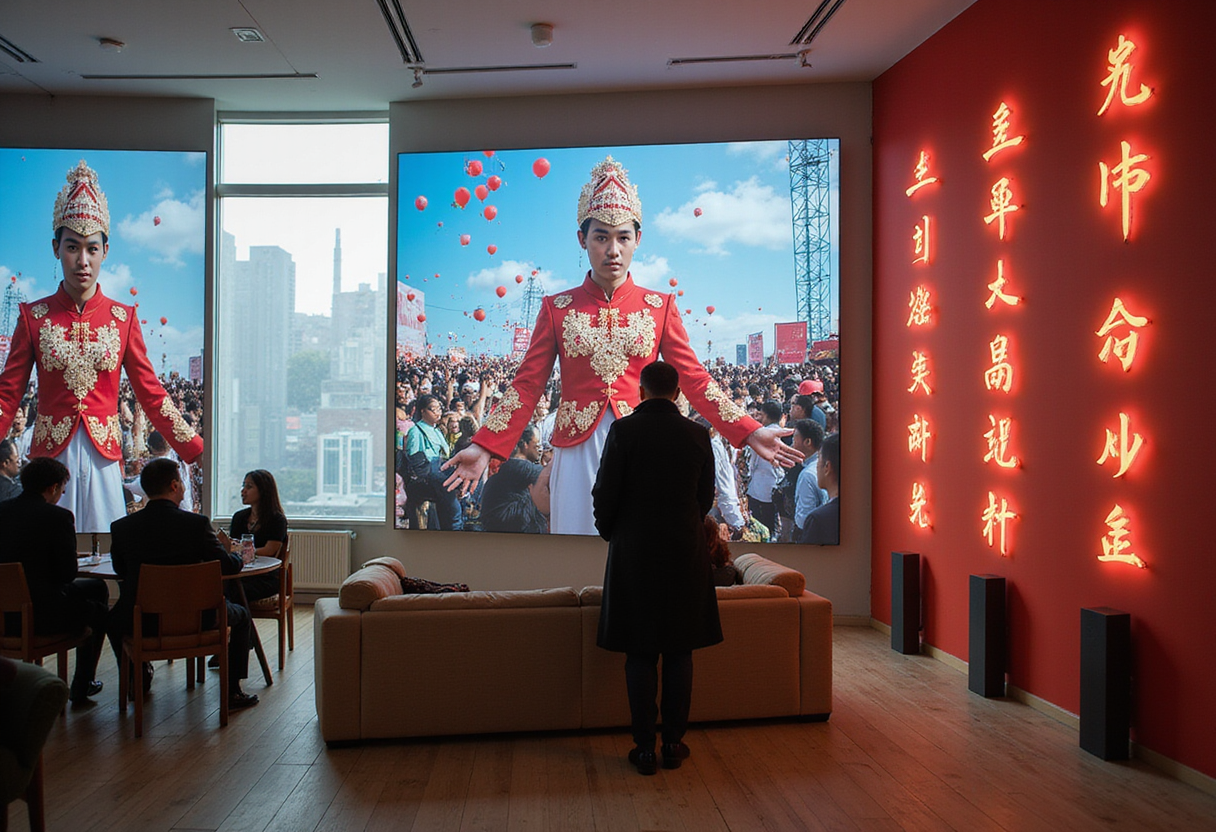
The Cape Town Photography Festival has returned, and its organisers have chosen a pointed theme for this edition: "truth" in an age of manipulation.
The framing could hardly be more timely. Photography has spent much of the past decade losing its default claim on evidentiary authority. Computational photography, algorithmic retouching and now generative image-making have blurred the line between what a camera recorded and what a machine invented. A festival that once might have treated the medium's relationship to reality as a settled question now puts that question at the centre of its programme.
Cape Town is a fitting host for that conversation. South African photography carries a long and heavy history of testimony — images made under apartheid functioned as documents, counter-narratives and evidence, and photographers such as Ernest Cole, David Goldblatt and Santu Mofokeng built bodies of work whose moral weight depended on the photograph's status as a record. That inheritance gives local debates about manipulation a sharper edge than they might carry elsewhere. When a South African audience asks whether a photograph can still tell the truth, it is also asking what happens to a tradition of documentary witness when the ground beneath it shifts.
The festival's return itself is part of the story. Cape Town's photography scene has grown steadily in visibility over the past two decades, anchored by institutions such as the South African National Gallery, the Cape Town-based photojournalism tradition, and a commercial and independent gallery ecosystem that has increasingly platformed lens-based work from across the continent. A dedicated photography festival in the city serves as both a local platform and an international signal — a claim that Cape Town belongs in the global circuit of photo festivals alongside Arles, Lagos and Bamako.
The theme of manipulation invites several kinds of work. One strand is almost certainly forensic: images that expose the seams of digital alteration, or that interrogate how propaganda, advertising and state narratives have always bent the photograph to their purposes. Manipulation, after all, predates the algorithm. Stalin's censors airbrushed commissars out of frames; apartheid-era propaganda chose its angles carefully. Another strand is likely more formal — artists who embrace constructed, staged or digitally altered imagery not to deceive but to ask what truth a fabricated image can nonetheless carry. The most interesting festival programming tends to hold those two impulses in tension rather than choosing between them.
There is also a pedagogical dimension to a theme like this. Audiences now consume images primarily through screens, stripped of context, compressed, captioned by strangers. A festival that asks viewers to slow down and interrogate what they see performs a small act of resistance against the feed. Whether this edition succeeds will depend on whether its exhibitions give viewers tools for that interrogation — or merely gesture at the problem with a theme statement.
The stakes extend beyond one festival. Institutions worldwide are wrestling with how to exhibit, collect and label photographs in an era when the question "is it real?" has become both unanswerable and insufficient. Curatorial practice is adapting: wall texts increasingly disclose process; artists are asked to state where documentary ends and construction begins. Cape Town's contribution to that adaptation will be watched, because the city's photographic history gives it a distinctive authority on the question.
If the festival can convert its timely theme into a rigorous programme — one that treats manipulation as a historical, political and aesthetic condition rather than a technological novelty — it will do more than ride a headline. It will help define how photography's oldest promise, to show us what happened, gets renegotiated in the years ahead.
Key points
- The Cape Town Photography Festival has returned for a new edition.
- This edition's theme is 'truth' in an age of image manipulation.
- The festival is hosted in Cape Town, South Africa.
Source: Google News: photography festival
Daniel Okafor
Show full bio
News editor covering consumer brands and retail at Lens Gazette.