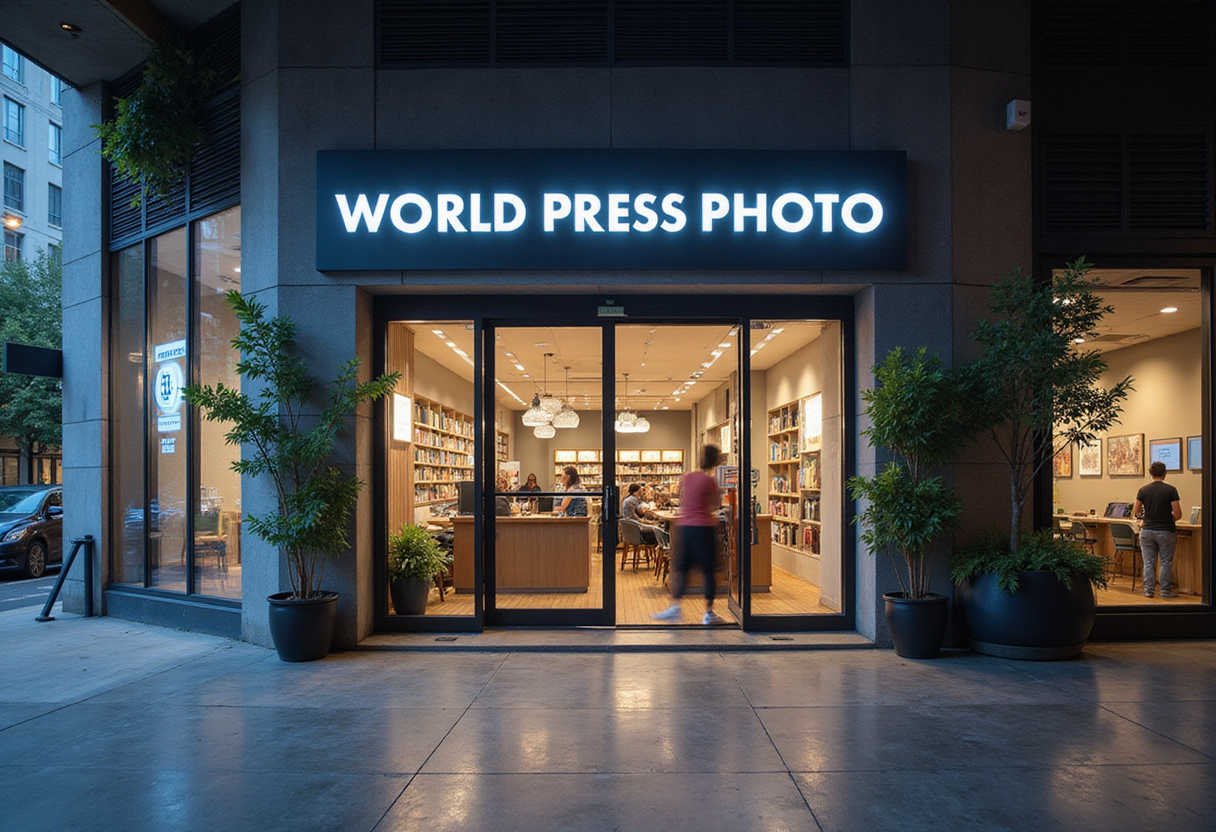
World Press Photo 12 Exhibition Opens at Barcelona's CCCB
The World Press Photo 12 exhibition opens at CCCB in Barcelona. The touring show presents the 2012 documentary prize winners, including Samuel Aranda's Photo of the Year from Yemen, alongside public programming on visual journalism.
Updated
The World Press Photo 12 exhibition is now on view at the Centre de Cultura Contemporània de Barcelona, presenting the 2012 edition of the world's most widely watched annual documentary photography prize.
By Grace Kim
What does the exhibition contain?
World Press Photo was founded in Amsterdam in 1955. It operates the longest-running annual award in photojournalism. Photographers from around the world submitted work for the 2012 judging.
A jury reviewed the entries. The panel selected a curated set across categories. These include contemporary issues, daily life, portraits, sports, and nature. A single World Press Photo of the Year receives dedicated gallery space with extended caption detail.
The 2012 World Press Photo of the Year went to freelance photographer Samuel Aranda for a frame captured inside a mosque in Sana'a during unrest in 2011. The image shows a Yemeni woman, cloaked in black, holding close a wounded relative. The choice placed domestic consequence ahead of foreign spectacle, an editorial argument the jury resolved by image.
Takeaway: The exhibition offers a curated cross-section of the year's photojournalism, organized by category rather than by event or geography.
What does CCCB bring to the presentation?
CCCB sits on Carrer de Montalegre in the Raval district of Barcelona. The institution frames the contest within broader programming on contemporary visual culture. Public lectures, panel discussions, and school visits accompany the photographic display.
The Barcelona venue has hosted World Press Photo across multiple editions. The arrangement reflects an institutional commitment to press photography as a continuing cultural concern. Spain's news media navigated significant economic strain during the early 2010s.
The exhibition forms one of the few venues where documentary image-makers receive sustained public attention in Catalonia. The center's leadership views photojournalism as a civic resource, not as a declining craft. Programs run in parallel, extending the visit beyond passive gallery looking.
Takeaway: CCCB frames the prize as a teaching tool, not as a celebrity showcase.
How does the curation shape the viewing?
The exhibition arranges images by category rather than by region or chronology. Wall texts avoid editorial commentary. The photographs carry their own argument.
That restraint places interpretive weight on the viewer. Visitors must read the image itself. Some arrive expecting literary scaffolding and find none. The omission itself functions as a form of curatorial pedagogy.
Documentary photographers arrive to study craft and editorial selection. Educators arrive with student groups. Tourists and neighborhood residents arrive for visual experience alone. The exhibition accommodates all three modes without flattening any of them.
Takeaway: Curation is silent on purpose, and that silence shapes the gallery encounter.
Where does the broader context sit?
Photojournalism has moved steadily closer to the museum context across two decades. World Press Photo juries have rewarded essays over singular decisive moments. The shift raises ongoing questions about the line between news photography and art photography.
CCCB has used the exhibition to anchor discussions on press freedom, image ethics, and visual literacy. Such discussions gain weight during periods of reduced newsroom capacity. The work operates as both celebration of the year's photojournalism and implicit audit of institutions that commission it.
The annual show documents events that newsrooms chose to cover and events newsrooms chose to leave alone. Barcelona visitors receive a survey of how international picture editors judged a single year's coverage.
Takeaway: The prize names winners; it also exposes what falls outside the frame.
What comes next?
CCCB has signaled continued engagement with documentary photography programming through subsequent seasons. The European leg of the World Press Photo tour typically returns to Barcelona as a confirmed venue.
The next edition will follow the same judging structure. It will travel the same global network of cities. The unresolved task for visitors is to look beyond the curated wall and ask what the year looked like when nobody was photographing it for prize.
Key points
- The World Press Photo 12 exhibition is on view at CCCB in Barcelona
- World Press Photo, founded in Amsterdam in 1955, is the world's longest-running annual documentary photography prize
- Samuel Aranda won the 2012 World Press Photo of the Year for a photograph taken inside a mosque in Sana'a during 2011 unrest
- The exhibition is organized by category, including contemporary issues, daily life, portraits, sports, and nature
- CCCB has hosted the touring exhibition across multiple editions, anchoring it within broader public programming on press freedom and visual literacy
Source: Google News: World Press Photo
Grace Kim
Show full bio
Senior reporter covering companies, deals and strategy in Photography exhibitions, photographers, photo books, festivals and awards at Lens Gazette.