Visible Justice Takes Up Residence at London's ICA Until 2027
Visible Justice, founded at London College of Communication in 2018, is in residence at the ICA until 30 April 2027, exploring justice beyond the law through images.
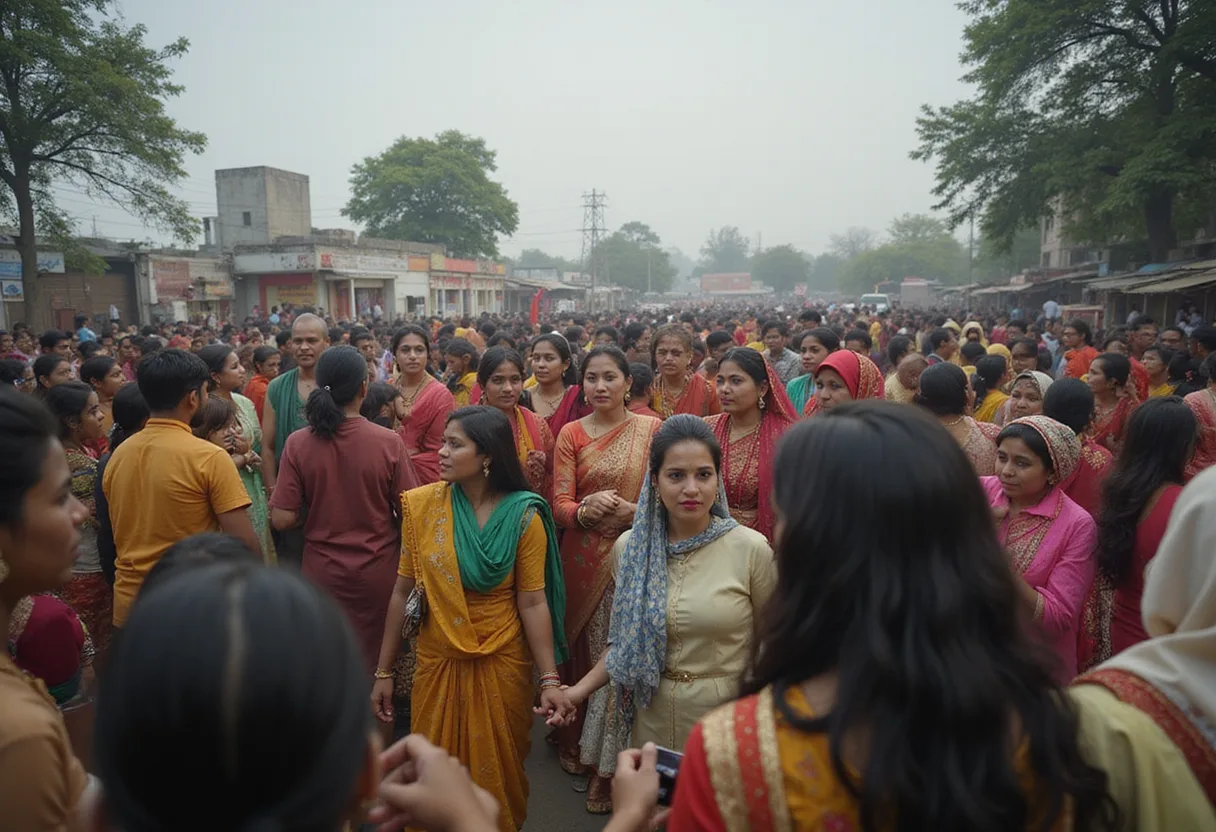
On 20 May 2026, Visible Justice opened a year-long residency at London's Institute of Contemporary Arts — and it runs until 30 April 2027, ending with a weekend takeover next spring. That's the frame. What happens inside it is harder to categorise: part seminar, part vigil, part screening programme, run by an academic research hub that insists on leaving the university behind.
The opening evening gathered photographic artist Amak Mahmoodian, legal scholar Patricia J Williams and poets Sunnah Khan and Haia Mohammed, plus a screening of Walid Raad's 1998 short film The Dead Weight of a Quarrel Hangs. The focus was visibility and resistance in Palestine, Lebanon and Iran. Mahmoodian presented her series One Hundred and Twenty Minutes; Mohammed, evacuated from Gaza in 2025, read from her debut pamphlet, The Age of Olive Trees.
On 9 July, the collective returned to the ICA with writer Lola Olufemi and filmmakers Saeed Taji Farouky and Sofia Karim — whose uncle, the photographer and curator Shahidul Alam, was detained by the Bangladeshi government in 2018 — to discuss policing, prisons and punishment, including current changes to UK law around protest and direct action. The following evening brought Steve McQueen's 2008 film Hunger, on Bobby Sands' 66-day hunger strike in the Maze Prison in 1981. Heba Muraisi, who undertook a 73-day hunger strike from the end of 2025 after being jailed for pro-Palestine protest, introduced it, alongside Francesca Nadin, founder of Prisoners for Palestine.
What holds it together?
One medieval legal concept, as it happens. The residency is underpinned by habeas corpus — the demand to "produce the body", the requirement that detained people be brought before a judge. The body runs through the whole programme as both site of injury and site of resistance.
Visible Justice is based at University of the Arts London but was built by two people with a shared obsession with where images meet legal systems. Max Houghton leads the MA photojournalism and documentary photography course at London College of Communication; her PhD, supervised by lawyer Philippe Sands KC at UCL, examined how visual materials were used at the Nuremberg Trial and how those uses still shape the present. David Birkin, an artist who also teaches at LCC, is doing a PhD at Goldsmiths' Centre for Research Architecture under Kodwo Eshun of The Otolith Group and Susan Schuppli of Forensic Architecture, tracing aerial violence, lawfare and resistance through aerial photography.
"When I was living and teaching in the US I was looking to human rights law and international law as a solution to injustices like forced disappearances or drone strikes," Birkin explains. "But I've come to realise that the law is not the site of justice for so many people, and increasingly so, as we move towards more draconian and repressive measures."
Where did it come from?
The spark was a student collaboration with human rights organisation Reprieve at LCC. The work was strong enough that Houghton and Birkin refused to let the thread drop, and in October 2018 they staged a symposium and exhibition at LCC, both titled Collective Imaging and Imagining, with work by Birkin, Shahidul Alam, Larry Achiampong and David Blandy, Edmund Clark and Helene Kazan. Symposia followed: Embodied Activism at LCC in May 2019 with Poulomi Basu, Sim Chi Yin and Abd Doumany, and Decoding the Gaze: Iconography and the Algorithm at The Photographers' Gallery that November.
In 2021, a collaboration with Williams — pairing photography students in London with her philosophy students in Boston — grew into Infinitude, an exhibition at Northeastern University's Center for the Arts. The title borrows Emerson's "infinitude of private man"; Houghton and Birkin stretched it further, writing that it also "conjures the vast scale of the galaxy and the seemingly boundless reaches of technology and personal ambition driving the contemporary space race."
Why the ICA and not a lecture hall?
"For the conversation to take place in a truly generative way, it needs to be as public as possible," says Houghton. "We want to take it out of the university and be public-facing." In February 2025 the collective curated Hostile Environments: What Happens to the Land, Happens to Us at Tate Modern, alongside the exhibition Gathering Ground. Actor and activist Khalid Abdalla led the audience to Abbas Zahedi's work Begin Again, where a drone's sound filled the space before a silence of 76 seconds — one for each year since the Nakba.
The ambition, the founders say, is room for collective grief in "this incredibly violent political moment", and space for joy too — emotion, mess, the human, set against what Birkin calls the "slick, glossy, consumerist content in most museums". Houghton reaches for "the underside of the image": the idea that pictures connect with the unconscious and help build new imaginaries. Birkin quotes Dr Cornel West: "Justice is what love looks like in public."
The programme continues at the ICA through 2026 and early 2027, closing with next spring's weekend takeover.
Key points
- Visible Justice opened a year-long ICA residency on 20 May 2026, running until 30 April 2027
- The collective was founded in 2018 by Max Houghton and David Birkin at London College of Communication
- The residency is underpinned by the medieval legal concept of habeas corpus
- Events have featured Steve McQueen's Hunger, Walid Raad, Amak Mahmoodian and a 76-second Nakba silence at Tate Modern
Source: 1854.photography
Olivia Hart
Show full bio
Staff writer covering people, launches and day-to-day practice in Photography exhibitions, photographers, photo books, festivals and awards at Lens Gazette.