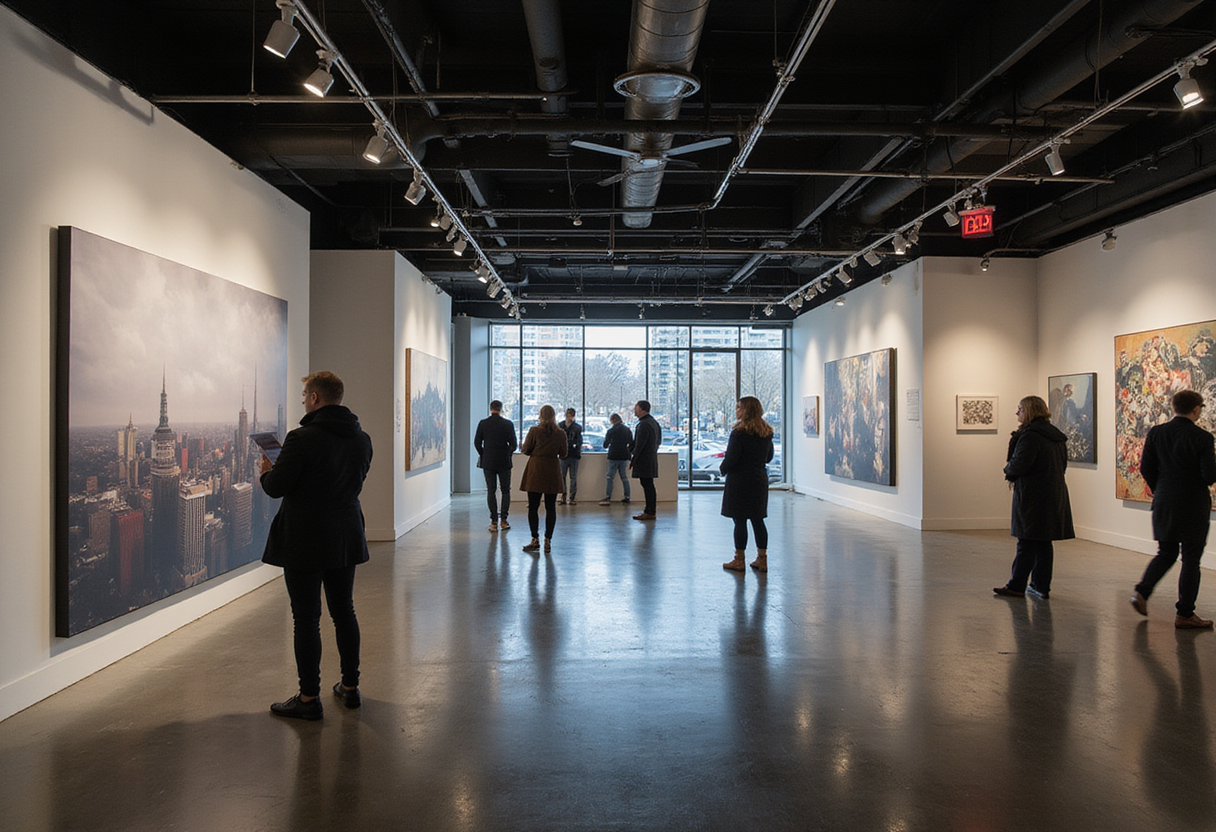
AFP Opens Exhibition on the Real Lives of Balkan Women
AFP has unveiled a photography exhibition on the real lives of Balkan women, reframing wire coverage of the region as a considered documentary record.
Updated

Agence France-Presse has unveiled a photography exhibition devoted to the real lives of women in the Balkans — a show built, according to the agency, on documentary truth rather than the region's familiar headlines.
The announcement is brief but pointed. AFP, one of the world's largest news agencies, is putting its documentary archive and its photographers' fieldwork in front of an exhibition-going public under a single premise: that the everyday lives of Balkan women deserve sustained visual attention, not the fragmentary treatment news cycles usually allow.
That premise carries weight coming from a wire service. Agencies shoot for immediacy — a protest, a parliament, a flood. An exhibition reframes that same output as a body of work, sequenced and considered. It's a shift from transmission to reflection, and it puts AFP's photographers in a different light than the daily feed ever can.
Why an agency would mount a show like this
Wire photography lives and dies by the single frame that moves in minutes. An exhibition asks the opposite of the image. It asks it to hold a wall, to sit beside its neighbours, to accumulate meaning across a sequence. When a news agency curates its own coverage into a thematic exhibition, the act doubles as an argument: that photojournalism about a place and its people constitutes a record worth returning to.
The Balkans give that argument a sharp edge. The region has been photographed, for three decades and more, overwhelmingly through crisis — war, transition, politics. Women in that visual history have too often appeared as victims, mourners or background figures. An exhibition explicitly framed around "real lives" pushes against that grain. It signals ordinary work, family, ambition and daily routine as legitimate subjects.
What that looks like on the walls, AFP's announcement does not yet specify. No venue, curator or photographer roster accompanies the unveil. The gaps matter, and they will fill in as the agency releases details.
What does this change for the region's visual record?
Practically, it consolidates attention. A global agency's institutional weight can move images of Balkan women's lives into circulation far beyond the region — into European exhibition circuits, editorial follow-ups and educational contexts. For local photographers who have long documented these same realities with less distribution muscle, it can open doors. It can also, fairly, raise a question about who tells the story: agency staff dispatched to the region, or the photographers who live there. How AFP balances those voices will shape the show's credibility.
There's institutional context, too. News organisations have increasingly treated their archives as cultural assets — exhibitions, books, retrospectives that extend the life of work originally made for a 24-hour cycle. AFP stepping into that space with a regional, women-centred subject aligns with a broader move by wire services and picture desks to claim documentary photography's documentary authority, not just its speed.
The framing is the story
"Real lives" is a loaded phrase, and deliberately so. It positions the exhibition against a perceived false image — the Balkan woman as the region's crises have cast her. Whether the show fully escapes that framing depends on the pictures: are women photographed as agents of their own days, or once again as emblems of a place explained from outside? The title promises the former. The proof will hang on the wall.
The genre this work belongs to has a strong lineage. Documentary projects centered on women's daily labour and domestic life have long served as correctives to official histories — work made in kitchens, markets, factories and schools, where most of life actually happens. If AFP's exhibition draws on its photographers' sustained coverage of the region, it could sit credibly in that tradition.
For now, the unveil is a statement of intent backed by institutional weight. Details on venue, dates and contributing photographers are the next markers to watch — and the strength of the final hang will decide whether "real lives" becomes a documented record or a well-meaning slogan.
Key points
- Agence France-Presse has unveiled a photography exhibition on the real lives of Balkan women.
- The exhibition is framed around everyday reality rather than crisis-driven news imagery.
- AFP has not yet announced venue, dates or photographer lineup.
- The show draws on a news agency's documentary output, presented as a curated body of work.
Source: Google News: photography exhibition
Marcus Bennett
Show full bio
Correspondent covering companies, deals and strategy in Photography exhibitions, photographers, photo books, festivals and awards at Lens Gazette.