Van Eyck's Portraits Gathered in London for the First Time
The National Gallery has gathered all of Jan van Eyck's portraits for the first time — a jewel box show that preserves merchants, monsters and his wife like flies in amber.
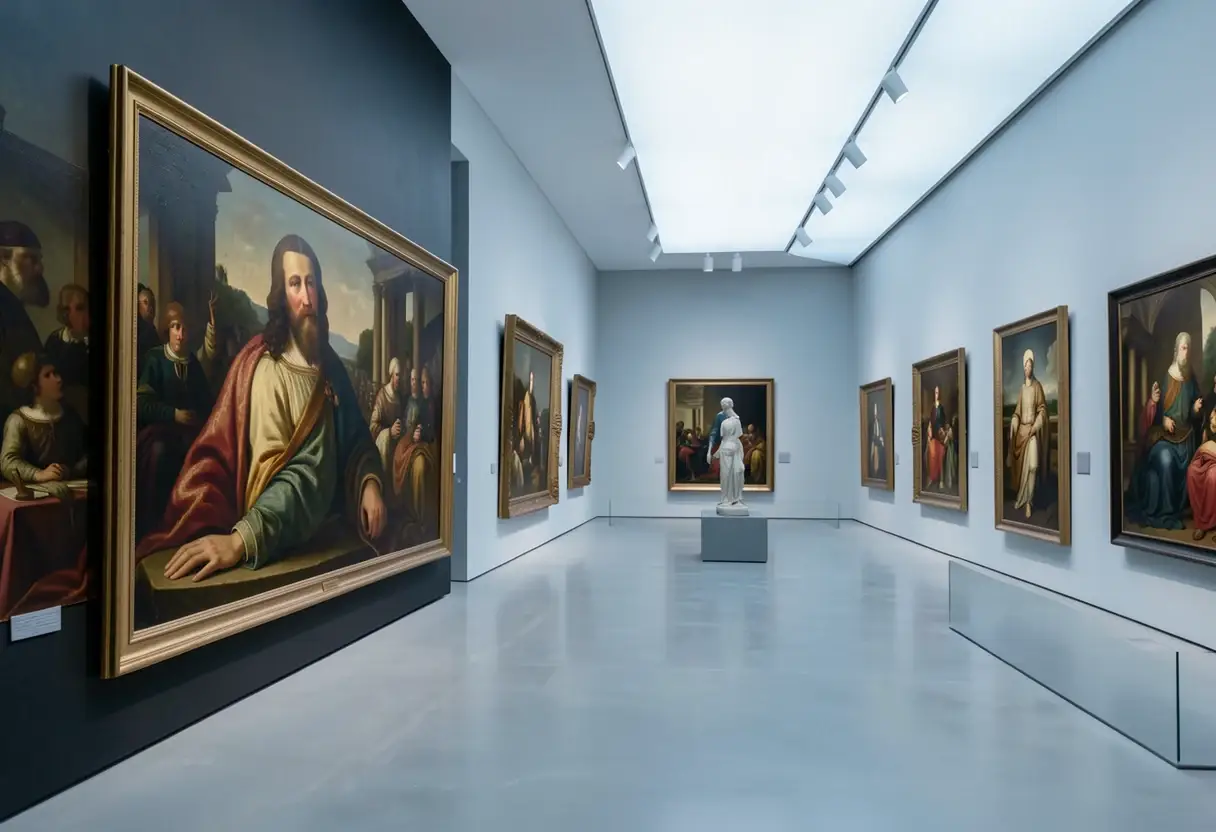
The National Gallery in London has brought together all of Jan van Eyck's portraits for the first time — every image the Flemish master painted of a person for that person's own sake, under one roof.
The result, in the Guardian's verdict, is a jewel box of a show. It is also an institutional flex: the gallery owns three of van Eyck's greatest portraits, and this exhibition puts that fact on full display.
What makes the paintings astonishing?
Start with the old man. He is unknown to us by name, but van Eyck painted him in oils roughly 600 years ago, and the portrait still delivers its clinical shock. The stubble on his chin is tiny yet silver-sharp — long after both painter and sitter are dead, you can still see the man needed a shave.
The hair on his head receives the same unsparing attention, each strand varying individually in paleness and lankness. The skin of his throat sags with overhangs and shady gulleys that read, in the Guardian reviewer's phrase, like a rock formation. He is a wonder and a freak of nature, yet also a perfectly ordinary person. On this evidence, van Eyck's proposition about humanity is generous and unsettling at once: we are all banal and marvellous, mundane and impossible.
This is oil painting doing what nothing else in its century could. The technique isn't decoration. It is the mechanism by which van Eyck preserved his sitters — merchants, monsters, even his own wife — like flies in amber, clinically exact and apparently death-defeating.
Is the framing honest?
There's a fair argument that it isn't. Portraitist was far from van Eyck's only job. He painted stupendous religious works, most famously the Ghent Altarpiece, made in collaboration with his brother Hubert and still standing in St Bavo's Cathedral in Ghent. Those altarpieces contain portraits too — real people placed in uncanny proximity to supernatural beings.
By stripping out that medieval context of prayer and faith and isolating the standalone likenesses, the show arguably cheats. It detaches the portraits from the devotional world that produced them.
It also, conveniently, lets the National Gallery stage a display it is uniquely positioned to stage. Three of the greatest portraits in the room are its own. The exhibition is scholarship and marketing in the same frame.
Does the trade-off pay off?
On the evidence of the review: yes. The cost of losing the religious context is matched by the gain in strangeness. Freed from the altar, you see clearly how oddly van Eyck collects his slightly miniaturised people — preserved, pinned, perfect, each one caught mid-existence with an accuracy that outlasted every sitter.
Six hundred years on, the effect is not reverence but intimacy. The silver stubble, the lank hairs, the geology of an aging neck — these are not icons. They are people, recorded with a coldness that turns out to be a form of love.
The exhibition runs at the National Gallery in London, and it reframes a painter too often filed under "religious master" as something nearer to a proto-realist with an entomologist's patience. That reframe — van Eyck as the man who put humanity under glass — is likely to shape how his portraiture is taught and hung from here.
Key points
- The National Gallery in London has united all of Jan van Eyck's portraits in a single exhibition for the first time.
- The gallery itself owns three of van Eyck's greatest portraits.
- The portrait of the unknown old man was painted in oils roughly 600 years ago.
- Van Eyck's religious works, including the Ghent Altarpiece, were collaborations with his brother Hubert.
Source: theguardian.com
Olivia Hart
Show full bio
Staff writer covering people, launches and day-to-day practice in Photography exhibitions, photographers, photo books, festivals and awards at Lens Gazette.