Tate Modern to survey Pictorialism and the rise of soft-focus photography
Tate Modern is preparing an exhibition on Pictorialism and the birth of soft-focus photography, The Art Newspaper reports this week. No curator, dates, or checklist yet named for the London show.
Updated
By Marcus Bennett
Tate Modern is preparing an exhibition on Pictorialism and the birth of soft-focus photography, The Art Newspaper reported this week. The London museum has not disclosed a title, opening date, curator, or checklist for the show.
That thin announcement carries weight. A major institution is taking on a movement historians have called either photography's first international art movement or its longest-running critical dispute. The Tate's framing will shape the reception.
Pictorialism ran roughly from 1885 to 1915. Its practitioners — clustered in clubs from Vienna to London to Tokyo — used soft-focus lenses, deliberate exposure, and heavy darkroom work to mimic etchings, pastels, and tonalist paintings.
The technical choices were deliberate. Members argued sharp mechanical detail reduced the medium to record-keeping. They wanted the camera treated like a brush, not a typewriter.
Pictorialist printmaking relied on a defined toolkit. Gum bichromate allowed layered colour from a single negative. Platinum prints delivered a soft, matte surface photographers prized. Bromoil transferred a silver gelatin image into an inked oil print resembling a lithograph. The point was the surface — evidence of the photographer's hand on the material.
The movement organised itself internationally. The Linked Ring Brotherhood opened in London in 1892. The Photo-Secession followed in New York in 1902. Camera Work, edited by Alfred Stieglitz, ran from 1903 to 1917 as the movement's flagship journal. Members held juried salons on three continents and used the same circuit of exhibitions, juries, and critical vocabulary to argue for the photograph as fine art.
The Art Newspaper's report does not name photographers, lenders, or specific works. The story is the announcement itself: a museum that has tilted its collecting toward post-war documentary and contemporary practice for two decades has decided the medium's nineteenth-century arguments are worth a survey.
What does this change for visitors?
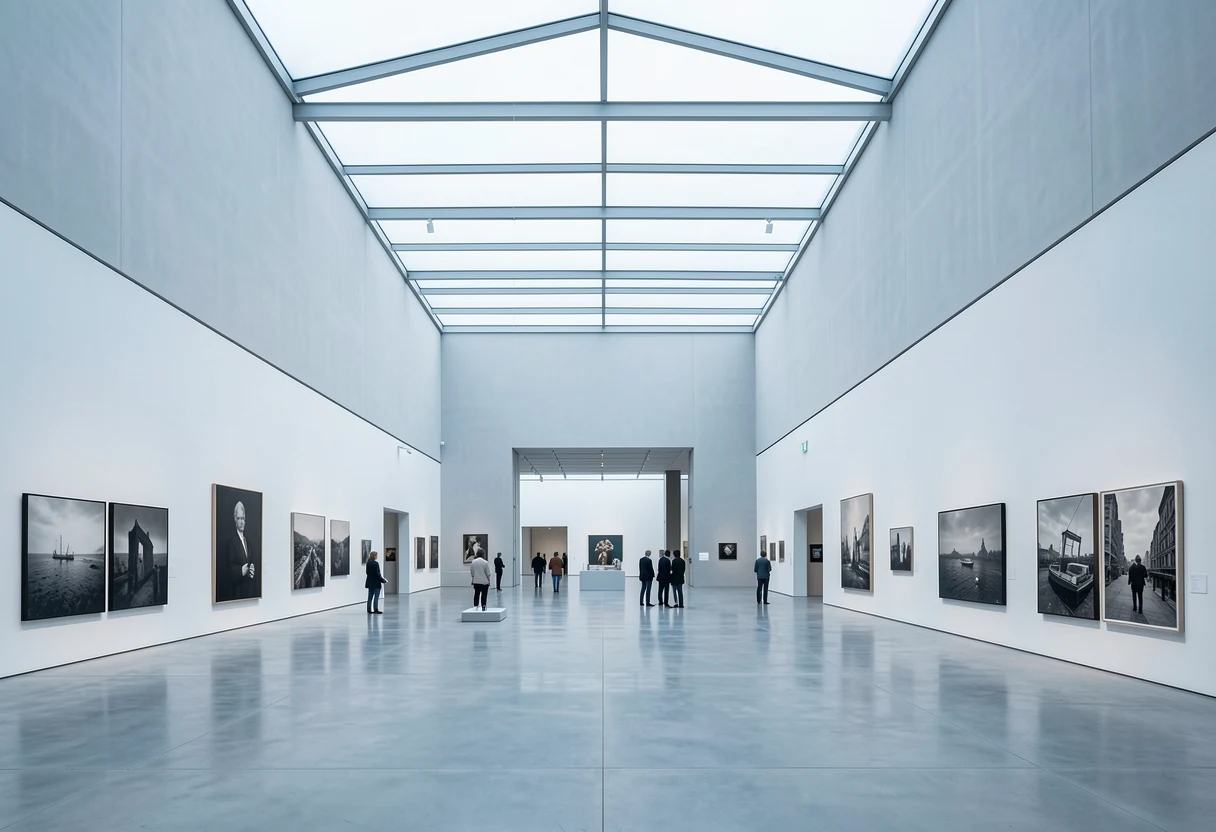
A first substantial chance in years to see Pictorialist prints hung at scale in London. The Tate has not surveyed the movement's high period in some time. Visitors used to contemporary walls at the Switch House will notice the smaller picture scale — most Pictorialist prints were made for salon-style hanging and intimate viewing, not the museum-sized statement pictures the Tate now favours.
Why Pictorialism, and why now?
Three forces are converging. Auction houses have begun reporting renewed bidder interest in early Pictorialist platinum prints since 2022. Independent galleries in New York and Paris have run smaller Pictorialist shows in recent years. Academic reappraisals have reframed the movement away from the old dismissal — soft-focus as a sentimental lapse before modernism cleared the air — toward a closer reading of its transnational organising and its role in establishing photography's exhibition circuit.
The Tate show enters that conversation with institutional weight. It can rehang pictures from storage, commission fresh scholarship, and reach audiences smaller galleries cannot.
Survey or argument?
Tate's collecting priorities for two decades have favoured post-war and contemporary work. A Pictorialist survey signals appetite for the medium's earliest institutional battles. Curators at this level rarely stage a heritage show without a thesis attached. Expect the show to push back against the old criticism that soft-focus was photography avoiding its own capacities.
Where does this lead?
Look for the catalogue. A serious Tate exhibition typically carries a scholarly publication. The Art Newspaper's report does not mention a publisher. If Tate pairs with a university press or a photographic-history imprint, expect a volume that reconsiders the standard chronology and likely elevates women photographers and non-European clubs the older literature passed over.
Expect dates and a curator name when the press embargo lifts. Tate Modern's autumn season has not been formally announced. Look for the major photography institutions in New York and Paris to follow with their own reappraisals if the Tate show sells.
Key points
- Tate Modern is preparing an exhibition on Pictorialism, The Art Newspaper reported this week
- The museum has disclosed no opening date, curator, or checklist
- Pictorialism ran roughly from 1885 to 1915 across clubs from Vienna to Tokyo
- The Linked Ring Brotherhood opened in London in 1892; the Photo-Secession in New York in 1902
- Camera Work, edited by Alfred Stieglitz, ran from 1903 to 1917 as the movement's flagship journal
Source: Google News: photography exhibition
Marcus Bennett
Show full bio
Correspondent covering companies, deals and strategy in Photography exhibitions, photographers, photo books, festivals and awards at Lens Gazette.