Pinhole Cameras and Expired Paper: Arron Levi Foster Maps Ohio's Damaged Land
Since 2022, Foster has photographed Superfund and brownfield sites in Ohio with pinhole cameras and expired paper, folding the results into an accordion book that asks viewers to slow down.
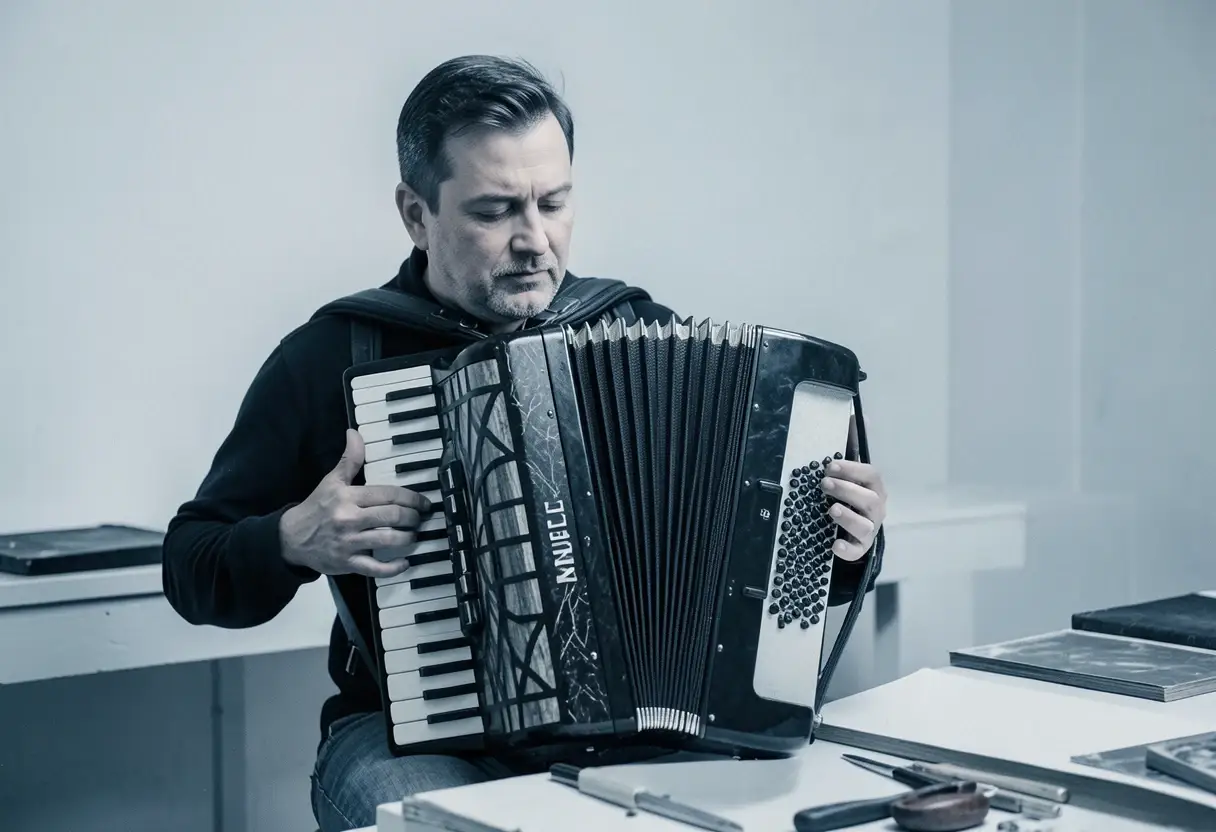
Since 2022, Arron Levi Foster has photographed Superfund and brownfield sites across Northeast Ohio, and the result is Almost, Everything, a pinhole photography project that became an elongated accordion book. The work is featured in a conversation with Epiphany Knedler, published on Lenscratch, that traces how expired photographic paper and handmade cameras produced one of the more disciplined landscape projects in recent print media.
Foster is a printmaker, interdisciplinary artist, and educator. He holds an MFA in Printmaking and Book Arts from the University of Georgia and a BFA in Printmaking and Art Education from East Carolina University. He has just begun a position as Assistant Professor of Art and Visual Culture at Bates College in Maine. His exhibition record includes solo shows at George Fox University, Waterloo Arts, Dayton Society of the Arts, Akron Soul Train Gallery, and Hiram University, plus participation in the 5th Global Print Exhibition in Portugal.
Knedler, who conducted the interview, is herself an artist and educator. She co-founded the collective Midwest Nice Art with her husband, Tim Rickett, and Foster has exhibited with the group several times. She describes his attention to material as admirable, noting that he turns everyday scenes into something unusual through screenprinting, cyanotypes, handmade paper, fabric, and installation.
How did the project start?
Foster's account is precise about mechanism. Printmaking, he told Knedler, is inherently process-based: an image is built through layers, repetition, translation, and accumulation. "I began to wonder whether those qualities could be used not only to construct an image, but to structure how an image is experienced."
That question pushed him beyond the single print toward artist's books and installation. His environmental research ran in parallel. The sites he has worked with since 2022 sit in Kent, Mogadore, Deerfield, Akron, and Canton. In his words, these are "places shaped by extraction, industry, environmental degradation, and remediation," but also places where people live and construct identities.
Almost, Everything emerged from practical constraint. Working in his home darkroom, Foster acquired a large quantity of expired photographic paper. Rather than discard it, he treated reuse, limitation, and chance as productive parts of the process. He built simple pinhole cameras and photographed sites along the Cuyahoga River. The varied exposures forced him to remain with each location for an extended period. The finished photographs became the accordion book. His takeaway question: what happens when an image asks us to slow down?
What does Sown with Salt show?
One body of work stands out for Foster: Sown with Salt. It centers on the Mogadore Road brownfield site in Kent, Ohio, the former location of the RB&W industrial fastener plant. The site carries a long history of industrial contamination, followed by ongoing remediation.
Foster is direct about the tension. "I don't want the image to tell the viewer simply that this is a beautiful landscape or that this is a damaged landscape. Both things can be true at the same time."
The book structures carry the argument. Sown with Salt uses tunnel books and flag books. A tunnel book compresses multiple visual layers into one sight line. A flag book creates movement and repetition as it is handled. The image is therefore not fixed; it changes with the viewer's physical encounter. For Foster, the photograph is only one part of the experience. Paper, printing process, structure, and the viewer's movement all shape the meaning.
How does the practice work?
Foster calls his practice interdisciplinary, research-driven, and site-responsive. He works across printmaking, artist's books, drawing, photography, video, animation, and installation, and lets the logic of one medium inform another. A core method is what he terms experiential watchfulness: walking a landscape, photographing, drawing, studying archives, and researching environmental history until those forms of knowledge intersect.
The environmental dimension extends to materials. He has used reclaimed photographic materials, handmade papers with locally harvested plant matter, botanical dyes, and recycled fibers. Material choices, he argues, are not separate from the conceptual concerns of the work.
His broader target is contemporary image consumption. We encounter enormous numbers of images each day, most built for instant consumption. He describes printmaking and book arts as durational image systems, structures that create conditions for sustained looking.
What comes next?
Foster has relocated to Maine and plans to bring the same watchfulness to Coastal and Southern Maine, where different relationships between land and water, industry, tourism, and community will shape the work. His curatorial project Genius Loci: The Pathos of Place, developed with Erik Waterkotte, continues, and upcoming conference presentations will examine print and book arts as forms that unfold through time, physical presence, and embodied engagement.
Key points
- Foster has worked with Superfund and brownfield sites across Northeast Ohio since 2022.
- Almost, Everything uses pinhole cameras and expired photographic paper to image the Cuyahoga River.
- Sown with Salt documents the Mogadore Road brownfield in Kent, Ohio, former site of the RB&W fastener plant.
- Foster has just started as Assistant Professor of Art and Visual Culture at Bates College, Maine.
Original: arronfosterstudio.com
Grace Kim
Show full bio
Senior reporter covering companies, deals and strategy in Photography exhibitions, photographers, photo books, festivals and awards at Lens Gazette.