An $882 'Well-Dressed Man' Was Worth $230,400 a Year Later
Sold for $882 as an anonymous 'well-dressed man,' the 1850s daguerreotype of George Boyer Vashon resold for $230,400 after Sotheby's identified the sitter.
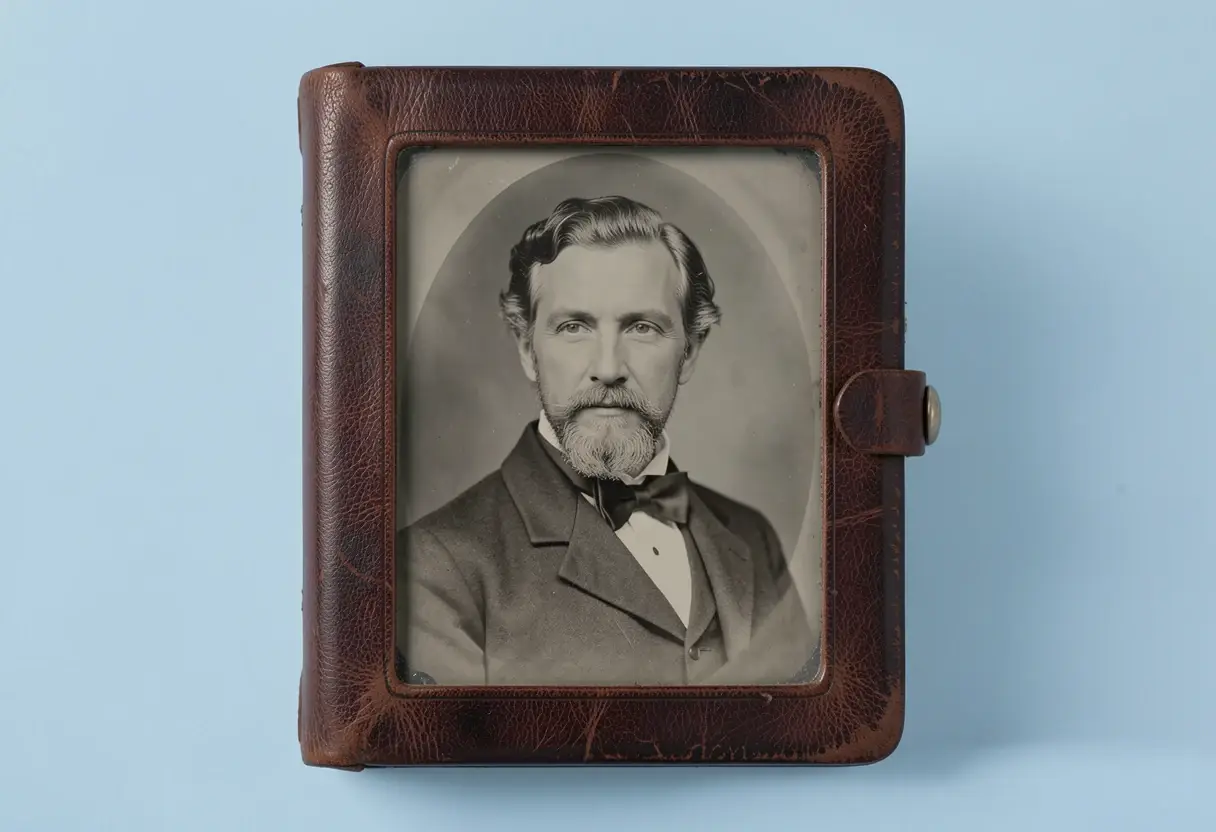
A daguerreotype sold for $882 at Christie's in June 2025 fetched $230,400 at Sotheby's this June — a 260-fold jump that hinges entirely on one specialist reading a signature and an inscription that the first auction house missed.
The plate is now identified as the only known daguerreotype of George Boyer Vashon, the first licensed African American attorney in New York State. When Christie's offered it as part of the Maillet Daguerreotype Collection, the catalog described the sitter flatly as "a well-dressed man with spectacles." No name, no photographer. The estimate ran $1,000 to $1,500. It didn't even reach the low end.
Sotheby's specialist Emily Bierman did the work. She spotted the signature "P. Haas, NY" on the portrait and traced it to Philip Haas, an accomplished lithographer and among the earliest resident daguerreotypists in Washington, D.C. Haas photographed President John Quincy Adams among other political figures; the resulting plate counts as the earliest known photograph of an American president. Provenance of that caliber changes everything.
What did the inscription reveal?
The case held more than a signature. Inside, Bierman found a handwritten note: "My dear Professor loved this picture, which I prize always — taken for me early in the summer of '56."
That single line tied the portrait to a student of Vashon's, dating the commission to 1856 and identifying the sitter as a man whose surviving images are, by Sotheby's account, almost entirely reproductions from later photographs. The George B. Vashon Museum in St. Louis, Missouri holds the original examples known until now. No other daguerreotype of Vashon has been identified anywhere.
Who was Vashon?
Born in 1824, Vashon racked up firsts with grim regularity. He was the first Black graduate of Oberlin College — a milestone the abolitionist press treated as a victory for the anti-slavery movement, not just a personal one. Pennsylvania denied him admission to its bar because of his race. New York admitted him in 1848.
In 1867 he won the right to practice before the U.S. Supreme Court. He went on to become Howard University's first Black professor. Pennsylvania, 160 years late, posthumously admitted him to its bar in 2010.
Why the price gap matters
Here's the uncomfortable part. The object didn't change between June 2025 and June 2026. The silver plate, the Haas signature, the student's inscription — all of it sat there, unread, while the Maillet collection crossed the block. What changed was scholarship, and scholarship at auction houses is done on the clock, for profit, by whoever bothers to look.
Bierman looked. Credit where it's due. But the $229,518 difference between the two hammer prices is also a measure of what catalog departments can miss when a sitter isn't famous enough to flag. How many other "well-dressed men with spectacles" are sitting in collections right now, priced at three figures? Nobody can say. That's the point.
Sotheby's says the Vashon daguerreotype is exceptionally rare, believed to be the only known image of its kind. The claim is narrow and, so far, unchallenged — but note what it rests on: the absence of any other identified example, which is not the same as proof of uniqueness. Absence of evidence has a habit of expiring.
Still, the identification itself is solid. The signature matches a documented operator, the inscription names a relationship and a year, and the sitter's paper trail is unusually rich for a Black professional of the 1850s. This is a genuine recovery of American history, whatever one thinks of the markup.
What happens next?
The buyer's identity hasn't been disclosed, and Sotheby's hasn't said whether the plate will be exhibited or reproduced publicly. Until it surfaces — in a museum show, a scholarly publication, or the Vashon Museum's orbit — the only verified image of New York's first Black attorney in this medium remains, effectively, in private hands.
Key points
- Sotheby's sold the Vashon daguerreotype for $230,400 in June 2026 after Christie's sold it for $882 in June 2025.
- Sotheby's specialist Emily Bierman identified the signature of Philip Haas, an early Washington, D.C. daguerreotypist.
- An inscription dates the portrait to 1856, made for one of Vashon's students.
- Vashon, born 1824, was New York's first licensed Black attorney, admitted to the bar in 1848.
- It is believed to be the only known daguerreotype of Vashon.
Original: fox2now.com
Daniel Okafor
Show full bio
News editor covering companies, deals and strategy in Photography exhibitions, photographers, photo books, festivals and awards at Lens Gazette.