Paris Photo 2026 closes after a bicentenary edition
Paris Photo 2026 closed at the Grand Palais with more than 240 exhibitors, while AnOther’s highlights paired the photography bicentenary with six works by Nadine Ijewere.
James Calloway
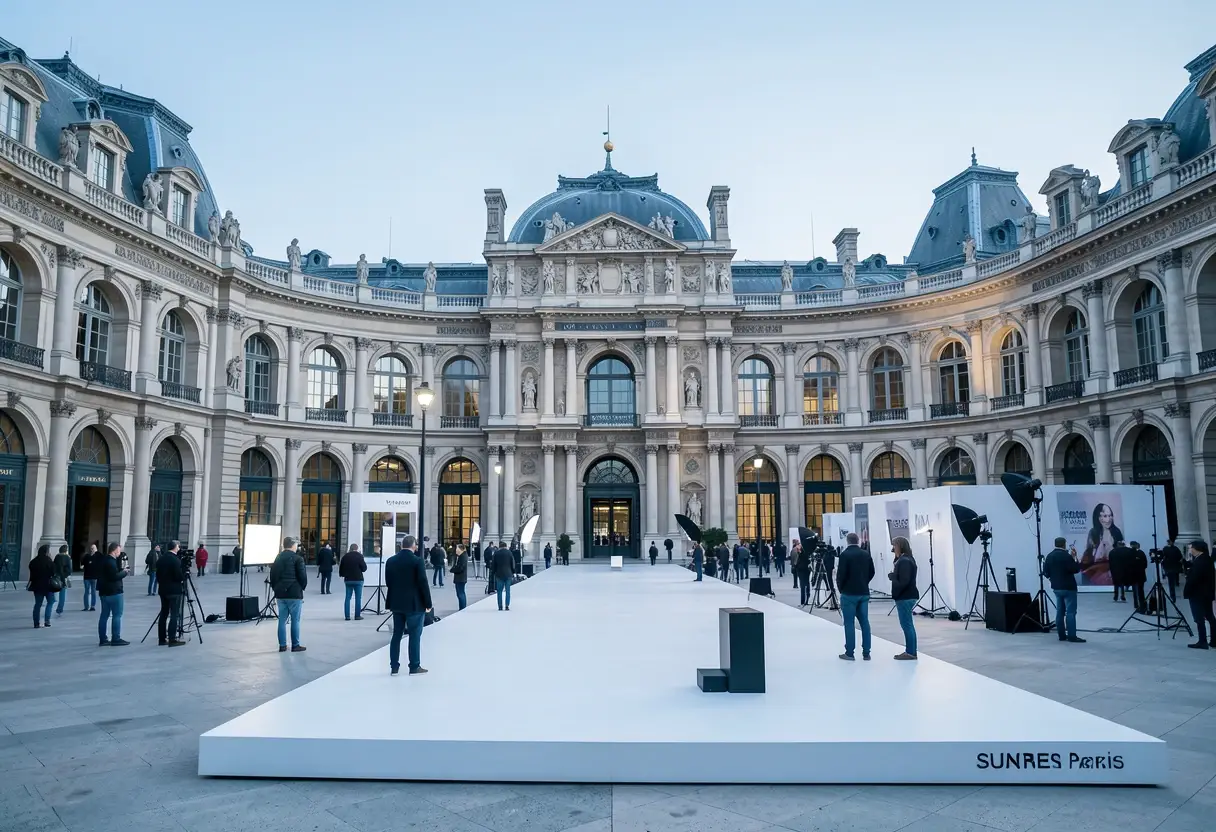
Paris Photo 2026 welcomed more than 240 exhibitors from across the globe to the Grand Palais in Paris, closing yesterday in an edition built around photography’s bicentenary and two centuries of image-making. AnOther Magazine described the fair as “one of the year’s most anticipated photography events” and foregrounded six photographs by Nadine Ijewere in its highlights.
What does the bicentenary framing change?
The fair set established masters alongside other exhibitors beneath the Grand Palais’s soaring glass roof. For photographers, that two-century frame made the 2026 gathering an argument about continuity, rather than simply a presentation of current work.
It placed contemporary practice beside inherited histories at the precise point when the medium reached 200 years. That breadth also changes the route into Ijewere’s work: readers encounter one photographer through six dated pictures, not the full survey implied by 240 exhibitors.
AnOther’s broad account creates a counterpoint through Ijewere’s smaller sequence of six photographs. That shift from survey to constellation gives practitioners a productive model: adjacency can create argument without pretending that chronology explains everything.
For an audience of working image-makers, the exhibition’s central lesson concerns the decisions that turn separate pictures into a coherent body. The six works show how a focused contemporary sequence can hold several geographic registers at once.
Which works anchor Ijewere’s selection?
The gallery presents six titles, with dates from 2019 through 2026. Their captions and order form the clearest evidence available for reading the selection.
- Afloat (2019) opens the gallery with its most compressed title, naming a condition of suspension without fixing a location.
- Hertiage, Senegal (2021) follows, pairing the published word “Hertiage” with a national location; AnOther prints the title in that form.
- Girl in Pink, Dominican Republic (2019) fixes figure, clothing colour and place within a single caption.
- Untitled, London (2025) anchors the sequence to a city while withholding a subject.
- Two White Dresses (2026) foregrounds two garments and the fair’s newest date.
- Sisterhood in Sand (2019) closes the set by joining relationship and environment.
Three of the six works date from 2019; the others date from 2021, 2025 and 2026. Three titles specify Senegal, the Dominican Republic or London; the remaining three name neither country nor city.
The gallery order runs 2019, 2021, 2019, 2025, 2026, 2019, rather than arranging the pictures as a linear chronology. That final return to 2019 creates recurrence and interrupts any implication that the newest image represents the endpoint.
The geographic range remains uneven. Senegal and the Dominican Republic provide explicit national coordinates, London supplies an urban one, while three unlocated titles leave viewers without stable geography. That inconsistency resists a simple travel narrative, even though place names cue one.
Repetition of 2019 intensifies that issue. Three works share the year, allowing differences in naming to carry the sequence’s movement. By moving from Afloat to Hertiage, Senegal, then later to Untitled, London, the gallery shifts the viewer’s reference points without claiming a continuous event.
How does sequence change what the pictures communicate?
The captions privilege title, date and place, so the selection first reveals itself through juxtaposition rather than a consistent descriptive account. Girl in Pink, Dominican Republic offers the most precise geographic and descriptive caption, while Untitled, London names only city and date.
Two White Dresses and Sisterhood in Sand redirect attention towards garments, social relation and environment without supplying a place. Within the gallery, title and order become editorial craft: each changes what a viewer expects the adjacent photograph to continue.
That matters for photographers, for whom captioning and sequencing can clarify a body of work as effectively as changes within the frame. The distinction gives the Ijewere sequence force beyond a checklist of dates and places. It asks how pictures acquire meaning through neighbours, an approach with direct relevance to how photographers edit books and exhibitions.
What remains unresolved?
Yet six captions cannot establish whether nonchronological ordering deepens Ijewere’s project or merely supplies editorial variety. Nor does the title-level evidence alone resolve how each photograph operates formally.
That leaves the selection open to two readings. It may extend the bicentenary’s breadth through formal variety, or resist the fair’s scale through a deliberately smaller field. The evidence supports the second more strongly: recurrence, altered geography and withheld subjects shape what the six titles disclose. The gallery’s critical potential lies there, preserving questions about sequence, specificity and inherited history instead of smoothing them into a survey narrative.
That measured uncertainty suits a bicentenary fair, whose stated ambition was to gather two centuries of image-making under one roof. With Paris Photo 2026 closed, the immediate question is whether its anniversary framing will extend beyond the Grand Palais into sustained programmes connecting current practice with the medium’s 200-year history.
Key points
- Paris Photo 2026 welcomed more than 240 exhibitors from across the globe to the Grand Palais in Paris.
- The 2026 fair marked photography’s bicentenary and presented two centuries of image-making.
- AnOther Magazine’s highlight reproduces six photographs by Nadine Ijewere.
- Ijewere’s gallery includes three works dated 2019 and one each from 2021, 2025 and 2026.
- Three of the six titles specify Senegal, the Dominican Republic or London.
Source: anothermag.com
James Calloway
Show full bio
Market editor covering people, launches and day-to-day practice in Photography exhibitions, photographers, photo books, festivals and awards at Lens Gazette.