Orlando Museum of Art to Mount David LaChapelle's Largest U.S. Retrospective
The Orlando Museum of Art opens the largest U.S. retrospective of David LaChapelle's photography in January — a milestone survey of his staged, celebrity-saturated imagery.
Updated
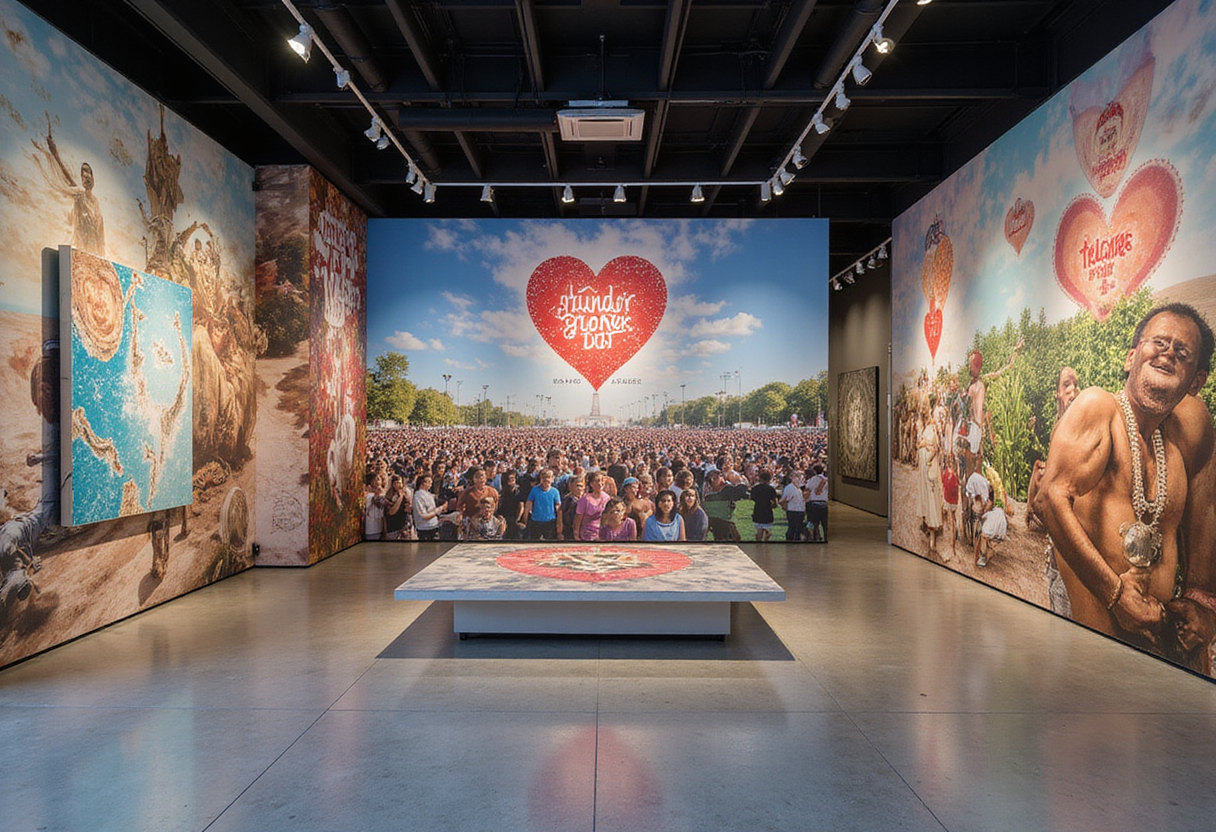
The Orlando Museum of Art will open the largest retrospective of David LaChapelle's work ever staged in the United States this January, giving American audiences their most comprehensive look yet at one of contemporary photography's most conspicuously excessive imaginations.
The scale of the commitment matters. LaChapelle has shown widely across Europe and Asia, where institutions have long treated him as a serious subject for survey exhibitions, but no American museum has previously assembled a retrospective of this breadth. That the milestone should arrive in Orlando rather than New York or Los Angeles says something about how regional museums are repositioning themselves — OMA is claiming a photographer whose celebrity-saturated, hyper-colored tableaux sit provocatively between fashion, pop mythology and fine art.
LaChapelle built his reputation in the 1990s as a photographer whose images did not merely appear in magazines but colonized them. His elaborately constructed scenes — part altarpiece, part tabloid, part fever dream — repositioned celebrity portraiture as baroque theater. Models and movie stars inhabit his frames like saints and sinners in a painted apocalypse, staged with a chromatic intensity that makes the work instantly recognizable and, for some critics, instantly suspect. He is a photographer people tend to love or distrust, rarely with moderation.
That polarization is precisely what makes a museum retrospective worthwhile. LaChapelle's career spans fashion editorials, music imagery, advertising campaigns and gallery-scale fine art, and a full survey forces the question his individual publications avoid: where does the craft of construction end and the manufacture of spectacle begin? His pictures are built, not taken — composed with the resources of film production, lit and painted and propped into states of deliberate artifice. A retrospective that gathers enough of them can let viewers trace the through-line from his early editorial work to the allegorical, increasingly religious imagery of his later career.
The art-historical stakes are real even when the surfaces gleam. LaChapelle's imagery descends recognizably from the staged theatricality of painters such as Michelangelo Merisi da Caravaggio and from the pop appropriations of Andy Warhol, whose Factory orbit he briefly inhabited early on. He took the staged photograph — the tradition of Cindy Sherman and Gregory Crewdson — and pushed it toward overt religious and apocalyptic allegory at billboard scale. Whether the results constitute sustained critical inquiry or luxurious decoration has been the argument around his work for three decades, and it is an argument a U.S. museum audience has rarely had the material to conduct in person.
For Orlando, the exhibition is a statement of institutional ambition. Mounting a retrospective of this size — one that no American museum has previously attempted — positions OMA to attract an audience that fashion photography and celebrity imagery reliably draw, while testing whether that audience will also engage with the harder questions the work poses about consumption, idolatry and spectacle.
January will bring the answer, at least in part: a photographer who spent his career staging excess will finally have his own career staged at full American scale, and viewers in Central Florida will be the first to judge whether the whole exceeds the sum of its spectacles.
Key points
- The Orlando Museum of Art will host David LaChapelle's largest-ever U.S. retrospective.
- The retrospective opens in January.
- No previous U.S. museum has staged a LaChapelle retrospective of this breadth.
Source: Google News: photographer retrospective
James Calloway
Show full bio
Market editor covering industry trends and analytics at Lens Gazette.