OM System Executives Reveal They Once Weighed Full-Frame Move
OM's COO Kataoka admits he weighed a full-frame pivot 15 years ago; the company rejected larger formats and now targets being the top outdoor camera brand.
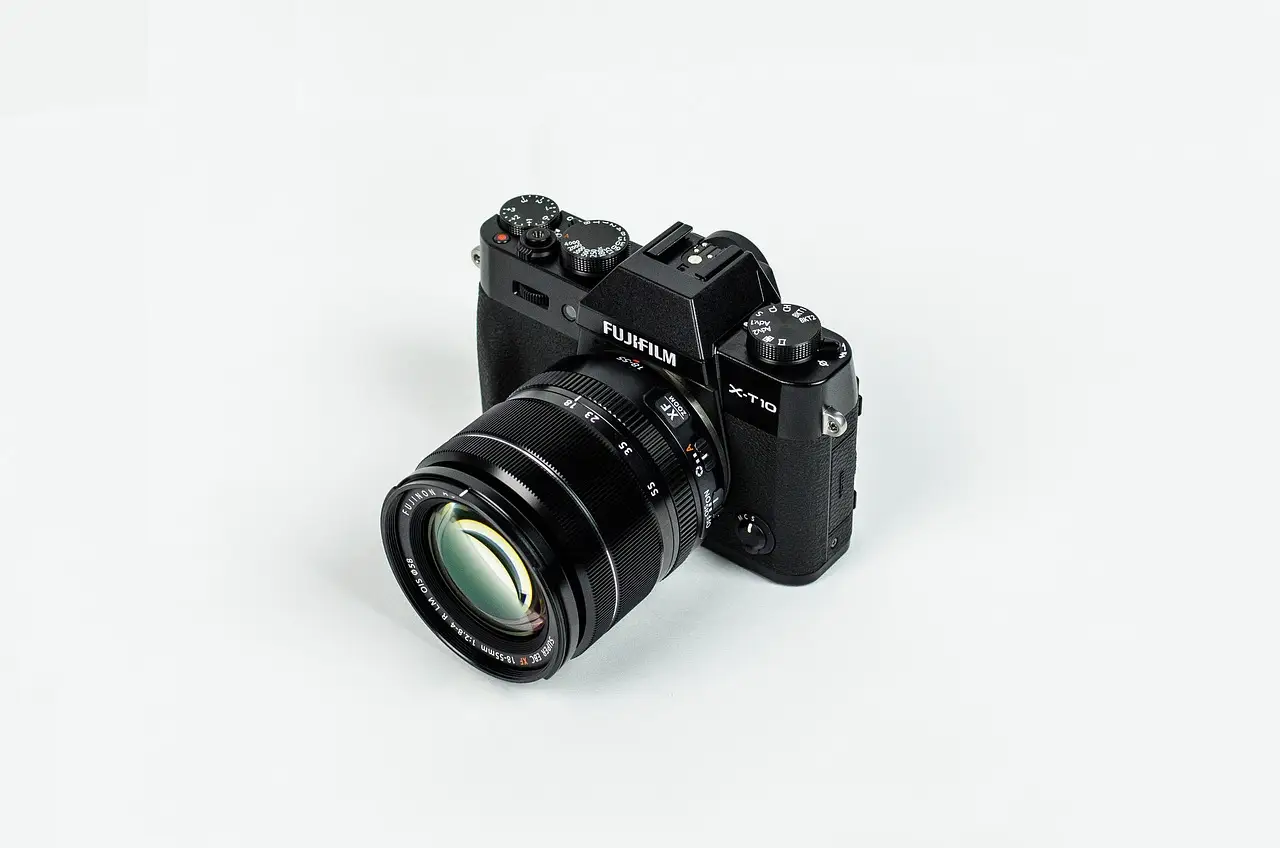
OM Digital Solutions' two most senior engineers have confirmed the company repeatedly considered building full-frame and APS-C cameras before rejecting the idea in favour of Micro Four Thirds. COO and CTO Setsuya Kataoka and Eiji Shirota, Head of the OM System Business Unit, made the disclosure in a Japanese-language interview on OM's own YouTube channel, surfaced by Digital Camera Life and translated automatically.
The admission is unusually candid for a company that has staked its identity on a single sensor format. Kataoka went furthest, saying the temptation struck early.
"To be honest, shortly after we started Micro Four Thirds, I briefly considered expanding into full-frame or APS-C as a future option," Kataoka said. He dropped the idea after a senior colleague challenged him directly.
What changed the decision?
The colleague's rebuke, as Kataoka recalls it, framed the whole question: "Before thinking about what happens with other formats, have you truly pushed Micro Four Thirds to its absolute limits? Only after you've thoroughly explored and exhausted every possibility might that make sense. But jumping to other formats before you've even fully thought things through — that's just wrong."
"Hearing that, I thought, 'He's right,'" Kataoka said. "Since then, regardless of external or internal questions about why we don't do full-frame, I've spent the last 15 years continuously thinking about how we can surpass those limits using Micro Four Thirds."
Shirota confirmed the debate never fully died inside the company. "Such suggestions occasionally come up and fade away repeatedly over time," he said. "Of course, I considered what would happen if we went full-frame, but I never felt compelled to switch or build one."
How does OM frame the format gap?
Shirota conceded that a physical gap between Micro Four Thirds and full-frame will always exist, but argued its significance depends entirely on the customer and the scenario. Resolution remains the most visible shortfall at the top end — a subject PetaPixel pressed him on last year, when he defended computational features such as Handheld High Res Shot as compensating tools.
"Basic hardware performance has continually improved, which resolved many issues," Shirota said in the new interview. "And we've developed features to offset any inherent limitations… We genuinely feel that complaints like 'It lacks X, so it's unusable' have decreased significantly."
Kataoka refused to frame the question as a contest. "Full-frame cameras have their own strengths. And Micro Four Thirds has its own strengths," he said, adding that there are "plenty of scenarios where Micro Four Thirds is undeniably the best choice."
Shirota put it in explicitly commercial terms: "If portability is key, Micro Four Thirds is ideal. If someone prioritizes absolute ultimate image quality in specific setups, full-frame is an option. An increasing number of people are choosing Micro Four Thirds, and providing those clear choices is extremely important."
Which pictures justify the format?
Asked which Micro Four Thirds images stayed with them, both executives chose work made possible by weather sealing and cold durability rather than by image quality. Kataoka cited "a picture of an ordinary-looking landscape that was actually shot at -40°C, or a photo of a snake taken deep in the Amazon after a three-day trek carrying only our system."
Shirota named photographer Tetsuro Shimizu's Mongolia work, shot after days of horseback travel with all gear carried alongside daily supplies. "Facing sandstorms or -40°C temperatures at the destination, when he showed us the photos saying 'This is how I captured it,' I remember feeling deeply relieved," Shirota said. "Delivering a system that fulfils a photographer's desire to go to extreme places and bring back art really stuck with me."
That philosophy drives design decisions. Shirota argued a camera too big or heavy to carry has no value; Kataoka said the goal is equipment light enough that a photographer thinks, "Maybe I'll pack one more lens today."
Where does the company go next?
OM System enters this period with commercial momentum — the new OM System PEN has sold out in Japan — though one camera does not secure a system's future, and Micro Four Thirds has struggled in recent years to deliver meaningful generational leaps.
CEO Shigemi Sugimoto told PetaPixel earlier this year that the company has built a management structure enabling "faster and more flexible decision making on mid- to long-term investments in new technologies, product development, and manufacturing."
Kataoka named the destination: "Our goal is to become the number one outdoor camera brand. Under our tagline, 'Discover More Adventure', our focus is supporting people who want to explore new creative photography." Shirota closed with the company's creed: "Carrying a camera and taking photos enriches people's lives. That is our core belief, and we will stay true to it without wavering."
Key points
- COO Setsuya Kataoka says he considered full-frame or APS-C expansion shortly after Micro Four Thirds launched, roughly 15 years ago
- Both executives confirm internal proposals for larger formats 'occasionally come up and fade away repeatedly'
- Images shot at -40°C and Tetsuro Shimizu's Mongolia work anchor the company's weather-sealing-led value claim
- The new OM System PEN has sold out in Japan
- OM System's stated goal is to become the number one outdoor camera brand under the tagline 'Discover More Adventure'
Original: dclife.jp
James Calloway
Show full bio
Market editor covering people, launches and day-to-day practice in Photography exhibitions, photographers, photo books, festivals and awards at Lens Gazette.