MoMA Loses Photography Curator Onabanjo to the Met
Curator Oluremi C. Onabanjo, called "among the most compelling voices in contemporary photography," leaves MoMA to join the Metropolitan Museum of Art.
Updated
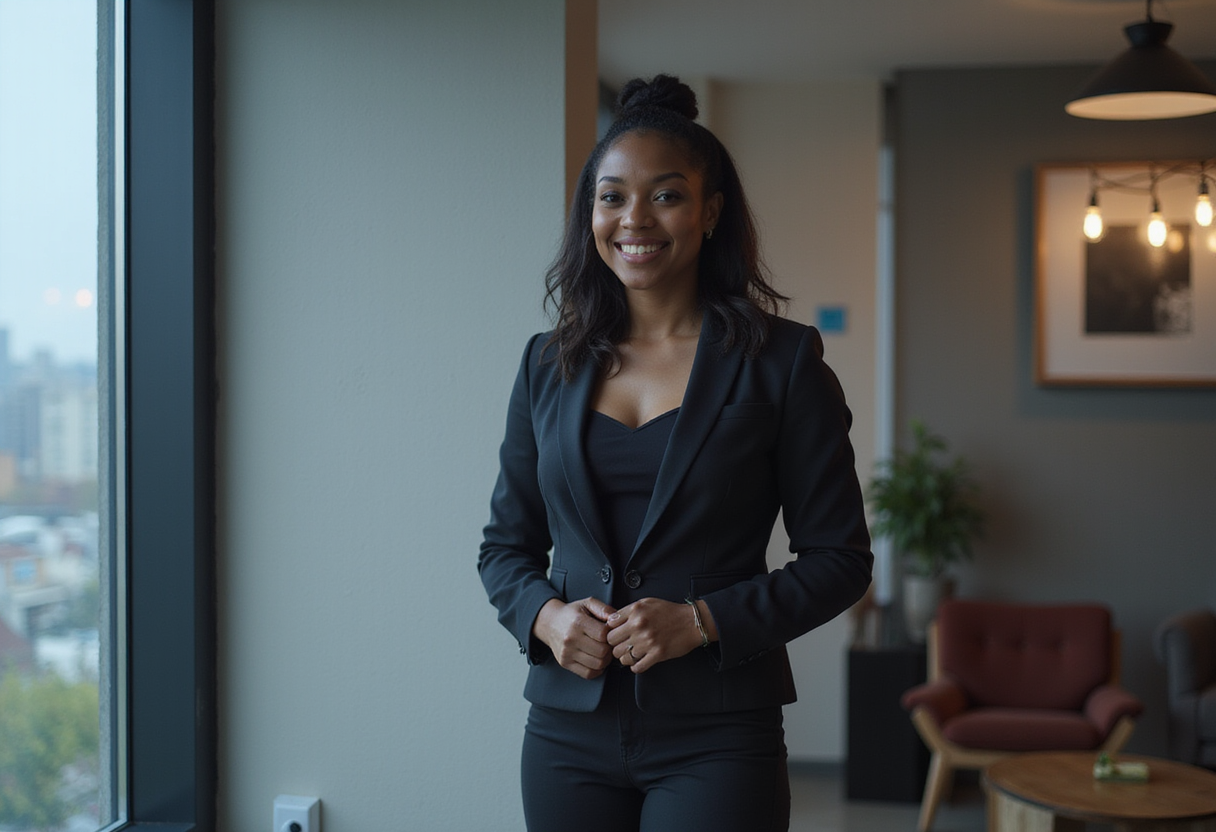
Curator Oluremi C. Onabanjo is leaving the Museum of Modern Art to join the Metropolitan Museum of Art — a curatorial transfer between two institutions separated by roughly a mile of Fifth Avenue pavement and a great deal of institutional gravity.
The news, first reported by Culture Type, frames the move plainly. Onabanjo — described by the publication as "among the most compelling voices in contemporary photography today" — is departing MoMA, where she has worked within the Department of Photography, for the Met, whose own photography holdings and exhibition programme continue to expand under a curatorial bench that now gains a notable name.
Who is Oluremi C. Onabanjo?
Onabanjo is a curator and scholar of photography whose work centres on the medium's contemporary practitioners and its historical entanglements — particularly image-making by artists of African descent and the institutional frameworks that have, until recently, given those practices less wall space than they merit.
That profile is exactly what the Culture Type headline is pointing at when it calls her "among the most compelling voices in contemporary photography today." It is a strong claim. It is also the kind of claim that a curator earns less through solo blockbusters than through the slower work of acquisitions, scholarly attention and the re-hanging of a permanent collection so that it stops telling the same story in the same order.
Why does the move matter?
MoMA's Department of Photography remains one of the most consequential in the world; the museum effectively institutionalised photography as an art form in the American imagination, and its curatorial staff carry that inheritance. Losing a curator identified with contemporary voices to the Met is therefore not routine housekeeping. It is a signal.
For the Met, the acquisition is equally pointed. The museum has spent recent years working to broaden its photography programme and its engagement with living artists — an effort that a curator of Onabanjo's reputation accelerates. Two houses, one talent, and a tilt in the balance.
Consider the geography in human terms: one curator moving roughly 20 blocks up Fifth Avenue, but the contemporary photography audience will feel the shift on both ends of that short trip.
What changes for each institution?
At MoMA, a vacancy in contemporary photography curating opens at a moment when the field itself is being redefined — by artists working across image, text and archive, and by museums reckoning with whose photographs they bought, and whose they didn't.
At the Met, Onabanjo arrives with a mandate the Culture Type report implies rather than details: to bring a compelling contemporary voice into a collection historically weighted toward the European and American canon. What her first exhibition there will be, and when, remains unannounced.
The wider context
Curatorial moves of this kind tend to read as individual career news and then, a few seasons later, as institutional direction. A curator who championed contemporary photography at MoMA does not leave that sensibility behind; she brings the network, the scholarship and the artists with her.
The Met's photography galleries have increasingly hosted contemporary positions alongside the Stieglitches and the Evanses. Onabanjo's appointment suggests that trajectory will continue — and, if the "compelling voice" designation carries weight, sharpen.
For now, the facts are spare and the implications are large: one curator, two museums, and a New York photography scene that just rearranged itself slightly. Whether the Met's gain proves MoMA's loss will be legible, as these things always are, in the exhibition schedule — a few seasons out, on the walls, where it counts.
Key points
- Oluremi C. Onabanjo is departing the Museum of Modern Art to join the Metropolitan Museum of Art.
- Culture Type describes Onabanjo as "among the most compelling voices in contemporary photography today."
- The move is a curatorial transfer between two major New York institutions on Fifth Avenue.
- No start date or first Met exhibition has been announced.
Source: Google News: photography museum
Olivia Hart
Show full bio
Staff writer covering people, launches and day-to-day practice in Photography exhibitions, photographers, photo books, festivals and awards at Lens Gazette.