Laia Abril Turns Her Lens on Rape Culture's Evidence, Not Its Victims
Laia Abril's black-and-white series on rape culture and institutional failure, first shown in 2020, is now on view at the International Center of Photography, photographing objects instead of people.
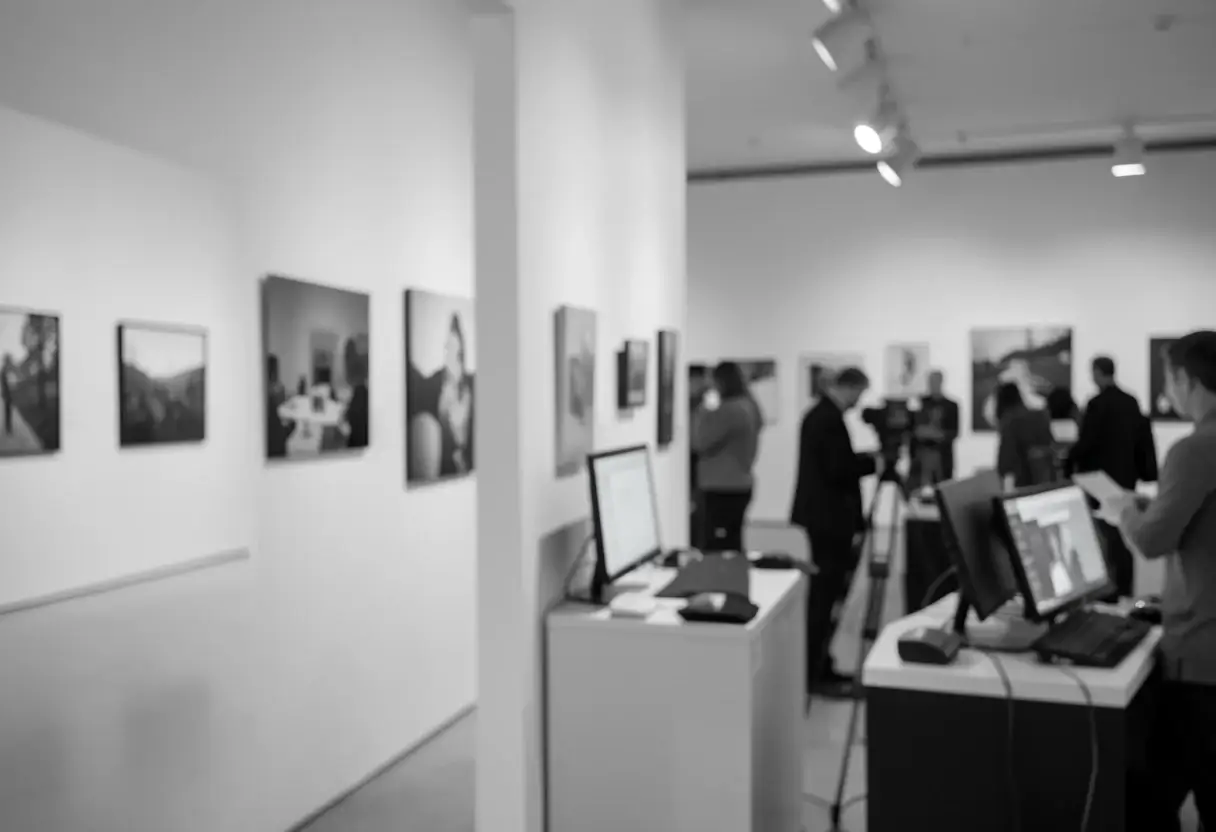
Laia Abril's On Rape and Institutional Failure, a chapter of her long-running project A History of Misogyny that was first shown in 2020, is now on view at the International Center of Photography in New York. The series photographs objects, not people, and it shoots every one of them in black-and-white. That double constraint is the whole argument.
The exhibition arrives at a moment when the internet can barely keep up with sexual assault allegations. Recent allegations against Cornell students produced what can only be called a glut: the accused's portraits, images of their text messages, videos of their fraternity house. Tweets and articles flooded the web. When a journalist tried to identify Jane Doe, the response inverted the exposure — users began posting their own pictures under the hashtag #iamjanedoe, a wall of solidarity built to shield the accuser's identity.
Abril's subject sits on the other side of that spectrum. Reported rapes in the military, the Catholic Church, and less wealthy communities around the world often meet silence instead. They get handled privately. They fail to galvanize the digital realm at all. The visibility gap is brutal, and it frames the difficult mandate her exhibition confronts.
Why photograph objects instead of people?
The choice is conceptual before it is formal. Abril — whose A History of Misogyny has previously tackled feminicide, abortion, and endometriosis — has to make images that are compelling without embracing spectacle, specific while addressing an enormous, global theme. That is a near-impossible brief. Point a camera at survivors and you risk re-victimizing them; point it at perpetrators and you risk the tabloid treatment the Cornell case received.
Her answer is to photograph the instruments of rape culture itself — the objects that carry the evidence and the inertia. The strategy shifts the burden of proof from bodies to things, which cannot be blamed, shamed, or asked to testify a second time.
The second choice is the palette. Everything is black-and-white, and the reasoning reads as deliberate rather than nostalgic. By honing in on this distilled palette, Abril gets at the seemingly eternal nature of misogyny — a violence that behaves, in the images' tonal logic, like something without a beginning and, alarmingly, without an end in sight. Her distilled images stoke a similarly condensed rage. The viewer supplies the color the photographs refuse.
What does the institutional framing add?
The title does real work here. This is not On Rape but On Rape and Institutional Failure — the second term indicts the systems, not only the individual offenders. That distinction matters at a moment when the Cornell allegations have forced questions about fraternity accountability, and when a Reuters report noted women declaring #iamjanedoe solidarity with the university's accuser on October 3, 2026.
The institutional silence Abril catalogues is not an absence of material. It is a distribution problem. Military cases, church cases, and assaults in poorer communities generate the same harm and a fraction of the coverage. The series implicitly asks why some victims get an internet army and others get a private settlement.
A caveat, because there should be one. Photography that shows objects in black-and-white risks aestheticizing what it documents — making harm tasteful, gallery-ready, consumable. Whether Abril fully escapes that trap is a question each viewer will have to settle in front of the prints. The source material gives no curator names, no exhibition dates beyond "now on view," and no image-by-image inventory, so the strength of individual pictures remains unverified here.
What is not in dispute is the project's position within contemporary documentary practice. Abril has spent years building A History of Misogyny as an archive of structural violence — feminicide, abortion access, endometriosis — and this chapter extends that method to sexual assault. She works like an evidentiary historian rather than a breaking-news photographer, which is precisely why her work belongs in a museum context and not only in the feed.
Editor's note: This story contains mentions of sexual assault and harassment. The National Sexual Assault Hotline can be reached at 1-800-656-HOPE (4673) or online at online.rainn.org.
With On Rape and Institutional Failure now installed at ICP, the project's institutional footprint keeps widening — and the question of how museums sustain attention on violence the internet ignores becomes part of the exhibition itself.
Key points
- Laia Abril's 'On Rape and Institutional Failure' was first shown in 2020 and is now on view at the International Center of Photography.
- The series photographs objects, not people, entirely in black-and-white.
- The work is part of Abril's larger project 'A History of Misogyny,' covering feminicide, abortion, and endometriosis.
- The Cornell rape allegations sparked the #iamjanedoe Instagram solidarity campaign.
- The National Sexual Assault Hotline: 1-800-656-HOPE (4673).
Source: hyperallergic.com
Daniel Okafor
Show full bio
News editor covering companies, deals and strategy in Photography exhibitions, photographers, photo books, festivals and awards at Lens Gazette.