KM Smith Photographs What Migration Left Behind in the American West
Dodho Magazine Issue #38 publishes After the Leaving, KM Smith's deadpan portraits of abandoned Western buildings, reframed as traces of migration and renewal.
Issue #38 of Dodho Magazine's print edition features After the Leaving, a series by Southern California photographer KM Smith that turns the abandoned buildings of the American West into a study of migration rather than decay.
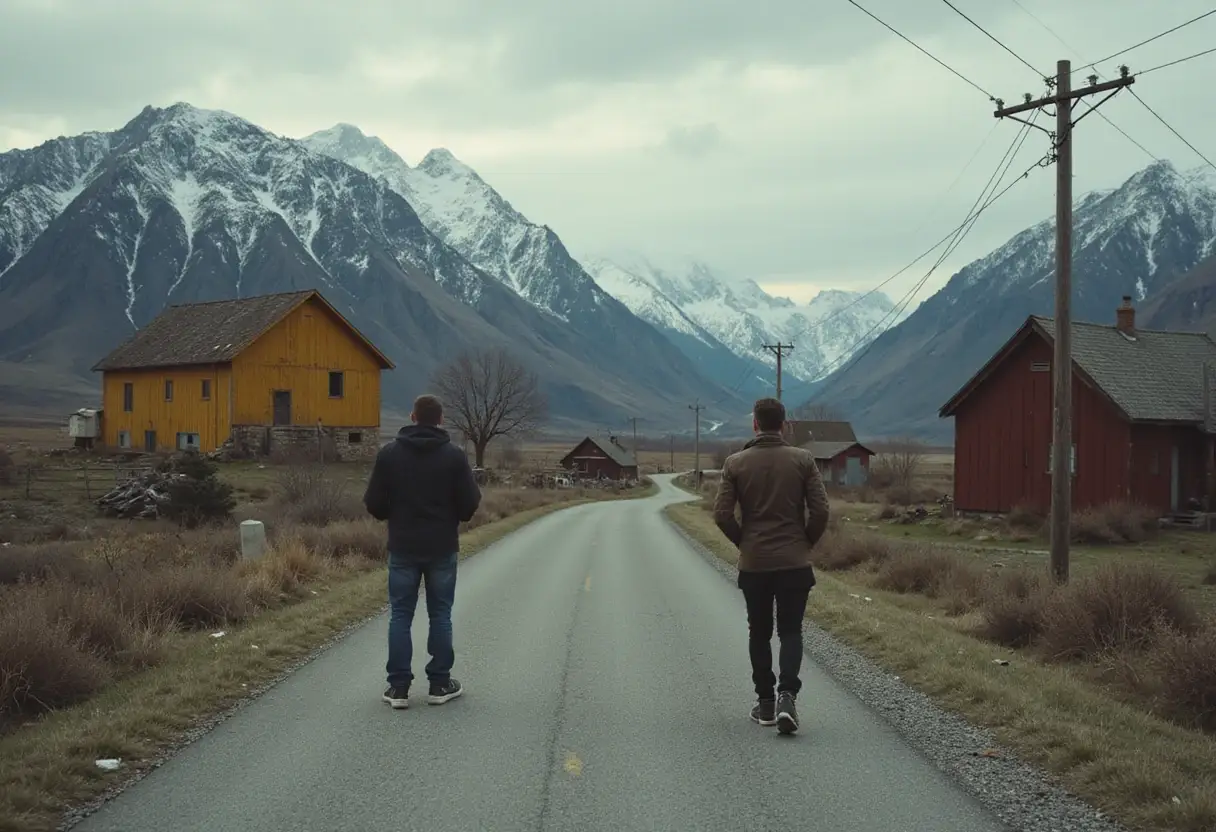
The project photographs weathered homes, businesses, churches, jails, and civic structures that survived the communities that built them. Smith presents each building as a portrait, shot frontally, in a deadpan typological style. The approach strips away the individual character of each structure and points the viewer toward the people who once passed through them.
Smith's framing is deliberate. He rejects the language of ruin. "The camera captures abandoned buildings; I see evidence of people who once lived and worked there and then moved on in search of something better," he said.
How did a physician and former roadie become a fine art photographer?
Smith's path to photography began at eight years old, when he borrowed a 35mm camera and learned printing in a community darkroom. "There was something magical about the darkroom," he recalled. "You carefully mixed the chemicals, measured temperatures, watched the clock and… an image appeared."
He then spent years outside the medium. He worked as a roadie for Elvis Presley, an experience he describes as unique, and one that let him keep taking photographs. Later he trained as a primary care physician and managed health plans serving poor and underserved populations. He says those years shaped his artistic choices, because he spent time with people whose lives are often overlooked.
His return to photography was gradual. A two-year mentorship with photographic artist Bob Killen filled gaps in art history and project development. Killen's central lesson stuck: an artist must decide not only how to make an image, but why that image should exist.
The takeaway: Smith treats photography as a second career built on a lifetime of looking at overlooked lives.
Why shoot abandonment without nostalgia?
Smith's central distinction shapes every formal decision in the series. He does not want the work read as a monument to failure. "It's easy to look at these buildings and focus on failure," he said. "But I found myself asking a different question: What happened next?"
Color was the critical choice. Black and white or sepia, he argues, would read as nostalgic and reinforce the idea of loss. He chose a subdued color palette instead. It acknowledges the weathering of the structures while keeping them grounded in the present. The images feel contemporary, not like historical documents.
The consistent frontal perspective serves the same purpose. By minimizing each building's individuality, the typology pushes viewers to imagine the lives and relationships that once filled these places.
The takeaway: every technical choice in After the Leaving works against the sentimental reading of the ghost town.
How do single images become a story of migration?
Smith insists no individual photograph can carry the full theme. A home, a barn, a bank, a church, and a jail each represent a different part of a community. The narrative emerges only in sequence.
His sequencing follows that logic. The series opens with homes, then expands to the agricultural, commercial, and civic structures that supported the people in those homes. Viewed together, the images reconstruct a functioning community whose members have departed but whose stories are implied.
Smith credits a background in economics with helping him understand why communities become unsustainable. Yet he frames the buildings not as remnants of failed enterprises but as traces of a human journey. "At some point in our lives, all of us have made a decision to move on — either physically or emotionally," he said.
The takeaway: the series works as an edited collection, and Smith credits Dodho precisely because it publishes cohesive bodies of work rather than single images.
What comes next?
Smith's work has appeared in juried exhibitions and photography publications, including projects on abstraction and the experience of space. He measures his progress by audience response and has learned to separate making photographs from curating a collection.
He remains focused on the relationship between people and the places they inhabit, and on the stories that might otherwise go unnoticed. That interest, he says, will likely shape whatever he does next.
Key points
- After the Leaving appears in Issue #38 of Dodho Magazine's print edition.
- Smith completed a two-year mentorship with photographic artist Bob Killen.
- He worked as a roadie for Elvis Presley before becoming a primary care physician.
- The series uses a consistent frontal, deadpan typological perspective and a subdued color palette.
- The sequence opens with homes and expands to agricultural, commercial, and civic structures.
Original: kmsmithfineart.com
Grace Kim
Show full bio
Senior reporter covering companies, deals and strategy in Photography exhibitions, photographers, photo books, festivals and awards at Lens Gazette.