Kari Varner Develops Photographs in Boiled Erie Canal Plants for Third Place
Kari Varner wins third place in Lenscratch's Art + Science Competition, developing photographs in a brew of boiled Erie Canal plants to trace two centuries of ecological and cultural upheaval.
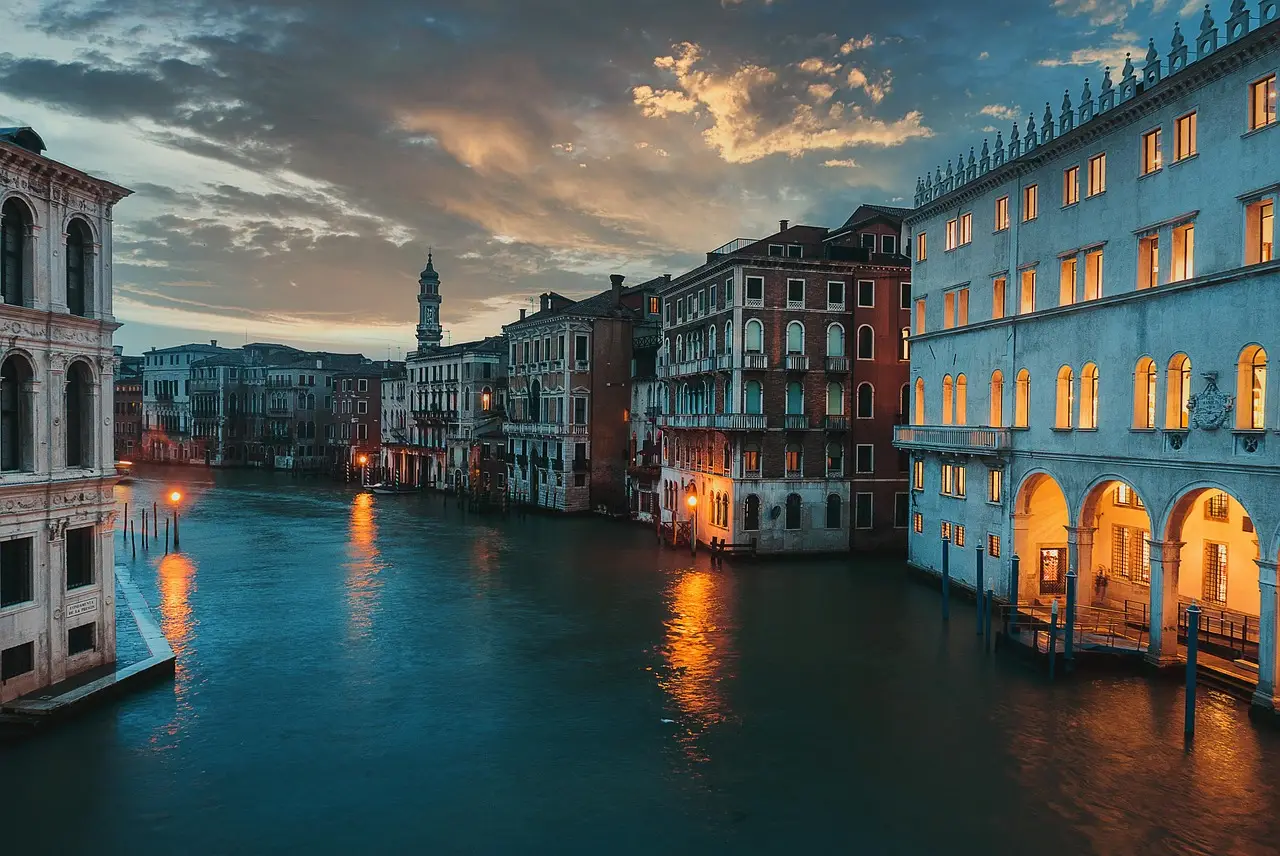
Kari Varner has taken third place in Lenscratch's Art + Science Competition, "States of Change," with a series whose developing fluid is boiled canal plants. That's the whole premise of Land as Archive, Canal as Collaborator, and it's stranger and more disciplined than it first sounds.
The competition asked for photography examining art and science through transition, transformation and instability — change "gradual or abrupt, visible or difficult to perceive," in the call's own words. Varner answered with chemistry pulled straight from the mud.
How the process works
Varner plays what the jurors' citation calls a dual role of biologist and historian. She harvests invasive and native plants from the Erie Canal's ecosystems, boils them into a brew, and uses that brew as the print developer. The photographs literally cannot exist without the plants that are remaking the landscape they depict.
That's the claim, anyway. The citation asserts the images "form from the very materials enacting change in the land and water" — a tidy loop, and one worth stressing. We get the organizers' word for the chemistry, not a lab report. But the conceptual architecture holds either way.
What the canal carries
Two hundred years ago, workers carved the Erie Canal through New York State. It dispossessed Indigenous populations and opened the route for European westward expansion. It also became, in the citation's phrase, "an inadvertent superhighway for invasive species."
Varner photographs three locations transformed by that history:
- Oneida Lake
- The Rome Sand Plain
- The Montezuma Wetlands
These ecosystems now support native species like the Eastern White Pine — the Tree of Peace revered by the Haudenosaunee Nation — alongside prolific imports like water chestnut and stiltgrass. The brew she develops her prints in can contain either. The land's wound and its memory sit in the same tray.
The citation frames the work as a "clarion call for rigorous inquiry," arguing Varner's approach shows "how unfamiliar we are with the cultural histories of the ecosystems we inhabit." Strong words. The series earns them by treating land not as subject but, in the jurors' language, as "an active participant" — the photograph emerging through collaboration rather than extraction.
Who is Kari Varner?
Varner makes photographs exploring the traces of industry and agriculture on the landscape, and her process frequently involves direct collaborations with nature. Her CV runs long. Solo and group exhibitions abroad include the Palace Museum Bourbon del Monte in Monte Santa Maria Tiberina, Italy; the San Marco Basilica in Florence; Kunst(seug)haus Rapperswil Museum in Switzerland; Gallery Ondo in Seoul; and Gallery G in Hiroshima.
Stateside, she has shown at the Herbert F. Johnson Museum, the Mildred Lane Kemper Art Museum and Candela Gallery. Grants have come from Light Work, the Puffin Foundation and an Artist Support Grant from the New York State Council on the Arts. Residencies include Millay Arts, Low Season, the Institute for Electronic Arts at Alfred University, Kimmel Harding Nelson, Klaustrið at Skriðuklaustur — and, tellingly, the Erie Canal itself.
She held the Olin Fellowship at Washington University in St. Louis and a Goodall Visiting Fellowship at Wofford College. Her MFA is from Washington University in St. Louis, her BFA from the University of Denver, and she currently lectures in photography at Binghamton University.
Who judged it?
Two jurors picked the winners. Linda Alterwitz is an interdisciplinary artist who has spent over two decades combining art and science, using high-resolution thermal cameras and digital and analogue techniques to visualize phenomena beyond ordinary perception. Her work sits in permanent collections at the Getty Research Institute, the Center for Creative Photography in Tucson and the Nelson-Atkins Special Collections Library, among others; her recent awards include a Nevada Arts Council Fellowship for Visual Arts in 2025.
Ben Hickey is Executive Director of the Center for Exploratory and Perceptual Arts in Buffalo, previously curator and Emily Cyr Bridges Endowed Professor of Art at the Hilliard Art Museum in Lafayette, Louisiana. He has over one hundred exhibition credits, has exhibited artists from Dawoud Bey to Sonya Clark, and served as a trustee of the Association of Art Museum Curators from 2015 to 2020.
The competition's fuller results are rolling out now: James Asava took second place on November 10, and Hillerbrand and Magsamen took first on November 9. Whether Varner's plant-brewed prints signal a broader turn toward process-as-evidence in ecological photography remains the open question this prize season will answer.
Key points
- Kari Varner won 3rd place in Lenscratch's Art + Science Competition, States of Change
- Her series develops photographs in a brew of boiled invasive and native plants from Erie Canal ecosystems
- The Erie Canal, carved 200 years ago, dispossessed Indigenous populations and spread invasive species
- Photographed sites include Oneida Lake, the Rome Sand Plain and the Montezuma Wetlands
- Jurors were artist Linda Alterwitz and curator Ben Hickey of Buffalo's CEPA
Original: karivarner.com
Daniel Okafor
Show full bio
News editor covering companies, deals and strategy in Photography exhibitions, photographers, photo books, festivals and awards at Lens Gazette.