Julia Casesnoves Turns Urban Park Trees Into Contemplation
Since 2024, Valencia's Julia Casesnoves has photographed urban park trees by night, framing parks as resistance to the attention economy and trees as nature's connectors.
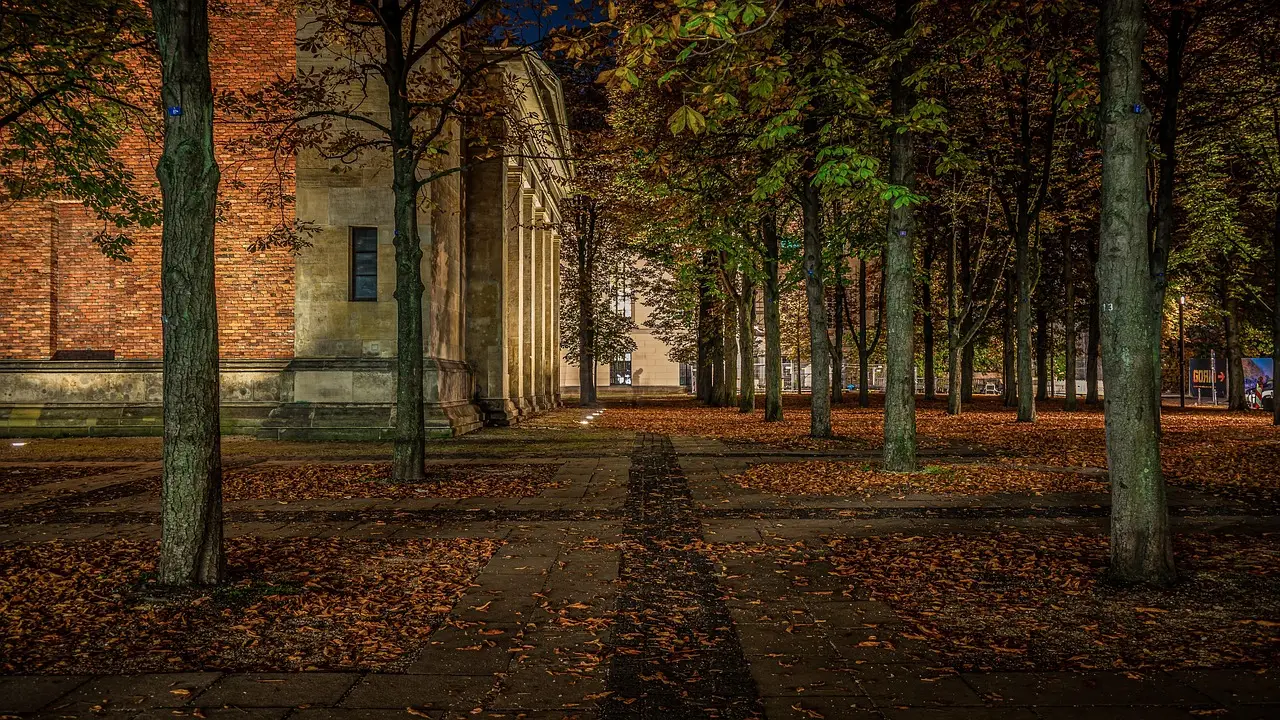
Julia Casesnoves began The Song of the Trees, an ongoing photographic project made largely at night in urban parks, in 2024. The series treats trees as its central subject and has evolved, in the photographer's own account, from picture-making into a deliberate practice of contemplation — a shift that tells practitioners much about where fine-art nature work is currently heading.
The project's premise is deceptively simple: urban parks are experienced as places for doing nothing. Casesnoves frames these green enclaves as spaces that inhabit "different levels of attention," and their survival in the heart of cities as a quiet form of resistance against what the writer Jenny Odell has named the "attention economy." For photographers, the invitation is clear — the park at night becomes both studio and site of refusal.
What does the project actually argue?
Casesnoves positions trees as "nature's great connectors," approached through a poetic lens and through what she calls ecological aesthetics. She draws the concept from David George Haskell, who describes it as the ability to perceive beauty in the relationships sustained within a particular part of the community of life — a step, in Haskell's phrasing, toward belonging in all its dimensions.
The photographer extends the idea into a claim about selfhood. To listen to trees, she writes, is "to listen to our own voices and those of the wider community of life." Beauty, in this framing, becomes a process of forgetting the self and merging with the greater whole. She anchors the sensibility in Mary Oliver's poem When I Am Among the Trees: "Around me the trees stir in their leaves / and call out, 'Stay awhile.'"
Who is Julia Casesnoves?
Casesnoves is a fine art photographer based in Valencia, Spain. She holds a diploma in Social Work from the University of Valencia and a Master's degree in Professional Photography from EFTI School in Madrid, and she began her photographic training at Barcelona's Institut d'Estudis Fotogràfics de Catalunya. More recently she studied Body, Science, and Arts-Based Research at TAE School in Barcelona.
Her career pivot came in 2017, when she showed Light Comes Through at the Parallax Art Fair in London — the work that established nature as the central theme of her practice. Her photographs have since appeared in Artdoc Photography Magazine and in Eyes on the World, a book on contemporary photography published by Kamira Institut in Paris.
Competition juries have taken notice. Casesnoves has received recognition from the Fine Art Photography Awards, the Tokyo International Foto Awards, the Julia Margaret Cameron Awards and the Prix de la Photographie Paris. Her work has been exhibited in Paris, London, Budapest, Madrid, Valencia and Barcelona — an exhibition record spanning six cities.
How does her research shape the images?
Casesnoves describes her current research as a set of interconnected strands:
- The practice of the economy of attention, following Jenny Odell
- Aesthetic attention and the Japanese concepts of yutori and wabi-sabi
- Aesthetic ecology, drawing on David G. Haskell
- The relationship between contemplative photography, nature and the nervous system
That multidisciplinary base — poetry, philosophy, psychology, somatic practices, dance, ecology and spirituality — underwrites a practice rooted in personal exploration rather than pure observation. The result, she suggests, is work experienced as a contemplative walk: a journey of discovery in which emotions surface from moments of astonishment, and viewers are asked to slow down, immerse themselves sensorially, and lose and recreate themselves through looking.
Technique, in her account, serves that end. Through command of photographic craft, sensitivity to detail and what her statement calls "remarkable delicacy," Casesnoves converts fleeting sensation into images that convey an intimate connection with the natural world — craft in service of contemplation rather than display.
Where does the project go from here?
The Song of the Trees remains ongoing, and its trajectory suggests a deepening rather than a conclusion: as the night practice matures into research on contemplative photography and the nervous system, Casesnoves signals that the next phase of urban-park photography may be measured less in frames than in attention.
Key points
- The Song of the Trees began in 2024 and is an ongoing project, shot primarily at night in urban parks.
- Casesnoves showed Light Comes Through at the Parallax Art Fair in London in 2017.
- Her work appears in Artdoc Photography Magazine and Eyes on the World, published by Kamira Institut in Paris.
- She has won recognition from the Fine Art Photography Awards, Tokyo International Foto Awards, Julia Margaret Cameron Awards and Prix de la Photographie Paris.
- Her photographs have been exhibited in Paris, London, Budapest, Madrid, Valencia and Barcelona.
Source: Dodho Magazine
James Calloway
Show full bio
Market editor covering people, launches and day-to-day practice in Photography exhibitions, photographers, photo books, festivals and awards at Lens Gazette.