José Castillo’s Dominican worlds come to Paris for free
José Castillo’s free “Unlikely Archipelago” survey brings paintings, photographs, collages, videos and assemblages to Paris’s Maison de l’Amérique latine.
By Daniel Okafor
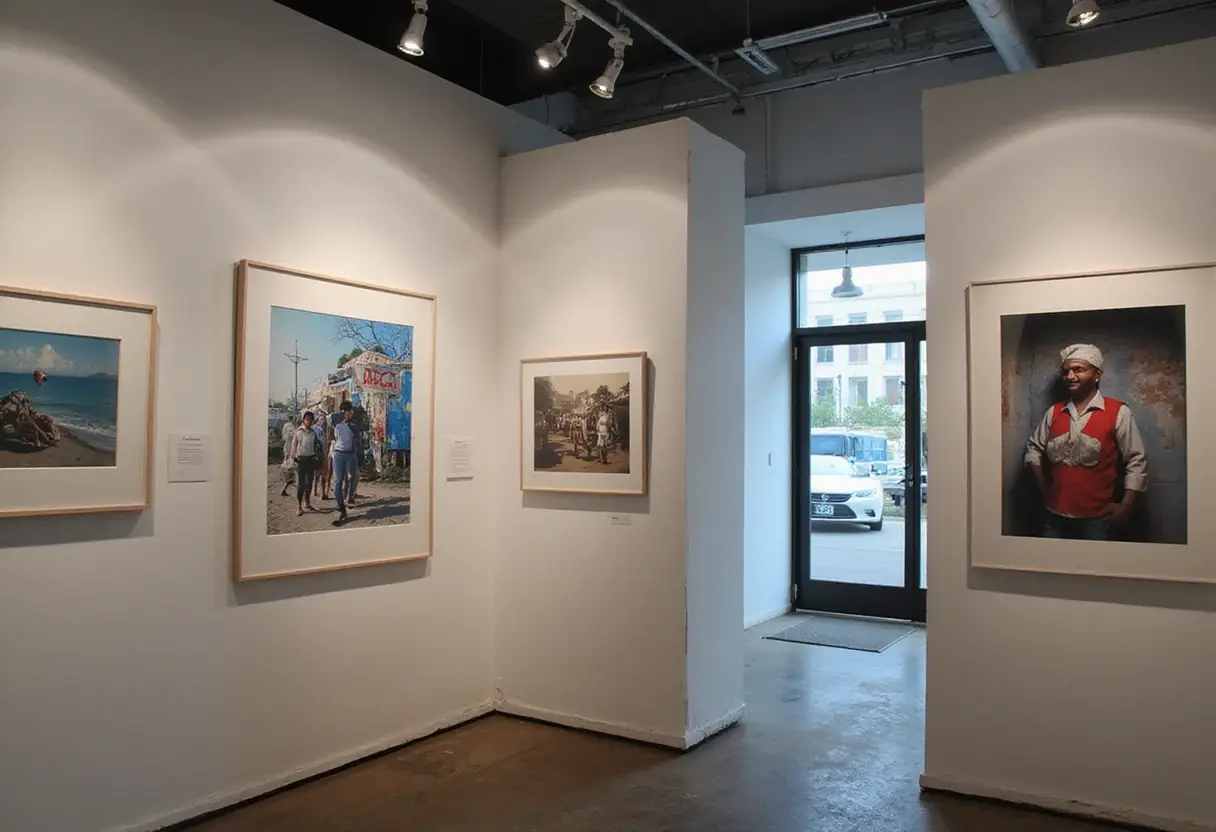
A free exhibition of Dominican artist José Castillo runs at the Maison de l’Amérique latine in Paris from 21 October 2026 to 15 January 2027. Titled “Unlikely Archipelago: José Castillo’s Dominican Worlds,” and listed in French as “Archipel improbable,” the exhibition takes place at 217 Boulevard Saint-Germain in Paris 7.
What does the show actually contain?
Curated by Vivian Braga dos Santos, the exhibition brings together:
- Paintings
- Drawings
- Prints
- Photographs
- Collages
- Videos
- Assemblages
The listing gives no work count or checklist. We cannot yet judge the scale and balance of the display, or know whether one medium dominates. Nor does it supply installation views, artist statements or a piece-by-piece account of the works. For a show built around transformations across media, those omissions matter.
Castillo was born in Santo Domingo in 1955 and has based himself in Paris since 1978. He draws on the cultures of his native island and on encounters during his journey into exile.
Curator Vivian Braga dos Santos describes the exhibition’s aim as to “discover the different facets of an artist whose work developed between the Caribbean and Paris, beyond any single technique or narrative.”
His route also supplies the show’s central tension. Dominican-born and Paris-based, Castillo developed across two cultural settings rather than arriving with a single settled identity. The institution presents that movement as productive: his pictures join personal recollection to collective history. The claim is plausible given the media and motifs, but the listing offers no examples that let a visitor test it in detail.
Castillo populates painted landscapes with figures, cut-out images and assembled objects. Birds and vegetation sit alongside popular figures, devotional pictures and snippets from the press.
He repeatedly recycles motifs, moving them from one work to the next through changes in colour, layering and material. That repetition lets an object, figure or fragment of news print become unstable: its meaning changes with scale, support and neighbours, even when its identity stays recognisable.
For a photography audience, photographs sit inside a mixed-media ensemble, not an announced single-projector sequence. The listing names no individual photographs, so their subjects and sequence remain unknown.
Judging from the listed contents, the show is closer to a contact sheet than to a conventional photo exhibition: images on paper, moving images and built surfaces share attention.
The historical register is explicit: the works address the memory of slavery, resistance and Indigenous legacies, and the listing places these subjects where personal and collective history meet. Birds, plant life, popular figures, devotional images and press clippings form the stated repertoire, but the source does not identify which works engage which histories.
Some of Castillo’s works recently appeared in “Paris noir” at the Centre Pompidou, giving this survey an immediate institutional comparator. The listing does not identify the pieces or say whether they recur here; if they do, comparison may sharpen the show’s argument. If they do not, the connection remains largely contextual.
The title does considerable work. “Archipel improbable” gives the French listing’s name, while “Unlikely Archipelago: José Castillo’s Dominican Worlds” makes the connection between artist and place explicit.
The available listing does not explain how the title organises the rooms, whether it refers to a particular sequence, or whether geography operates as a formal theme rather than a biographical one. An evocative title cannot replace exhibition architecture.
Operationally, admission is free, and the listing marks the event as indoor and “no reservation.” Sortir à Paris’s listing, by Julie de Sortiraparis, was updated on 2 November 2026 at 3:10 p.m. It gives the address in the Saint-Thomas-d’Aquin quarter of Paris’s 7th arrondissement: 217 Boulevard Saint-Germain, 75007 Paris.
The listing also supplies the official site, www.mal217.org, but no daily opening hours, despite a “Dates and Opening Time” label.
The Centre Pompidou’s recent “Paris noir” has already placed Castillo in a Paris institutional setting; this dedicated Maison survey carries that context into a longer exhibition through 15 January 2027. The next test is whether the Maison adds the missing work list, interpretive detail and opening hours. Without them, Castillo’s transformations of recurring motifs will remain harder to read than they should.
Key points
- 21 October 2026–15 January 2027: “Unlikely Archipelago: José Castillo’s Dominican Worlds” runs at the Maison de l’Amérique latine.
- Free, indoor, no-reservation exhibition at 217 Boulevard Saint-Germain, 75007 Paris.
- 1955: Castillo was born in Santo Domingo; he has based himself in Paris since 1978.
- Curated by Vivian Braga dos Santos, the exhibition presents seven listed categories: paintings, drawings, prints, photographs, collages, videos and assemblages.
- Some works recently appeared in “Paris noir” at the Centre Pompidou.
Source: Google News: photography exhibition
Daniel Okafor
Show full bio
News editor covering companies, deals and strategy in Photography exhibitions, photographers, photo books, festivals and awards at Lens Gazette.