Jean-François Leroy, founder of Visa pour l'Image, dies
Jean-François Leroy, founder of Visa pour l'Image in Perpignan, has died. Digital Camera World describes his passing as 'a huge loss to photojournalism' and a turning point for the documentary field.
Updated
Jean-François Leroy, the founder of Visa pour l'Image, has died, according to Digital Camera World, which described his passing as "a huge loss to photojournalism." The announcement closes a chapter in the institutional history of documentary photography that Leroy had shaped for more than three decades.
What was Visa pour l'Image?
Visa pour l'Image is an annual documentary photography festival held each September in Perpignan, in the south of France. Conceived and built by Leroy over more than thirty years, it became one of the most consequential gatherings in the international photojournalism calendar.
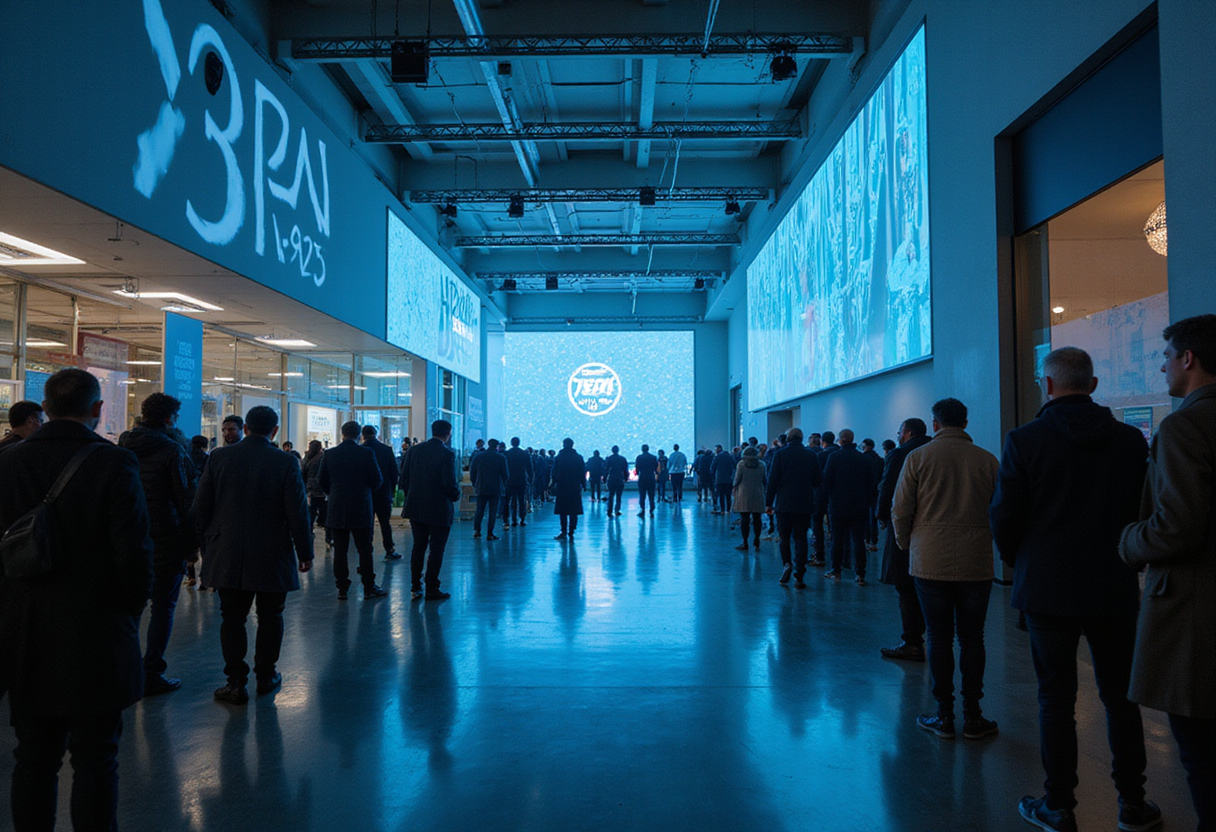
The festival drew working photographers, picture editors, agency directors, publishers, curators, and a substantial public audience to Perpignan for roughly two and a half weeks each autumn. Its core program combined large-scale outdoor exhibitions across the city's medieval centre with evening screenings of picture essays in the courtyard of the Campo Santo — a format that allowed finished bodies of work to be presented in full, in sequence, to an audience of several thousand at a sitting.
How did Leroy shape the field?
Leroy's curatorial philosophy rested on a single conviction: that photojournalism deserves to be shown as completed work, not broken into individual saleable images. He selected essays, not single frames. He insisted on context, captions, and the photographer's editorial voice. He gave priority to long-form investigations at a moment when newspaper and magazine budgets for documentary features were contracting across Europe and North America.
Under his direction, Visa pour l'Image became a venue where the long-form picture essay retained its standing as a publishable, public-facing form. Photographers who could not find a home for ambitious multi-year projects in commercial publications found one in Perpignan. Editors who still believed in the form used the festival as a buying trip. Students used it as a curriculum.
The festival also hosted a widely used portfolio review, a photojournalism seminar, and an awards night that recognised both established and emerging practitioners. For a generation of documentary photographers, a Visa pour l'Image projection functioned as a publication in its own right; for their editors, it was often the first signal that a body of work had arrived.
What changes with his departure?
Whether Visa pour l'Image can continue in the curatorial mode Leroy established is now an open question. The 2025 edition is scheduled for September in Perpignan; organisers have not yet indicated how they will mark the founder's absence or whether his role will be filled by a successor with comparable editorial authority.
Reaction across the profession was immediate. Within hours of the announcement, tributes circulated among photographers, editors, and agency staff, many of them echoing the framing offered by Digital Camera World: "a huge loss to photojournalism."
The festival's institutional structure — its small permanent staff, its reliance on local civic partners, and the personal relationships Leroy maintained with photographers and editors — was built around a single curatorial voice. Translating that voice into a committee process will require either a successor of comparable standing or a deliberate reshaping of the festival's editorial model.
Looking ahead
The next edition of Visa pour l'Image will be the first public measure of what comes next. If the programme retains Leroy's emphasis on complete essays, slow reporting, and the picture story as a public art, the festival's identity survives its founder. If it shifts toward the market-friendly model adopted by several newer photography gatherings — single-image selections, commercial sponsorships, gallery-style presentations — the festival will look different in 2026 than it did in any previous year. Either way, photojournalism has lost one of the last independent editors of his generation to control a venue of this scale single-handedly.
Key points
- Jean-François Leroy, the founder of Visa pour l'Image, has died.
- Visa pour l'Image is held annually each September in Perpignan, in the south of France.
- Digital Camera World described Leroy's passing as 'a huge loss to photojournalism.'
- Leroy led the festival for more than thirty years, with the 2025 edition scheduled for September in Perpignan.
- The festival's signature evening screenings take place in the courtyard of the Campo Santo in Perpignan's medieval centre.
Source: Google News: photography festival
Daniel Okafor
Show full bio
News editor covering consumer brands and retail at Lens Gazette.