In Amsterdam, Leica Hangs More Than Photographs on the Wall
Leica's Amsterdam exhibition breaks from the framed-print format, building an environment around the act of photography itself — a promising rethink of how audiences encounter images.
Updated
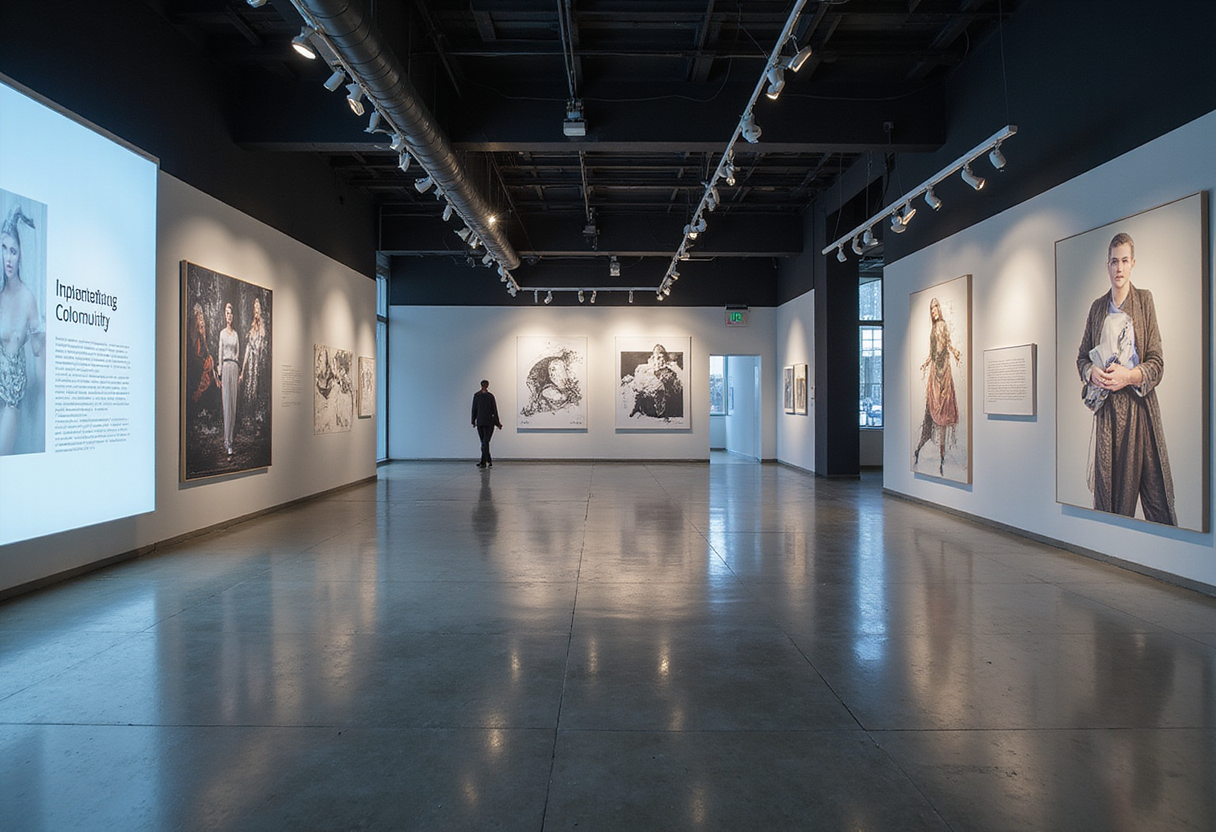
Most photography exhibitions do one thing: they put photographs on walls and let the prints speak. Leica has tried another approach in Amsterdam, and the experiment deserves attention from anyone who cares about how photographic work reaches an audience.
The Amsterdam show breaks from the standard format of framed prints in sequence. Instead of treating the exhibition as a container for finished images, Leica's presentation builds an environment around the act of photography itself — an approach that turns the venue into part of the argument rather than a neutral shell.
Why does this matter? Because the conventional exhibition model has real limits. A row of prints, hung at eye level and lit with care, asks the viewer to meet the work on the wall's terms. The photograph arrives finished, sealed off from the process that produced it. What happened before the shutter fired — the decision, the hesitation, the machinery in the hand — stays invisible. An exhibition that reaches beyond the frame can recover some of that lost context.
For a manufacturer like Leica, the move carries obvious self-interest. A company that builds cameras has every reason to remind visitors that photographs come from somewhere, and that the somewhere involves equipment, craft and physical gesture. The risk is that such a show slides into brand theatre — an exhibition that sells hardware rather than serves the work. The question any visitor should ask is whether the added elements illuminate the photography or merely decorate it.
Done well, though, the broader approach has a respectable pedigree. Museums have long grappled with how to exhibit a medium defined by reproduction. Curators have hung contact sheets beside fine prints, played darkroom audio in galleries, and displayed the cameras themselves as historical objects. Each of these choices insists that a photograph is not only an image but also the record of a procedure — a piece of time shaped by an instrument and a pair of hands.
Amsterdam, with its dense institutional landscape and a public fluent in design and visual culture, is a sensible testing ground for the format. Visitors there arrive accustomed to exhibitions that treat objects, spaces and narratives as one fabric. A camera company introducing a hybrid exhibition model in that city is pitching the idea to an audience primed to notice whether the concept holds or collapses.
The early verdict is promising. The approach works because it acknowledges something the standard show ignores: audiences increasingly want to understand how images are made, not only what they depict. In an era when billions of photographs circulate daily, the craft behind a considered picture — the choice of tool, the moment of exposure, the sequence of decisions — has become part of the work's meaning. An exhibition that stages that craft, rather than hiding it, gives viewers a fuller account of what they are looking at.
There is a caution worth stating plainly. Technique must remain in service of the work. When an exhibition foregrounds process, the danger is that process becomes the spectacle and the photographs recede into justification. The strongest shows of this kind use the expanded format to deepen the viewer's encounter with specific images; the weakest use images as props for an installation. The difference shows quickly, and audiences register it faster than institutions usually admit.
If the Amsterdam experiment signals a direction, it points toward exhibitions that behave less like catalogues and more like arguments — shows that treat the photograph as one element in a larger story about seeing. For a manufacturer with Leica's institutional ambitions, that is a significant repositioning: from maker of instruments to shaper of how photography is encountered.
Whether other institutions follow remains to be seen. But if the format travels beyond Amsterdam, the photography exhibition may slowly become a place where making and looking share the same room — and that would change the contract between the viewer and the wall.
Key points
- Leica staged an exhibition in Amsterdam that goes beyond displaying photographs on walls.
- The format incorporates context around the making of photographs, not just finished prints.
- The approach raises questions about whether manufacturer-led shows serve the work or the brand.
Source: Google News: photography exhibition
Daniel Okafor
Show full bio
News editor covering consumer brands and retail at Lens Gazette.