Honor's Arri Cinema Mode Fires a Warning Shot at Apple's Video Crown
Shot side-by-side with an Alexa in Burbank, Honor's Magic9 Pro Max with Arri Cinema mode narrows the video gap to a margin that threatens the iPhone's dominance in smartphone video.

Side-by-side clips shot inside Arri's Burbank, California studio in October 2026 put the Honor Magic9 Pro Max surprisingly close to an Alexa cinema camera, and the results, reviewed later on a calibrated monitor, erode the iPhone's claim to smartphone video supremacy. Arri's footage still wins on clarity and skin-tone gradation, but not by the margin the gulf in sensor size would suggest.
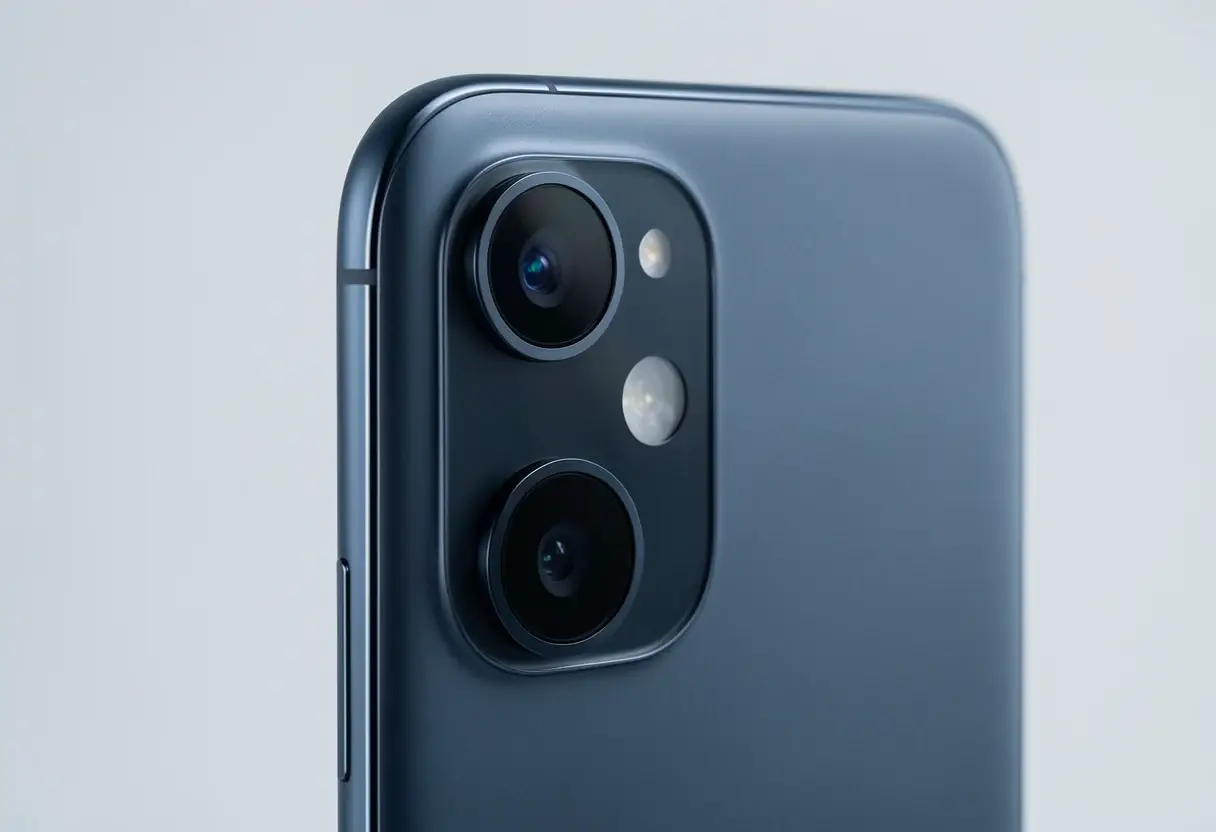
The phone at the center of this is Honor's Magic9 Pro Max, a flagship with a dual 200-megapixel camera system, a dedicated imaging chip, and the headline feature: an Arri Cinema mode built on color science derived from Arri's Alexa line. Honor, the smallest of the five major Chinese phone brands, had never partnered with a European imaging brand before — a distinction it shared only with Huawei. Its previous flagships produced respectable but uncompetitive video, and the Arri partnership aims not merely to catch Vivo and Oppo but, in the company's own framing, to surpass every competitor including Apple.
What does the Arri partnership actually cover?
Arri's contribution is image science, not optics. Unlike Xiaomi's work with Leica, Vivo's with Zeiss, or Oppo's with Hasselblad, Arri made no contribution to the phone's hardware design and has no involvement in its lenses. Honor's team in France worked with Arri's engineers in Munich, tuning the image signal processor through weekly software revisions during a development cycle that was only about six months old at the time of the studio visit.
The technical foundation carries real weight. Arri Cinema mode records up to 4K at 60fps in 2.39:1 or 16:9, at a base Exposure Index of 160, in LogC3 — the logarithmic encoding used in Arri cameras before the Alexa 35. Honor claims the main 24mm-equivalent and telephoto 85mm-equivalent cameras, both with CIPA 8-rated stabilization, track the LogC3 curve almost perfectly. Arri says this marks a first: the company had never matched multiple sensors to a single look in one device before.
The honest caveats come from Arri itself. Charts comparing the phone's response against a real Alexa show the phone clips in the highlights, because its sensor is not custom-designed like Arri's own — which Arri frankly calls "expensive." The phone's dynamic range is consequently far more software-driven than an Arri camera's. Honor's H1 chip works in the RAW domain for what the company calls "lossless noise reduction and extra dynamic range," in tandem with Qualcomm's Snapdragon 8 Elite Extreme Gen 6, though Honor reps stayed coy about how the pairing actually functions.
Where does the system fall short?
The ultra-wide camera is excluded from Arri Cinema mode entirely. Honor cites time constraints and a preference to "get it right first," though tuning a third camera may cost more money than time — and it remains unclear whether the lens arrives via software update or a future device, since each camera required custom curves and color matching.
The LUT workflow invites both praise and clutter. Fourteen built-in LUTs ship out of the box matching Arri's pre-Alexa 35 default look, and 87 more looks from Arri Media's post-production house are downloadable — spanning black-and-white channel emphales, period film simulations, seasonal grades and teal-and-orange finishes, all compatible with DaVinci Resolve. Install them all, though, and you cannot rearrange, organize, or delete any of them. Honor told reviewers it will look into fixing it.
Practical shooting options include 4K or 1080p at 24, 25, 30, 50, and 60fps, the APV 10-bit codec as a smaller-file ProRes alternative, five directional audio modes behind the microphone icon, and Log recording with manual controls. Notably missing: 120fps, which stays locked to the standard Video mode with vague assurances about any Arri involvement. Stranger still, standard Video mode ties 4K resolution to the Vibrant style alone — switch styles and resolution drops to 1080p for no stated reason.
Why is a cinema company licensing to phones?
The partnership is a commercial play, and Arri reps say so plainly: cinema remains the priority even as the high-end cinematography market shrinks amid falling competitor prices. Licensing color science reaches buyers who will never own an Alexa while familiarizing them with Arri Looks and post-production workflows. Arri previously certified Panasonic's LogC3 implementation on the Lumix S1R II, GH7, and GH6, but a smartphone deal reaches a far wider audience.
Whether the collaboration extends to still photography remains unanswered — Arri admits limited experience there but would like to try, while Honor declined to discuss roadmaps. Both brands, however, signal plans to collaborate on more than just a few devices, and the ultra-wide's absence suggests the tuning effort has only begun.
Key points
- Honor's Magic9 Pro Max shoots Arri Cinema mode up to 4K/60fps in LogC3 at base Exposure Index 160
- Side-by-side tests at Arri's Burbank studio in October 2026 put the phone close to an Alexa, though it clips highlights
- 87 downloadable LUTs from Arri Media plus 14 built-in looks, all usable in DaVinci Resolve
- The ultra-wide camera is excluded; the roughly six-month-old partnership prioritized main and telephoto sensors
- Arri contributed no optics or hardware; its earlier licensing covered Panasonic's Lumix S1R II, GH7 and GH6
Source: PetaPixel
James Calloway
Show full bio
Market editor covering people, launches and day-to-day practice in Photography exhibitions, photographers, photo books, festivals and awards at Lens Gazette.